Even when fitness looks normal, hidden changes in oxygen use and microvascular function may already be emerging in adolescents with type 1 diabetes.
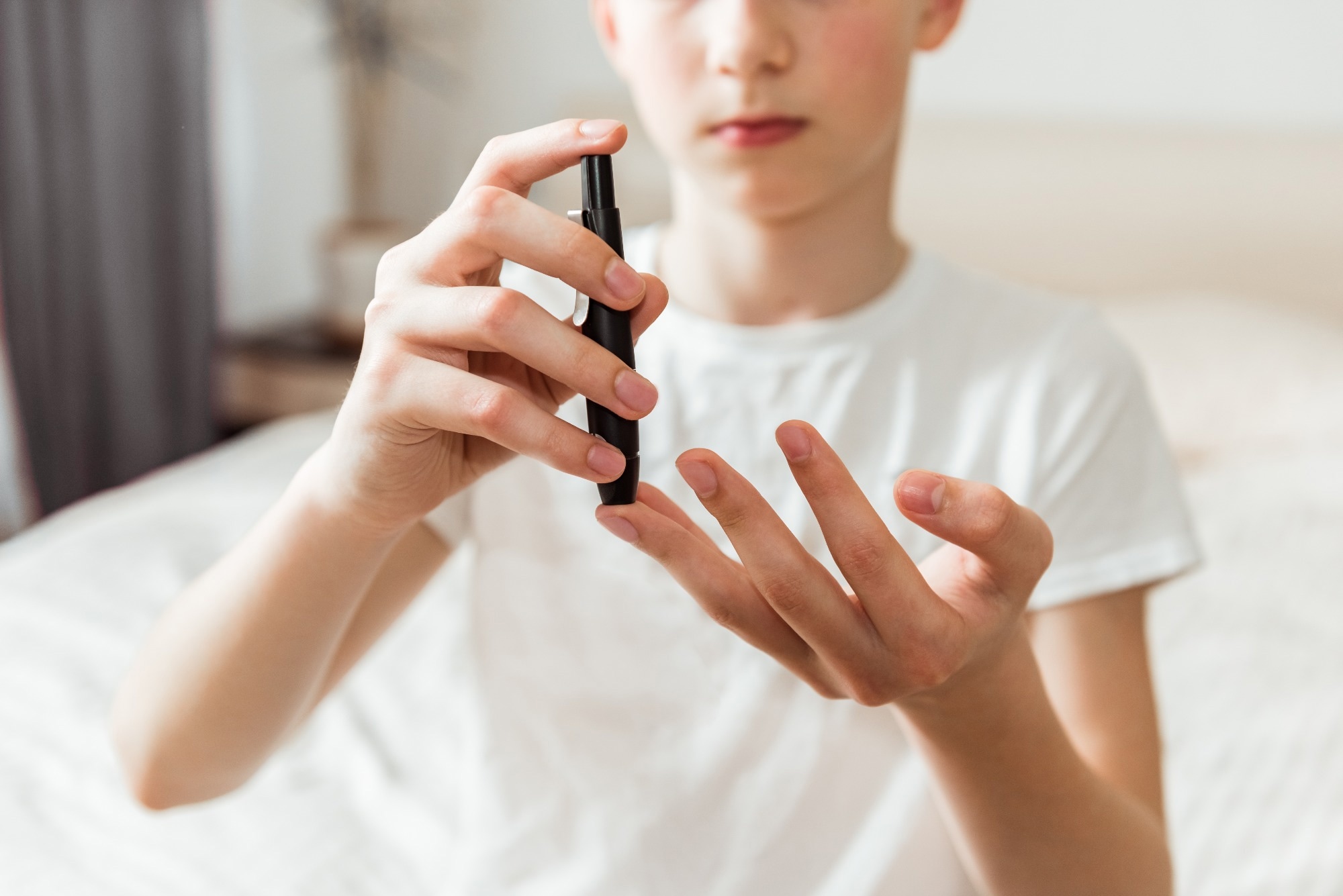 Study: Cardiovascular and autonomic nervous system response to graded exercise in adolescents with type 1 diabetes. Image credit: Iren_Geo/Shutterstock.com
A new study published in Frontiers in Endocrinology reveals that type 1 diabetes is associated with subtle alterations in oxygen utilization and peripheral microvascular function in response to graded exercise in adolescents. However, this chronic metabolic condition does not appear to significantly affect cardiovascular function and overall exercise capacity.
Early vascular changes may begin in diabetic adolescence
Type 1 diabetes is a chronic autoimmune condition characterized by the destruction of pancreatic beta cells, which produce the hormone insulin. This condition typically appears in childhood, with diagnosis peaking in adolescents. The global prevalence of this disease is estimated to be 9.5 million.
Lifelong insulin replacement therapy is the key to avoiding chronic hyperglycemia (high blood glucose level) and preventing health complications, including cardiovascular disease, kidney disease, eye disease, and peripheral neuropathy. However, evidence suggests that adolescents with type 1 diabetes may already experience early signs of vascular dysfunction and atherosclerosis.
Physical activity is considered an effective intervention for children and adolescents with diabetes to positively regulate blood lipid profile, glucose metabolism, and endothelial function. However, studies investigating the impact of type 1 diabetes on maximal exercise capacity and exercise-induced physiological changes in children and adolescents are limited.
Given this gap in the literature, researchers at the University of Ljubljana, Slovenia, conducted a small observational study to compare cardiovascular, respiratory, metabolic, and microvascular responses to cardiopulmonary exercise testing (CPET) in adolescents with type 1 diabetes and healthy adolescents. CPET is a widely used test in sports medicine to accurately assess physiological responses to short-term maximal exercise.
Adolescents tested across rest, exercise, and recovery phases
A total of eight adolescents with type 1 diabetes and eight healthy adolescents were enrolled in the study. All participants underwent CPET on a cycle ergometer, followed by a 10-minute recovery period.
Several physiological parameters were assessed before (resting), during, and after (recovery) CPET to evaluate participants' cardiorespiratory, metabolic, and microvascular responses to graded exercise.
Oxygen use efficiency shifts despite normal peak performance
The analysis showed that adolescents with type 1 diabetes had subtle differences in oxygen use at maximal exercise. They displayed a lower oxygen consumption per power output (VO2/PO) slope and a higher ventilatory equivalent for oxygen (VE/VO2). However, other measures, including the oxygen uptake efficiency slope, did not differ significantly from healthy peers.
There were no significant differences in maximal power output (peak workload achieved, measured in watts) or maximal oxygen consumption between the groups. Cardiovascular responses, including heart rate and heart rate variability, were also similar throughout the exercise test.
In contrast, peripheral microvascular responses differed. Adolescents with type 1 diabetes showed lower fingertip skin blood flow and reduced cutaneous vascular conductance at rest and during post-exercise recovery. These microvascular measures were not assessed during active exercise.
Peripheral vascular changes emerge before fitness declines
The study shows that adolescents with type 1 diabetes have similar exercise capacity and cardiovascular function to their non-diabetic peers during graded exercise. However, they may already exhibit early changes in oxygen utilization during exercise, and altered peripheral microvascular function at rest, and during post-exercise recovery. These findings suggest that any differences are more likely driven by peripheral mechanisms rather than central cardiovascular limitations.
The comparable cardiovascular parameters between groups indicate that cardiovascular autonomic function remains preserved in these adolescents. However, previous research has reported mixed findings. Some studies show reduced cardiovascular responses to exercise in individuals with type 1 diabetes, while others report no differences.
This variability may be influenced by factors such as disease duration, glycemic control, fitness level, and specific exercise conditions
Notably, the study finds significantly lower skin blood flow at the fingertip but not in the forearm among diabetic participants. Similarly, significantly lower cutaneous vascular conductance and differences in skin temperature (with lower fingertip temperatures observed in diabetic participants) have been observed only at the fingertip but not in the forearm.
These findings suggest that early-stage microvascular impairment or endothelial dysfunction in glabrous skin (hairless smooth skin on palms and soles) may already be present in individuals with type 1 diabetes. Because of dense sympathetic innervation and abundant arteriovenous connections, glabrous skin such as fingertip skin plays a central role in thermoregulation, allowing rapid adjustments in skin blood flow to facilitate heat dissipation. Taken together, these findings suggest altered peripheral microvascular regulation and impaired thermoregulatory capacity in adolescents with type 1 diabetes.
The observed early signs of peripheral microvascular dysfunction highlight the need for continuous monitoring of vascular function even in young diabetic individuals without evident health complications. Future research is needed to explore factors and mechanisms driving microvascular dysfunction in this vulnerable population.
Given the limited number of participants, the researchers noted that these findings should be interpreted as preliminary evidence, requiring confirmation in larger, more representative cohorts.
Furthermore, detailed information on pre-exercise meal content and timing, blood glucose trajectories, and insulin dosing was not collected and systematically analyzed in the study. These factors may influence physiological responses to exercise and should therefore be evaluated as within-subject determinants of CPET responses in larger cohorts.
Download your PDF copy by clicking here.
 Stalled gut microbiome development triples risk for type 1 diabetes in children