Study: Endogenous and exogenous determinants of sex differences in blood pressure. Image Credit: Miljan Zivkovic / Shutterstock
In a recent review published in npj Cardiovascular Health, a group of authors examined how biological and environmental factors shape sex-specific changes in blood pressure (BP) and cardiovascular risk throughout life.
BP problems remain one of the leading causes of heart disease, stroke, and kidney failure. Men and women experience different symptoms due to BP changes, which may be influenced by lifestyle, hormonal, genetic, and environmental factors. Understanding these differences is important because current treatment strategies are often based on generalized approaches rather than sex-specific patterns. Further research is needed to evaluate the need for developing different guidelines for BP prevention and treatment for women and men.
BP changes across the lifespan
BP naturally changes with age, but these changes differ between women and men. However, large studies show that healthy aging does not always require increasing BP levels. Healthy lifestyles may help maintain stable BP throughout life.
During childhood and early adolescence, boys and girls generally have similar BP levels. Differences become more noticeable after puberty. The average systolic BP of young females remains lower than that of their male counterparts throughout their reproductive years. Conversely, women face a steeper rise in BP beginning in midlife, particularly during and after menopause. This may contribute to higher cardiovascular risk in older women, and early detection could help families and healthcare systems prevent serious cardiovascular complications later in life.
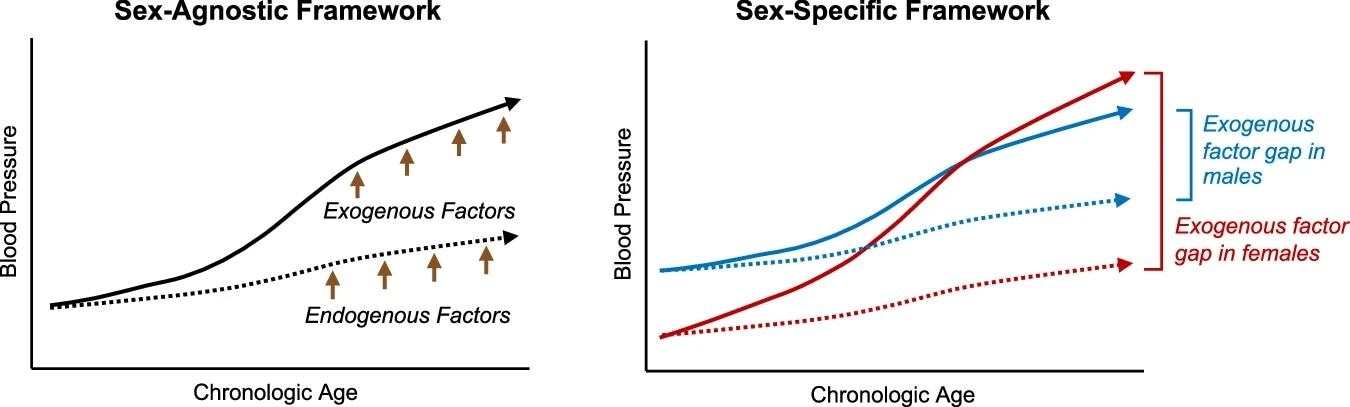
The left panel demonstrates the blood pressure trends over the life course as affected by endogenous factors (dotted line) and exogenous factors (solid line) in the overall population; the right panel demonstrates the blood pressure trends over the life course as affected by endogenous factors (dotted line) and exogenous factors (solid line), among females (red) and males (blue).
Genetic and hormonal influences on BP
BP is influenced by genes and hormones. Women have two X chromosomes, whereas men only have one X chromosome and one Y chromosome. Some of the genes on the X chromosome are thought to promote relaxation of the blood vessels and therefore assist in maintaining healthy BP levels; whereas, some Y chromosome variations may be responsible for enhancing the production of the renin-angiotensin-aldosterone system (RAAS), which increases BP.
Estrogen and progesterone generally protect blood vessels and support lower BP in women. Estrogen improves blood vessel relaxation, enhances endothelial function, and may reduce harmful vessel thickening. Progesterone also helps regulate sodium balance and contributes to BP control. The protective effect of both hormones is greatest during the reproductive years.
The decline of estrogen and progesterone leads to a relative reduction in their cardiovascular protection as women approach menopause. This may help explain the steeper rise in BP observed around and after menopause. Increased cases of hypertension have also been observed in men, as androgens, particularly testosterone, may counteract normotension through mechanisms that remain unclear, including possible RAAS activation, renal effects, or maladaptive gut microbiota pathways.
Hormones play a critical role in many conditions, including maternal and reproductive health, creating future cardiovascular risk. For example, women with polycystic ovary syndrome (PCOS) have an increased risk for obesity, hypertension, and cardiovascular disease.
Lifestyle and environmental stressors
Environmental and lifestyle factors strongly influence BP in both sexes, but evidence suggests women may respond more intensely to several common stressors. Obesity, diabetes, smoking, unhealthy diets, and lack of physical activity all contribute to rising BP.
Psychological stress due to work, caregiving, financial stress, and social pressures can activate the nervous system and elevate BP over time. Younger men may have stronger acute BP responses due to stress than older men, but older women may have a higher prevalence of hypertension, adding to their already increased cardiovascular risk.
Environmental factors like pollution, exposure to toxins, drinking alcohol, and eating more sodium can also impact vascular health in a negative way for women. Some researchers believe that women are more affected than men by these negative health effects because their blood vessels tend to be smaller and they distribute body fat differently. Physical inactivity, eating processed foods, chronic stress, and excess weight may all add to these health risks and may be contributing to increased hypertension risk in older female populations.
Medical treatments and future clinical approaches
Certain medications and hormone therapies may also affect BP differently in women and men. For example, in women, oral estrogen therapy may increase BP when taken after menopause; however, there is less risk of developing hypertension if estrogen is delivered through the skin (transdermally). In addition, gender-affirming hormone therapy may also affect BP differently depending on whether testosterone or estrogen is administered, although the evidence remains limited and mixed.
Current hypertension guidelines increasingly recognize female-specific risk factors such as hypertensive disorders of pregnancy, yet most treatment strategies remain largely similar for both sexes. Future healthcare may require more individualized approaches that consider sex, age, hormonal status, and lifestyle exposures together. Aggressive BP lowering may not always benefit older adults equally. In elderly patients, excessive treatment can increase the risks of falls, dizziness, or fainting.
New approaches that focus on improving metabolic health, such as glucagon-like peptide-1 receptor agonists (GLP-1 RAs), could offer favorable BP effects, in addition to controlling blood glucose levels, particularly in women earlier in the course of age-related BP rise.
Conclusion
The review concluded that BP regulation is shaped by complex interactions among genetics, hormones, lifestyle, and environmental stressors. Women generally experience lower BP earlier in life but demonstrate steeper increases with aging, especially after menopause. In many cases, obesity, diabetes, smoking, psychosocial stress, and hormonal factors may have a greater impact on women than men. These differences may contribute to varying cardiovascular disease patterns between the sexes.
The research supports the need for further research into more personalized approaches to prevention and treatment of heart disease that consider sex-specific biology, age, and environmental exposure in order to enhance heart health outcomes worldwide.
Download your PDF copy by clicking here.
Journal reference:
- Shangguan, S., Warsi, W., Kwong, J. L., Lee, Y., & Cheng, S. (2026). Endogenous and exogenous determinants of sex differences in blood pressure. npj Cardiovascular Health. 3. DOI: 10.1038/s44325-026-00128-3, https://www.nature.com/articles/s44325-026-00128-3
 First EU Screening Week urges citizens to know their numbers