From bright sunlight to heavy traffic and loud music, the Mig-Drive study reveals how migraine can turn everyday road conditions into sensory challenges that may affect safety and independence.
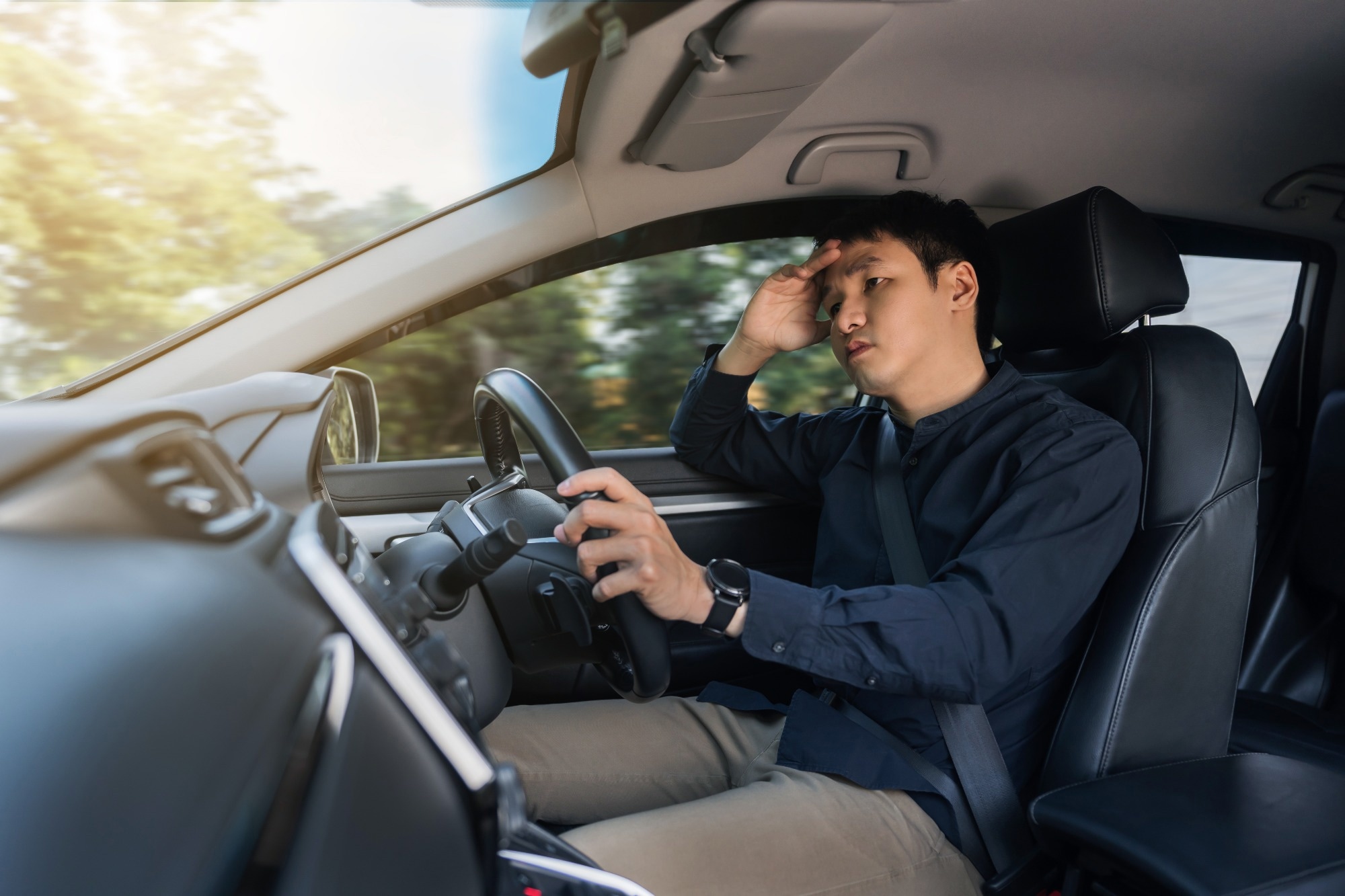
Study: Assessing the relationships between migraine and driving risks, challenges and coping strategies. Image Credit: BaLL LunLa / Shutterstock
In a recent study published in the journal Scientific Reports, researchers conducted a multicenter investigation of the previously underrecognized impacts (“burden”) of migraines on driving safety. The study evaluated a cohort of 1,333 active drivers with migraine, revealing that 70.6% experienced headache while driving.
Notably, the findings further showed that headaches occurred during approximately 13% of all trips, resulting in significant cognitive and sensory disruptions that may heighten a driver’s sensitivity to challenging road conditions, indirectly increasing traffic accident risks and driving cessation.
Background
Driving is a complex task that requires sustained attention, rapid reactions, and multi-modal sensory integration. For individuals living with migraines, however, the demands of road driving have been reported to present a range of potential headache triggers.
Migraine is an umbrella term for neurosensory disorders characterized by central sensory processing dysfunction. Migraine patients are known to be highly sensitive (vulnerable) to environmental stimuli (“triggers”), including glare (visual), noise (auditory), and strong odors (olfactory).
While previous studies suggest that almost 20% of migraine patients face severe driving limitations, the mechanisms underlying these limitations and the precise relationships between migraine subtypes, road conditions, and accident rates remain insufficiently characterized.
This discrepancy is likely due to the fact that neurologists and traffic regulators have historically overlooked how active symptoms (e.g., spatial disorientation) can undermine a patient's ability to drive a motor vehicle.
About the study
The present study aimed to address this knowledge gap and inform future clinical care and traffic safety policies for migraine patients by conducting a cross-sectional "Mig-Drive" study to elucidate the hidden impacts of migraines on road safety.
The study was conducted between May and July 2024 and initially comprised a preliminary cohort of 2,522 patients diagnosed with migraine according to International Classification of Headache Disorders, 3rd edition (ICHD-3) criteria. Of this initial cohort, 1,333 were identified as active drivers (mean age 36.75 years; 64.4% female) and were consequently selected for subsequent data collection and analyses.
Based on their clinical symptoms, participants were categorized into overlapping subgroups: 1. migraine with aura (MwA), 2. chronic migraine (CM), and 3. vestibular migraine (VM). Data collection involved face-to-face interviews administered by 57 neurologists across 40 clinics. These interviews used a structured questionnaire, adapted from the standardized Driving Habits Questionnaire, to assess headache frequency, real-world coping behaviors, and self-reported accident history.
The study additionally used the Headache Impact Test-6 (HIT-6) to quantify daily disability. Statistical analyses leveraged the Structural Equation Model (SEM) to trace the direct and indirect associations connecting migraine characteristics, environmental sensitivity, accident probabilities, and driving cessation.
Study findings
The study’s outcomes revealed that overall, participants experienced headaches during 13.02% of their drives, with attacks lasting an average of 3.36 hours. Notably, active headaches during driving were associated with immediate cognitive impairments: 69% of drivers reported decreased attention, 66% increased restlessness, and 56% experienced irritability.
Furthermore, about 18% of participants had been involved in at least one traffic accident in the previous year, underscoring the potential impact of migraines on road safety. The analyses additionally revealed that age and migraine subtype may influence risk. The mean age of drivers who suffered accidents was significantly younger (35.31 years, p = 0.007) than that of those who remained accident-free.
Similarly, the data showed that 96.9% of accidents involving chronic migraine patients occurred during an active headache, compared to 77.2% for episodic patients (p < 0.001). Visual aura was also associated with higher accident rates in episodic migraineurs (31.1% with aura vs 23.5% without aura, p = 0.039).
Finally, SEM analyses modeled direct and indirect associations between headaches while driving and heightened sensitivity to external stressors, such as bright sunlight and high-beam light-emitting diode (LED) headlights, thereby suggesting that headaches while driving could indirectly increase patients’ risk of accidents through greater sensitivity to road conditions.
Conclusions
The present Mig-Drive study is one of the first to identify migraines as an underrecognized neurosensory factor that may affect traffic safety and personal autonomy. While participants reported using medications (58.8%), turning off any music (51.9%), or wearing sunglasses (47.7%) to mitigate the severity of their headaches while driving, 17.7% reported continuing to drive without any precautions.
Together, these findings highlight the need for clinical- and road-safety policy support for patients living with migraines, to help reduce avoidable driving restrictions and potential safety risks.
While the study is notably limited by its reliance on self-reported participant data and its lack of controls, as well as its hospital-based design and absence of objective or simulator-based driving measures, the findings provide a crucial foundation for future automotive engineering and targeted clinical counseling.
Download your PDF copy by clicking here.
 Migraine with aura linked to higher ischemic stroke risk in middle-aged and older adults