From cold plunges to cryotherapy, researchers are probing how intense cold affects brain and stress pathways as the practice gains traction for mental well-being.
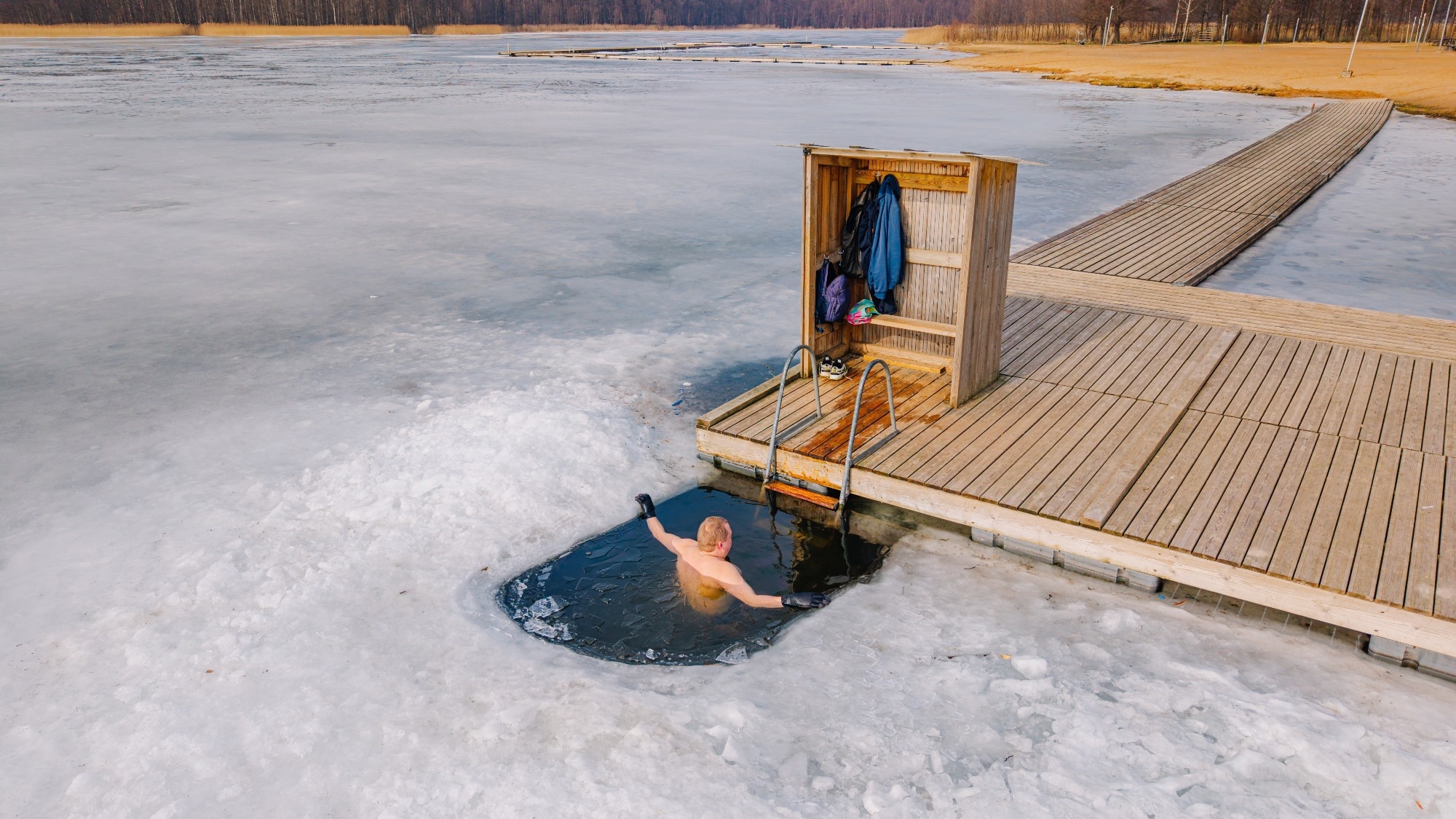
Review: Is cold exposure a viable lifestyle intervention for mental health? Reviewing evidence and mechanisms. Image Credit: shulers / Shutterstock
A review article published in the journal Molecular Psychiatry provides an in-depth overview of the evidence on cold exposure and mental health, focusing on potential mechanisms underlying the reported effects.
Background
Cold exposure as a potential mental health remedy has gained significant popularity in recent years, partly due to widespread endorsements on social media platforms, in wellness communities, and on high-profile podcasts.
Cold exposure is increasingly promoted on social media as a potential way to reduce symptoms of depression, anxiety, and other mental health challenges through its effects on physiologic arousal systems, including the sympathetic nervous system (SNS) and hypothalamic-pituitary-adrenal (HPA) axis.
Yet existing evidence supporting cold exposure as a mental health intervention has largely been derived from observational studies and case reports, which are constrained by methodological limitations, including small sample sizes, lack of appropriate controls, reliance on self-reported data, and inadequate adjustment for potential confounders.
With the growing popularity of cold exposure for mental wellbeing, it has become important for clinicians and researchers to gain sufficient knowledge about the existing evidence base for this practice.
This review article aimed to critically assess the reported mental health benefits of cold exposure and to describe the potential physiological mechanisms underlying these effects.
Mental health effects of cold exposure
Only three trials have been conducted to investigate the effect of passive cold exposure on acute mood changes in healthy individuals. These trials have reported associations between brief bouts of cold-water immersion and improved mood, increased vigor, decreased tension, increased positive affect, and reduced negative affect. The studies involved only 16–42 participants, used varied exposure protocols, and lacked active control conditions.
Three randomized controlled trials have also been conducted to examine cold-based interventions in clinical populations with depression or related affective disorders. In two trials, whole-body cryotherapy (exposure to extreme cold air) was associated with reductions in depressive symptoms when added to ongoing treatment, but the studies had important limitations and some benefits were not sustained.
The third trial compared cold showers with Wim Hof breathing, a form of rapid breathing popularized by cold-exposure advocate Wim Hof, against warm showers with slow breathing in 78 women with depressive symptoms. After three weeks, depression and anxiety symptoms fell by about 20–30% in both groups, with no significant differences between them. The study also combined cold showers with breathing exercises, so the effects of cold exposure could not be isolated.
Mechanisms driving mental health effects of cold exposure
Cold exposure triggers a complex physiological response, often referred to as the “cold shock” response. This response is characterized by rapid activation of the SNS and HPA axis to prepare the body for immediate physical demands.
The cold shock response is initiated by the activation of thermoreceptors in the skin that detect rapid temperature changes. These receptors send signals to central thermoregulatory nuclei in the hypothalamus, which in turn activates the SNS and triggers the release of the catecholamines epinephrine and norepinephrine. The hypothalamus simultaneously activates the HPA axis to increase cortisol secretion.
These hormonal changes trigger a series of adaptive responses, including peripheral vasoregulation, with vasoconstriction followed by superficial vasodilation, increased heart and respiratory rates, and heightened alertness, which collectively help preserve core body temperature and induce survival behaviors.
In parallel to these mechanisms, cold exposure as an external stressor triggers emotional, attentional, and behavioral responses through specific brain regions, influencing perceived stress, coping strategies, and the subjective experience of discomfort.
This interplay shapes the immediate response to cold and, with repeated voluntary exposure, may contribute to the adaptive modulation of stress and thermoregulatory circuits.
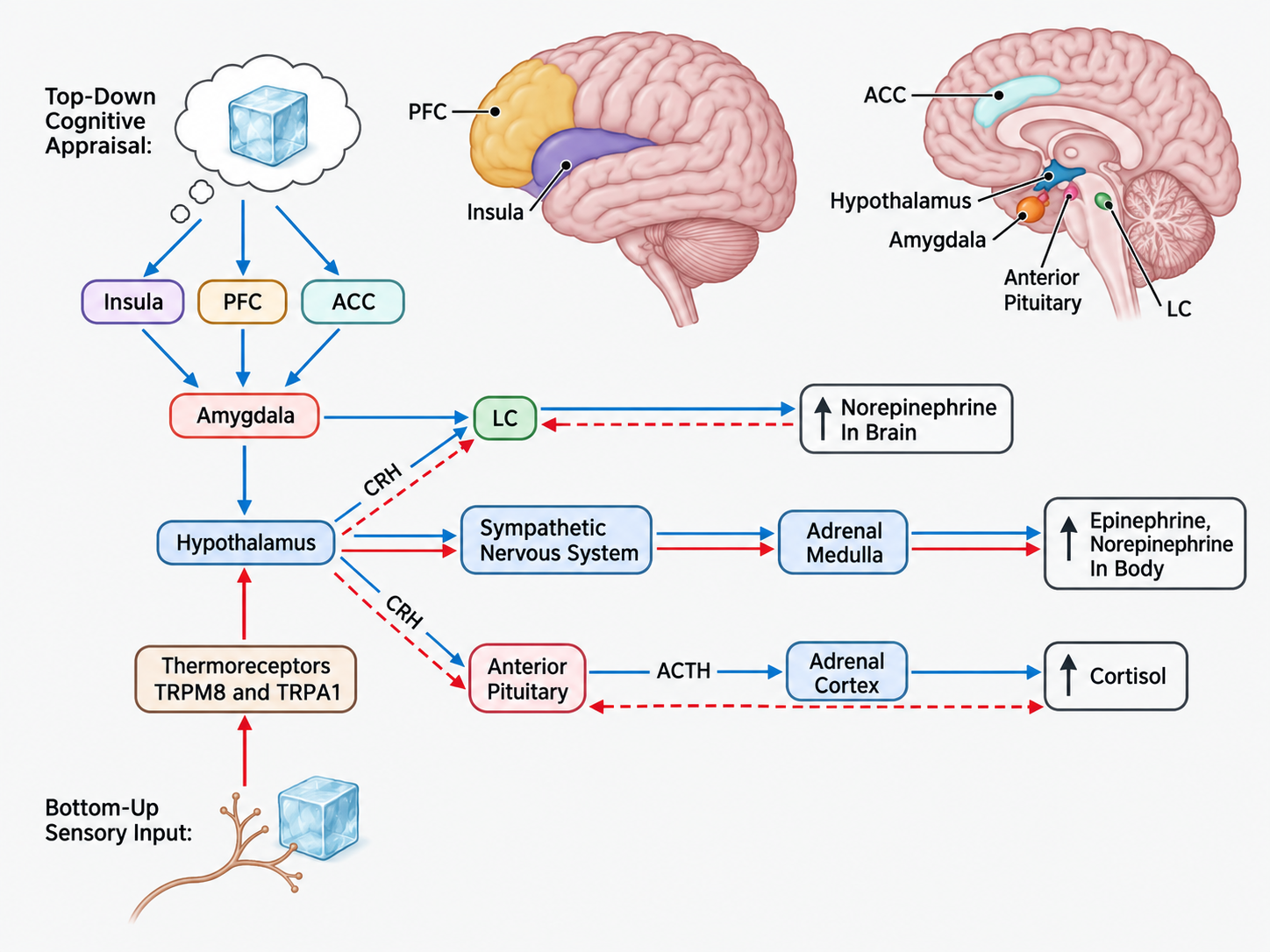
Bottom-up sensory input begins when peripheral thermoreceptors (TRPM8/TRPA1) detect rapid changes in skin temperature and transmit signals to the hypothalamus. This initiates activation of the sympathetic nervous system and hypothalamic-pituitary-adrenal (HPA) axis, stimulating the release of norepinephrine and epinephrine from the adrenal medulla, and cortisol from the adrenal cortex. Concurrently, top-down cognitive appraisal involves brain regions such as the prefrontal cortex (PFC), anterior cingulate cortex (ACC), insula, and amygdala. These regions mediate the emotional, attentional, and behavioral responses to cold stress, modulating the subjective experience of cold exposure. Bottom-up response is indicated by red lines; top-down response is indicated by blue lines. Dotted lines indicate theoretical mechanism.
Catecholamines
Among various catecholamines, norepinephrine shows the most sustained elevation after cold exposure, making it a key candidate mediator of physiological and possible neurological effects.
The blood-brain barrier prevents the direct transport of plasma norepinephrine into the brain, but indirect pathways could link increases in peripheral norepinephrine to central catecholamine activity.
Norepinephrine levels in the brain are strongly regulated by locus coeruleus (LC) activity, which can be modulated by peripheral baroreceptor signaling and corticotropin-releasing hormone (CRH) during acute stress. Since cold exposure activates both SNS and stress signaling, it is possible that cold-induced elevation in peripheral norepinephrine parallels increased central norepinephrine transmission through the induction of LC activity.
The LC-norepinephrine system regulates arousal and threat processing, and repeated, controlled activation of this system through cold exposure may lead to stress adaptation that blunts hyperreactivity over time, a mechanism with potential implications for mood and anxiety regulation.
Dysregulation of catecholamines, such as norepinephrine and dopamine, has been linked to the pathophysiology of depression, anxiety, post-traumatic stress disorder, and attention-deficit hyperactivity disorder. Several medications that are used to treat these disorders target the catecholamine systems to improve symptoms.
These promising observations highlight the need for future research to determine whether acute cold exposure reliably increases central catecholamine transmission in humans, and whether these effects have clinical significance for psychiatric disorders.
HPA axis and cortisol
Acute cold exposure causes a transient increase in HPA-axis activity and cortisol secretion in humans. Repeated cold exposure appears to lead to habituation of the HPA axis and attenuated cortisol responses over time.
The initial increase in cortisol response may partly reflect anticipatory psychological stress before cold exposure rather than the physiological effects of cold alone. Habituation to the psychological stress through repeated cold exposure may explain the observed attenuation of cortisol response.
These observations suggest that cold therapy may serve as an adaptive stressor to support more balanced HPA axis function in clinical populations. This mechanism remains speculative because no human trial has linked cold-induced changes in cortisol to improvements in a psychiatric disorder.
Immune and inflammatory response
Pro-inflammatory cytokines may contribute to the pathophysiology of stress-related disorders by modulating neurotransmitter function, neuroplasticity, and HPA axis activity. Higher levels of these cytokines have also been linked to various mental health disorders, including depression and anxiety.
It has been proposed that cold exposure exerts anti-inflammatory effects through stress-induced changes in cytokine profiles and immune cell activity. Cold stress can trigger the release of norepinephrine and cortisol, which in turn influence immune functions by redistributing white blood cells and modulating inflammatory signaling. Proponents have proposed that these mechanisms shift immune function toward a more regulated, anti-inflammatory state. Evidence for this anti-inflammatory effect is mixed. Studies have reported differing changes in immune cells and inflammatory cytokines, and mental health improvements observed after cold exposure have not been linked to reductions in systemic inflammatory markers.
Future research is needed to determine the extent to which cold exposure reliably reduces systemic inflammation and whether such a reduction contributes to mental health benefits. Reported psychological benefits may also reflect changes in self-efficacy, mastery, stress tolerance, or expectancy rather than the physiological effects of cold alone. Cold exposure can also carry risks, including arrhythmias and hypothermia, and people with conditions such as coronary artery disease or Raynaud’s disease may require direct medical supervision.
Overall, the review concludes that cold exposure may produce short-term changes in mood and stress-related physiology, but evidence for lasting mental health benefits remains limited. The proposed catecholamine, HPA-axis, and inflammatory mechanisms remain preliminary, and adequately powered randomized trials with standardized protocols and active controls are needed before cold exposure can be considered an established mental health intervention.
Journal reference:
- Browning, L., Fabiano, N., Luu, B., Brinkmeier, K., & Puder, D. (2026). Is cold exposure a viable lifestyle intervention for mental health? Reviewing evidence and mechanisms. Molecular Psychiatry, 1-9. DOI: 10.1038/s41380-026-03878-9, https://www.nature.com/articles/s41380-026-03878-9
 Long-term study outlines unexpected findings about tick populations