A new review follows Shatavari from gut microbes and estrogen signaling to inflammatory and neurochemical pathways, examining how an Ayurvedic herb might influence the biology connecting the gut and brain.
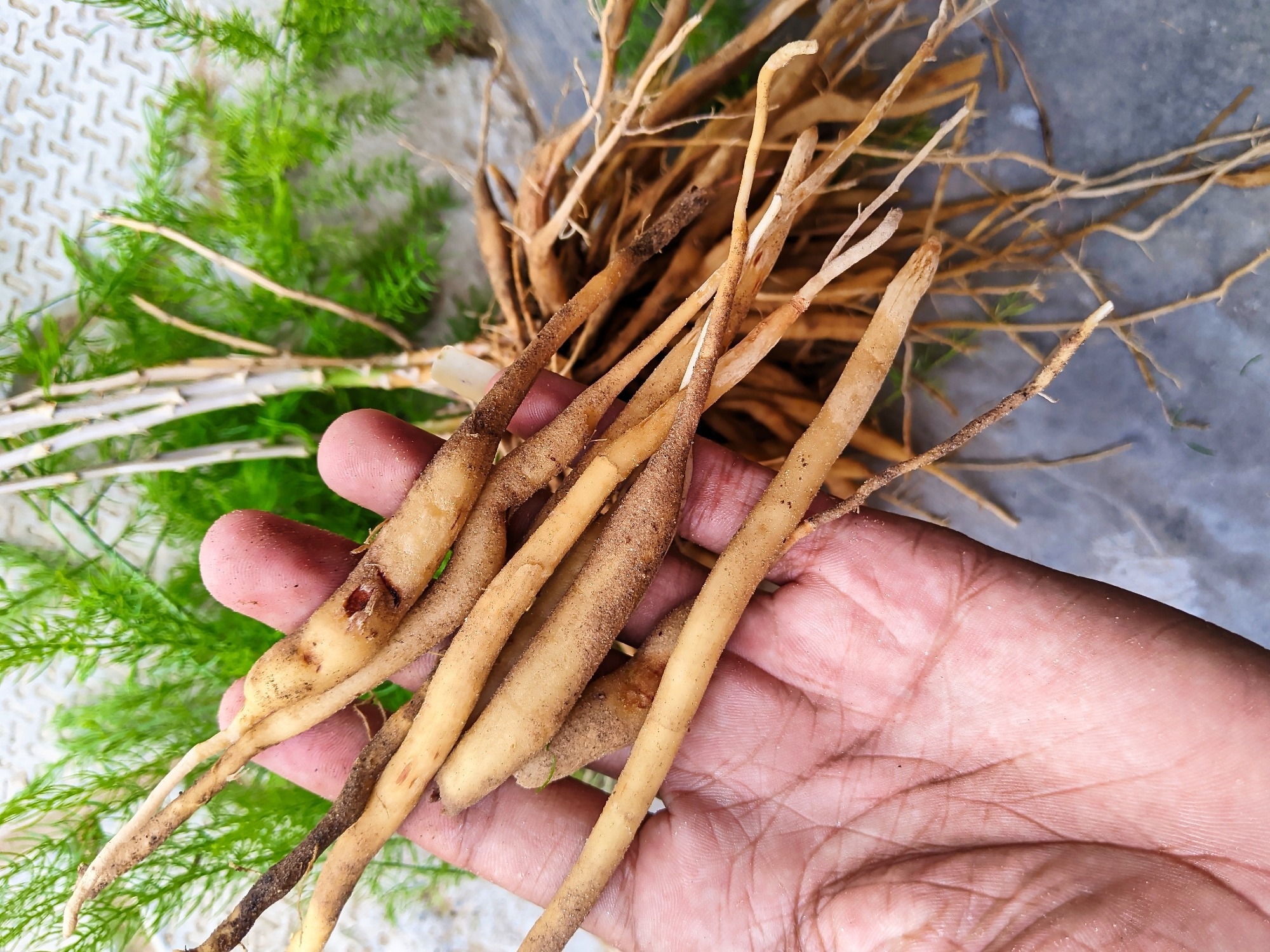
Review: Unraveling the Mechanistic Insights of Asparagus Bioactives to Promote Cognitive Health: Insights from the Gut–Brain Axis. Image Credit: Azay Photography / Shutterstock
In a recent review published in the journal Nutrients, researchers synthesized the latest scientific evidence on the neuroprotective and adaptogenic potential of Asparagus racemosus (“Shatavari”) in the context of human cognitive health.
The authors collated data from molecular docking analyses, cell-free biochemical assays, preclinical in vitro cell culture experiments, in vivo animal models, and human clinical studies to examine how Shatavari’s bioactive constituents may interact with the microbiota-gut-brain axis (MGBA) to influence the central nervous system (CNS).
Review findings revealed that one of Shatavari’s prominent steroidal saponins, Shatavarin IV, has a molecular structure that partly resembles the female hormone estrogen. Shatavarin IV can modulate estrogen receptor signaling, though its affinity for estrogen receptors is substantially lower than that of 17β-estradiol. Preclinical evidence also links the compound with BDNF signaling, synaptic plasticity, and inflammatory pathways.
Concurrently, the authors noted that the herb's abundant prebiotic fructooligosaccharides (FOSs) nourish beneficial intestinal bacteria. FOSs were associated with improved gut barrier integrity and may indirectly influence critical neurotransmitter systems, including serotonin and gamma-aminobutyric acid (GABA), through microbial metabolites, inflammatory signaling, and tryptophan metabolism. Gut-derived serotonin itself does not cross the blood-brain barrier.
The authors concluded that A. racemosus is a candidate multi-target botanical with promising but still largely preclinical evidence of effects on neuroinflammation, synaptic plasticity, and neuroendocrine regulation. They call for further mechanistic, pharmacokinetic, clinical, and safety research before broader use in nutrition and pharmacology.
Background
The paper describes an increase in reported cognitive decline associated with lifestyle-related conditions and discusses dietary patterns, metabolic dysregulation, oxidative stress, neuroinflammation, and chronic stress as contributing factors. The authors describe how diets rich in refined sugars and saturated fats can alter insulin signaling and redox homeostasis, while chronic stress may affect cellular processes linked with neuronal health.
The authors also focus on women during endocrine transition periods, including menopause and the postpartum period, when estrogen and progesterone levels can change markedly. Reductions in estrogen levels during these windows have been associated with impaired brain-derived neurotrophic factor synthesis and increased monoamine oxidase (MAO) activity, both of which may contribute to changes in mood, neurotransmitter availability, and cognition.
Researchers have recently identified an additional complication in these multisystemic associations: brain health depends intimately on bidirectional communication between the gastrointestinal tract and the brain, including signaling through the enteric nervous system (ENS; “second brain”). Around 90% to 95% of the body’s serotonin is produced by intestinal enterochromaffin cells rather than enteric neurons. Gut-derived serotonin does not cross the blood-brain barrier, but the microbiota can influence central serotonergic signaling indirectly by altering tryptophan metabolism, inflammatory activity, and microbial metabolite production.
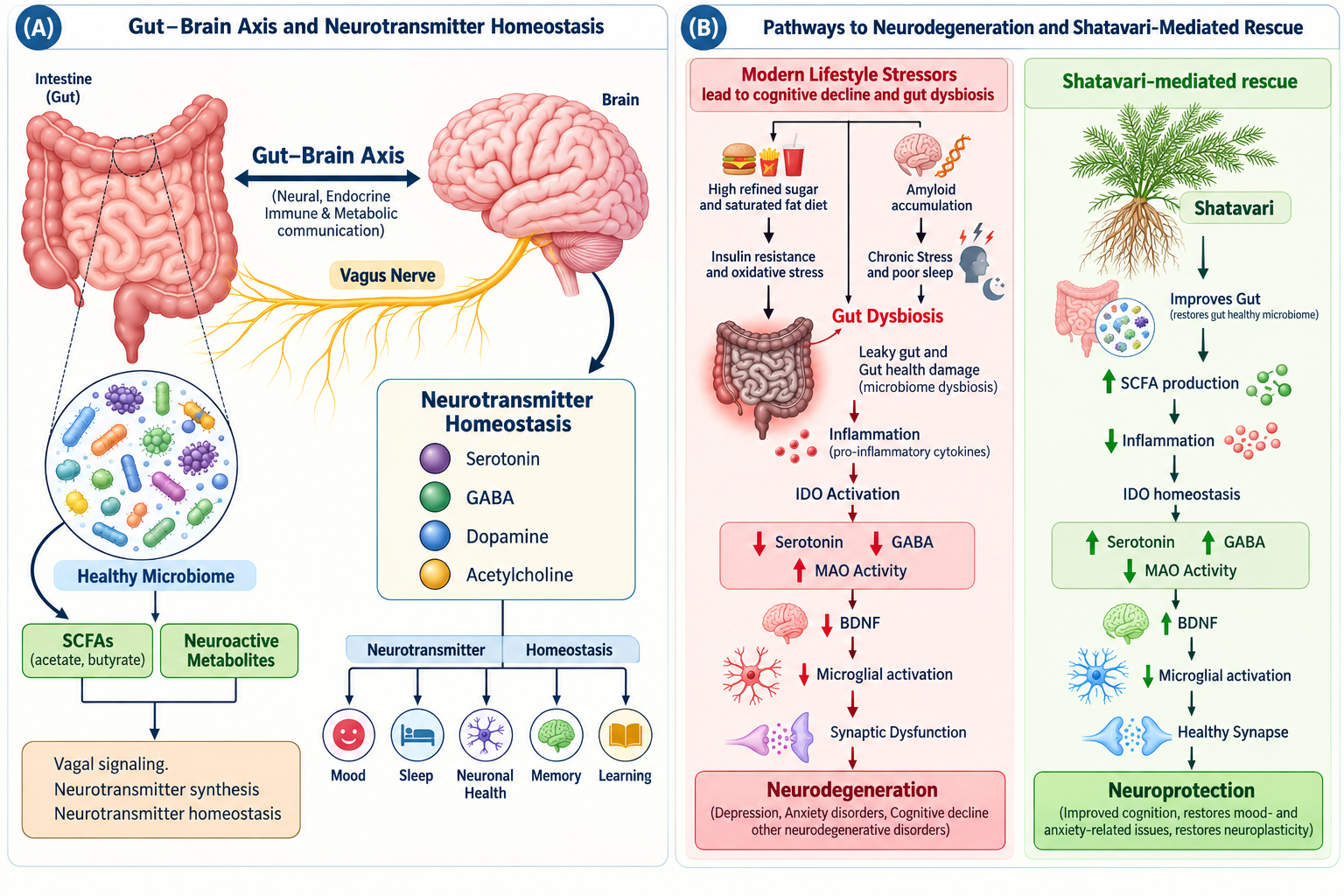
Gut microbiota and the gut–brain axis. (A) Schematic representation of a healthy microbiota–gut–brain axis (MGBA), illustrating microbial homeostasis, balanced neurotransmitter signaling, and maintenance of neuronal and systemic health. (B) Comparison of gut-dysbiosis-induced alterations in the microbiota–gut–brain axis and their plausible restoration by Asparagus racemosus (Shatavari).
About the review
The present review aimed to evaluate whether the Ayurvedic botanical Asparagus racemosus, colloquially “Shatavari”, contains bioactive compounds with neuroprotective, prebiotic, or endocrine-modulating properties that could contribute to cognitive health, thereby informing future neurobiological research and the development of Shatavari-based formulations.
The authors collated and synthesized published literature on the structural characterization of Shatavari-derived phytochemicals, including steroidal saponins (Shatavarins I-IV and sarsasapogenin), flavonoids, and prebiotic polysaccharides. The authors considered evidence ranging from computational predictions and biochemical assays to cultured cells, animal models, and human studies.
Evidence on the potential roles of these bioactives in microbiome-mediated gut barrier function, short-chain fatty acid (SCFA) production, and vagus nerve signaling, as well as neuroendocrine stress regulation and monoamine oxidase inhibition, was included in the synthesis. The review also examined serotonergic and GABAergic signaling, oxidative stress, neuroinflammation, BDNF-related pathways, and estrogen receptor signaling.
Finally, the authors summarized preclinical models and clinical studies assessing the effects of Shatavari root extracts and bioactive constituents on cognition, stress-related pathways, and menopausal symptoms in women. The clinical evidence was more limited than the mechanistic and animal evidence and did not establish Shatavari as a treatment for neurodegenerative or neuropsychiatric disease.
Review findings
The evidence ranged from computational and mechanistic studies to cell and animal experiments, with a smaller body of human research.
The authors described Shatavari root fructooligosaccharides as fermentable prebiotics that can promote the growth of beneficial Bifidobacterium and Lactobacillus species while potentially limiting opportunistic microorganisms through substrate competition.
The proliferation of these beneficial microbes and increased oligosaccharide fermentation, producing acetate and lactate, can promote the secondary growth of Faecalibacterium prausnitzii and similar butyrate producers, thereby increasing SCFA production. This microbial cross-feeding provides a proposed route through which Shatavari-derived fibers could influence intestinal physiology.
The review proposes that these SCFAs may strengthen the intestinal barrier by serving as an energy source for colonocytes and by increasing the expression of tight junction proteins such as occludin, claudins, and zonula occludens-1. These effects could reduce intestinal permeability and the translocation of microbial endotoxins such as lipopolysaccharide (LPS).
Cellular investigations further showed that Shatavarin IV and a standardized ethanolic root extract containing 5% Shatavarin IV (SheVari4) reduced inflammatory and oxidative signaling in LPS-stimulated human neuroblastoma (SH-SY5Y) cells in vitro.
The SheVari4 intervention was observed to reduce pro-inflammatory interleukin-6 (IL-6; -46%) and tumor necrosis factor-alpha (TNF-α; -50%) while raising levels of anti-inflammatory interleukin-10 (IL-10; approximately 2.74-fold) and transforming growth factor-beta 1 (TGF-β1; approximately 4.4-fold) in the cell model. Experiments involving BDNF and a Trk inhibitor implicated the TrkB-BDNF pathway, but these cellular findings do not establish cognitive benefits in humans.
Separately, research on methanolic Shatavari root extract in cell-free enzyme assays found that the extract competitively inhibited acetylcholinesterase (AChE; half-maximal inhibitory concentration [IC50] = 12.35 milligrams per milliliter [mg/mL]) and monoamine oxidase isoforms (MAO-A and MAO-B). These results suggest a possible mechanism through which enzymatic breakdown of acetylcholine and monoamines could be reduced, rather than demonstrating prolonged neurotransmitter availability in the human brain.
Finally, an 8-week RCT in perimenopausal women (80 randomized, with 73 completing the study per protocol; 300 mg of Shatavari root extract daily) demonstrated a 42.6% reduction in total Menopause Rating Scale scores (compared with 5.5% on placebo). The intervention group also showed a 29.6% reduction in perceived stress and a 32.8% increase in circulating estradiol, with no adverse events reported. These findings suggest benefits for perimenopausal symptoms and short-term tolerability of the root extract, rather than establishing the safety or cognitive efficacy of Shatavarin IV itself.
Conclusions
This review presents A. racemosus as a botanical candidate for further study in cognitive and gut-brain health, rather than as a clinically established therapy. Shatavari may help maintain intestinal barrier integrity, reduce oxidative and inflammatory stress, and engage estrogen-related neuroprotective pathways, but much of this evidence comes from computational, cellular, and animal studies.
The authors caution that many proposed mechanisms remain experimentally unconfirmed, and it is not yet known whether Shatavarin IV or its metabolites reach the mammalian brain at active concentrations. Further pharmacokinetic and clinical studies are needed to establish bioavailability, dosing, brain exposure, safety, and reproducibility before Shatavari can be developed as a reproducible clinical intervention for cognitive or neuropsychiatric disorders.
Journal reference:
- Das, D., Dasgupta, S. B., Banik, S. P., & Bagchi, D. (2025). Unraveling the Mechanistic Insights of Asparagus Bioactives to Promote Cognitive Health: Insights from the Gut–Brain Axis. Nutrients, 18(18), 3016. DOI: 10.3390/nu18183016, https://www.mdpi.com/2072-6643/18/18/3016
 Men's fertility-friendly underwear may be briefs without benefits