As measles resurges across the globe, public health experts argue that the outbreaks may reveal far more than gaps in vaccine coverage, raising a bigger question about what the push for eradication could mean for health systems worldwide.
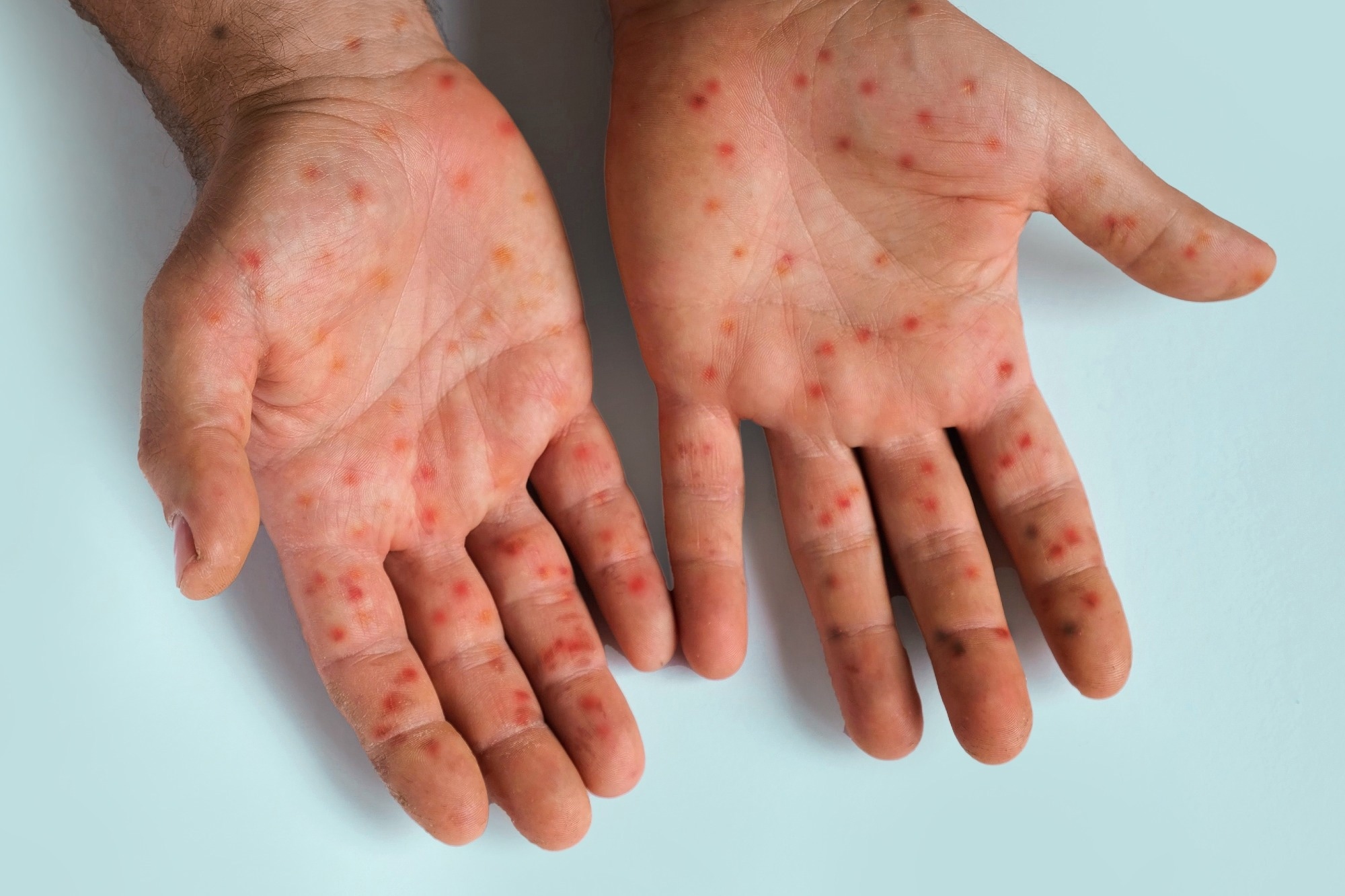
Commentary: Measles as tracer and tugboat: Why eradication can strengthen immunization systems. Image Credit: Marina Demidiuk / Shutterstock
A recent commentary published in the journal Human Vaccines & Immunotherapeutics argues that measles can serve as both a tracer of health system performance and a potential tugboat for strengthening immunization systems.
Measles has re-emerged worldwide in recent years, with large outbreaks documented in all regions. At least 51 countries experienced disruptive or large outbreaks (≥ 20 cases per million) from February 2025 to January 2026. This resurgence has often been described as a failure of immunization programs. The authors note that this interpretation is accurate but incomplete.
Measles outbreaks provide important information about the health of vaccination programs and public health systems. They expose deficits in surveillance, vaccine delivery, funding, community confidence, and program management. For the authors, measles serves as a sensitive indicator of health system performance.
Measles functions as a tracer of health system performance
Because of measles' extraordinary transmissibility, consistently high coverage with two doses of measles-containing vaccine across all communities is needed to sustain transmission disruption. Outbreaks can occur even with modest gaps in immunity. This makes measles a real-time stress test of the performance of immunization programs. Measles is often one of the earliest diseases to resurge when routine immunization systems weaken.
The tracer role also extends well beyond vaccination coverage, as outbreaks often uncover deficits in laboratory networks, disease surveillance, risk communication, outbreak preparedness, and community engagement. Measles incidence may therefore provide a more informative measure of immunization system performance than administrative vaccination coverage estimates alone, particularly where data quality is uncertain.
Experience from measles elimination programs shows that national averages of vaccination coverage can conceal sub-national inequities. Pockets of under-immunized populations sustain transmission, threatening elimination gains. Measles can also reflect health inequity, as outbreaks often affect communities that face broader barriers to healthcare. Within the Immunization Agenda 2030 framework, identifying these populations is central to reaching people consistently missed by health services. Actions to address measles susceptibility often address broader primary healthcare deficits.
The equity argument extends beyond the benefits that might follow eradication. The authors contend that equity is required for eradication itself because persistent pockets of susceptibility can sustain transmission. Reaching underserved populations can therefore require stronger community health worker networks alongside vaccine supply, surveillance, and cold-chain infrastructure.
Measles as a tugboat for more robust immunization systems
The late William "Bill" H. Foege, a leader in smallpox eradication, made two arguments for measles eradication at the Global Technical Consultation (GTC) in 2010. First, measles eradication would reduce health inequalities, given that disease burden is disproportionately high in disadvantaged communities. Second, it could serve as a tugboat leading to more robust immunization systems.
Measles eradication represents a disease-specific objective that can drive improvements in immunization programs and health systems. Critics argue that vertical initiatives could divert resources from broader health priorities. The authors argue that measles differs because successful eradication requires strong surveillance, high routine coverage, reliable supply chains, trusted community engagement, and accountable governance. These are also core features of effective immunization systems.
In their view, measles eradication does not compete with health-system strengthening because it depends on stronger systems and can accelerate their development. The 2010 GTC concluded that eradicating measles is both technically and biologically feasible, but identified inadequate investment, weaknesses in immunization systems, and limited political commitment as major barriers.
Countries need to achieve and maintain high vaccine coverage, support laboratory networks, build and sustain sensitive surveillance networks, determine outbreak origins, and maintain public confidence in vaccination to eradicate measles. Progress toward eradication can drive investments in routine immunization services, cold-chain systems, workforce development, laboratory capacity, disease surveillance, political accountability, program management, data quality, program monitoring, and community engagement.
The authors also cite economic analyses estimating that measles vaccination returns about US$74 in societal benefits for every US$1 invested. They note that eradication could avoid the continuing costs associated with repeated outbreaks and emergency responses.
Concluding remarks
The authors frame the recent measles resurgence as both a warning of widening immunity gaps, declining vaccination coverage, health inequalities, and limitations in immunization systems, and an opportunity to strengthen health systems. Measles can act as both a tracer and a tugboat: outbreaks highlight health system limitations, while the pursuit of measles eradication can drive investment in the systems needed to address them.
The benefits of strengthening health systems for eradicating measles extend well beyond immunization. Recent health emergencies, such as mpox, coronavirus disease 2019 (COVID-19), Zika virus disease, and Ebola virus disease, have underscored the importance of laboratory capacity, disease surveillance, trusted communication, and rapid response. Many of these capacities are needed for eradicating measles.
The authors argue that investment in measles elimination can produce wider benefits for pandemic preparedness and health security. Community engagement platforms developed for measles outbreak response and vaccination can also provide a foundation for future crisis communication. Decisions taken now will determine whether measles remains a recurring scourge or becomes a catalyst for stronger, more equitable immunization systems.
 Why pregnancy vaccination looks very different in Germany than it did 19 years ago