A simple handgrip test may reveal more than muscle power in very old adults, offering insight into how physical strength aligns with brain activation in regions that support working memory.
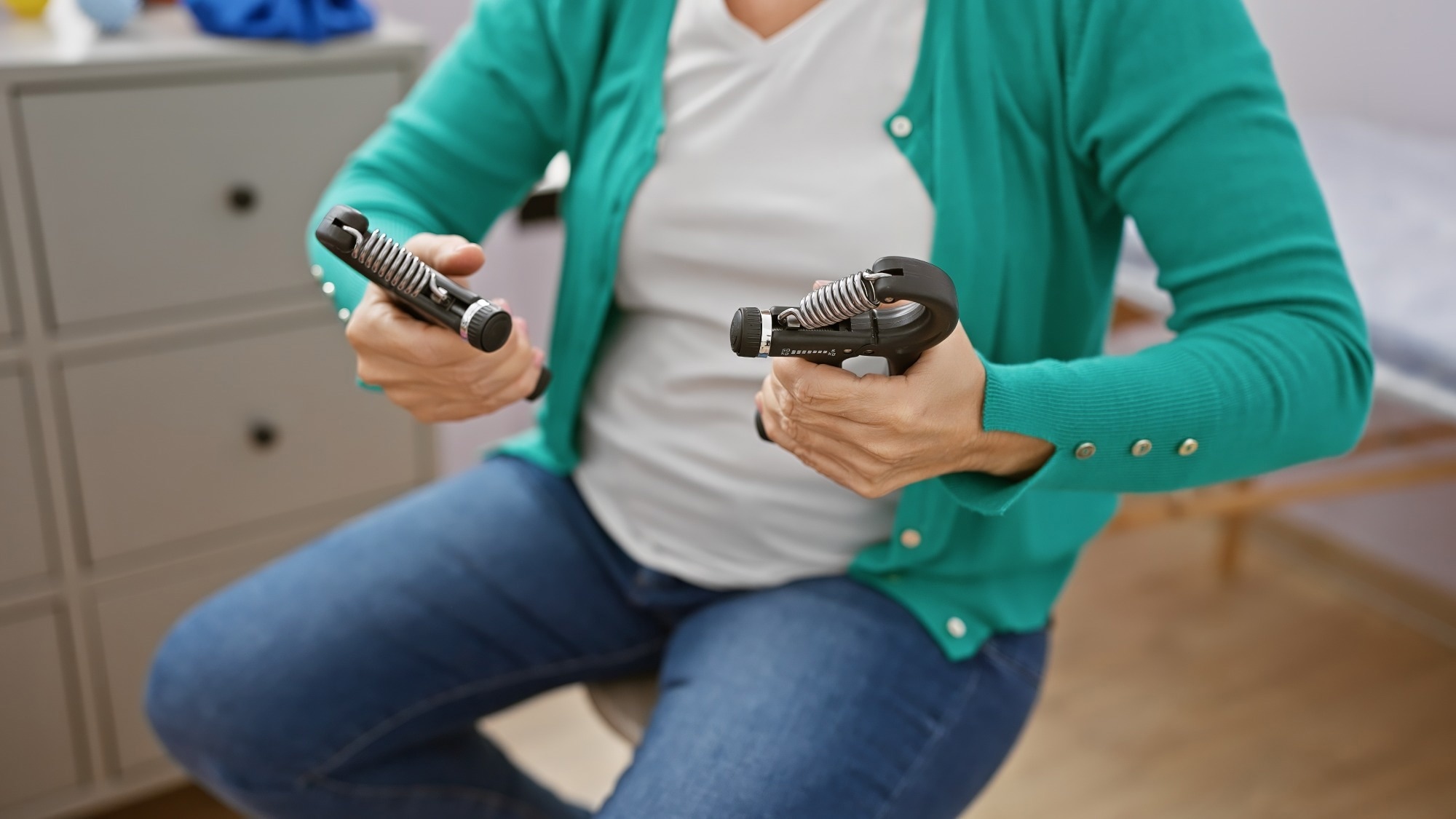 Study: The relationship between muscle strength and working memory in older adults: fNIRS-based evidence. Image credit: Krakenimages.com/Shutterstock.com
Muscle strength is reliably associated with cognitive function, yet little is known about its effect on working memory. A recent study published in the journal Frontiers in Psychology examined correlations between working memory and muscle strength.
Grip strength declines alongside cognitive aging
Grip strength is an important marker of cognitive performance, perhaps because both share the same neural pathways. Muscle strength and cognitive function wane with age. Initially, muscle mass drops by about 3 % to 8 % per decade from approximately 30 to 60 years, followed by a steeper decline.
Peak muscle strength at age 40 is, on average, about 16 % lower than in young adults. From 60 years on, the difference is about 41 %.
In China, dementia is often indicated by mild cognitive impairment, which occurs in ~12 % (60–69 years), ~19 % (70–79 years), ~24 % (80–89 years), and ~33 % (≥90 years). Corresponding dementia rates are ~3 % (60–69 years), ~8 % (70–79 years), ~14 % (80–89 years), and ~31 % (≥90 years).
Working memory is central to executive brain function. It stores and processes information. It typically decreases over time, the inflection point being at 60 years. Marked loss of working memory increases dementia risk.
The prefrontal cortex is crucial to working memory. Earlier studies in older adults have demonstrated that short-term exercise interventions are associated with improved hemodynamics in this brain region, potentially explaining, in part, the correlations with better cognitive function.
Other studies suggest that muscle strength may also mediate cognitive function in this age group. No studies have specifically focused on higher-order cognition in relation to muscle strength compared with overall cognition.
Testing strength and memory in adults over 80
The present study sought to identify associations between muscle strength and working memory/prefrontal cortex activation in older adults, using an N-back task and functional near-infrared spectroscopy (fNIRS), respectively.
The N-back test requires participants to quickly and accurately determine whether the currently displayed number matches one presented 0, 1, or 2 steps earlier, thereby varying the working memory load.
fNIRS is a noninvasive technique that indirectly reflects cortical hemodynamic changes. By measuring infrared light scattering and absorption by natural chromophores, such as oxygenated hemoglobin, it gathers biochemical information that provides indirect visualization of neural activation in the region of interest. This method is based on the correlation between brain activity and changes in cerebral blood flow.
The study included 192 older adults recruited from nursing homes and community centers in Shanghai and Suzhou, of whom 164 were included in the final analysis. Their mean age was 81.3 years.
At the first visit, their overall cognitive function and muscle strength were evaluated. The latter was measured through normalized grip strength and 30-second sit-ups (reflecting upper- and lower-body strength, respectively). During the second visit, the N-back test and fNIRS were performed.
Four hierarchical regression models were constructed to examine each of the assessed outcomes. Model 0 included age, sex, and overall cognitive performance (MoCA score). Models 1–3 additionally adjusted for physical activity (IPAQ score) and years of education. Adding normalized grip strength and/or normalized sit-up performance determined whether muscle strength independently predicted working memory performance and prefrontal activation beyond age and baseline cognition.
Grip strength shows independent cognitive links
Normalized grip strength was uniquely linked to working memory performance and prefrontal cortex activation.
Working memory
With increased grip strength, the reaction time on the N-back test was decreased.
Sit-ups showed a weaker correlation with working memory. When both measures were included simultaneously, only grip strength showed a significant association with working memory. Grip strength may more accurately reflect working memory performance because both depend on central nervous system control.
Prediction accuracy was highest with the high-load memory tasks. For both strength measures, behavioral performance differences were generally not significant at the lowest task step, although region-specific associations between grip strength and dorsolateral prefrontal activation were still detectable even at 0-back.
The researchers concluded that grip strength may serve as a potential physiological marker of working memory and associated prefrontal cortex activation. The association between sit-ups and working memory likely stems from the same physiological characteristics underlying grip strength.
Prefrontal cortex activation
Increased grip strength (but not sit-ups) was also correlated with higher prefrontal cortex activation. However, there was a clear functional hierarchy in the responses.
Grip strength was most strongly associated with prefrontal cortex activation in the left dorsolateral region (all participants being right-handed), followed by the ventrolateral and then the frontopolar area. Similar but weaker patterns were found on the right side.
The researchers attribute this to a functional gradient reflecting varying neurovascular coupling efficiencies across the prefrontal cortex. In particular, the dorsolateral prefrontal cortex, which drives working memory, requires rapid and reliable hemodynamic responses.
Muscle strength may be associated with more efficient hemodynamic responses. The hypothesized increase in neurovascular coupling efficiency with greater muscle strength could explain why activation of this cortex subregion is most strongly associated with muscle strength. However, the authors note that greater activation could also reflect compensatory recruitment rather than purely enhanced neural efficiency, and therefore, the functional interpretation remains tentative.
Cognitive load modulation
The cognitive load moderated the outcomes. Associations were generally strongest at higher task loads. While some prefrontal subregions, particularly the ventrolateral and frontopolar areas, showed little or no association at the 0-back step, the dorsolateral prefrontal cortex still demonstrated a detectable relationship with normalized grip strength even at the lowest load.
This agrees with earlier studies that have shown the nonlinear nature of hemodynamic responses. At the lowest load, cerebral autoregulation may adequately meet the increased metabolic demand of the brain. As the cognitive load increases, stronger neurovascular coupling is required. At this point, individuals with a higher hemodynamic reserve, which may be associated with greater muscle strength, will show stronger correlations between brain activation and muscle grip.
This supports hypotheses of bidirectional pathways between muscle strength and cerebrovascular health, mediated by mechanical and chemical signals, with higher cognitive areas such as the prefrontal cortex being especially sensitive to deficits.
The poor correlation between sit-ups and working memory could have multiple explanations. One, the sit-up test requires lower-limb muscle strength and other factors, such as balance, coordination, and willpower, that reduce its ability to consistently mirror working memory.
The current study also included mostly people in their eighties. Low physical strength and the lack of variability between individual measurements could also explain the negative findings. More accurate and sensitive measures should be used in future studies.
Limitations
Study limitations include potential confounding factors, such as chronic medical conditions, that may have influenced both muscle strength and cognitive outcomes. In addition, the relatively nonspecific methods used to define prefrontal regions of interest in the fNIRS analyses reduce confidence in the precise localization of activation patterns.
The sample predominantly comprised very old adults in their 80s, recruited from nursing homes and community centers, which may limit the generalizability of the findings to younger or more diverse populations. Finally, because the study was cross-sectional, the possibility of reverse causality cannot be ruled out, and causal relationships between muscle strength and cognitive function cannot be established.
Grip strength may signal brain resilience
The level of activation of the prefrontal cortex is more closely correlated with normalized grip strength than with normalized 30-s sit-up in older adults. This association shows a clear functional relationship with different subregions of the prefrontal cortex, and is also modulated by task complexity.
This highlights that standardized grip strength may be a key biomarker linked to the physical-mental health nexus, informing the development of resistance training interventions aimed at preserving cognitive health.
Though biologically plausible, these findings should be cautiously interpreted. They need to be validated by rigorous interventional trials that causally demonstrate cognitive improvement.
Download your PDF copy here!
 Aerobic exercise boosts executive function in postmenopausal women