If cigarettes were engineered for addiction, are some ultraprocessed foods following the same blueprint? A new analysis reveals how industry design strategies may be shaping modern diets, and why policymakers may need to respond.
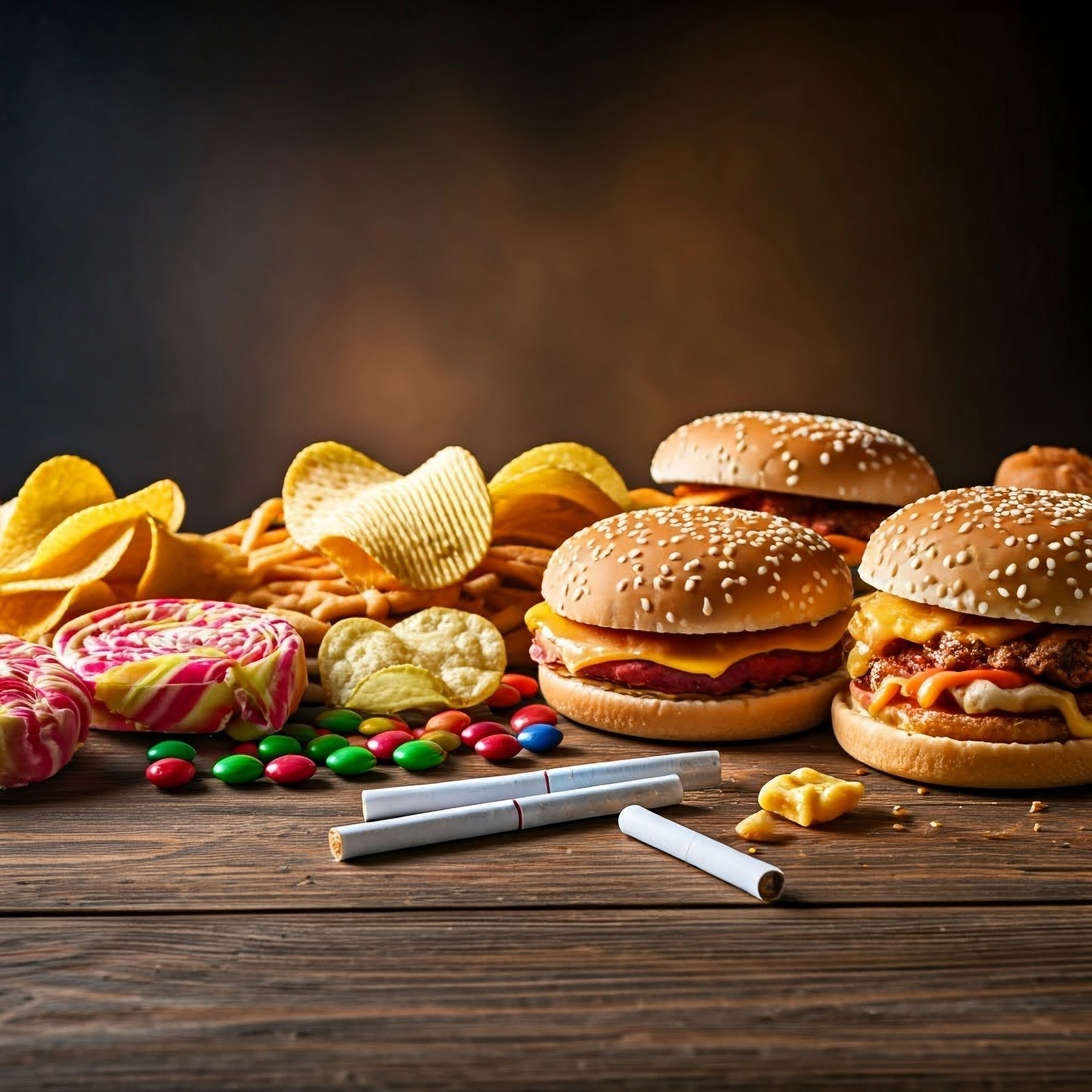 Study: From Tobacco to Ultraprocessed Food: How Industry Engineering Fuels the Epidemic of Preventable Disease. Image credit: Shutterstock AI/Shutterstock.com
Ultraprocessed foods (UPFs) are designed to provide a burst of intense flavor as quickly as possible, driving compulsive consumption and appetite dysregulation. A new conceptual analysis published in The Milbank Quarterly explored how the UPF industry borrowed its tactics from the tobacco industry. The authors emphasize the need for similar regulatory measures to minimize their public health threat.
Tobacco industry tactics echoed in food policy
UPFs are ubiquitous in their distribution and consumption. Shelf-stable, convenient, and extremely palatable, they contribute most of the daily food intake in industrialized countries, including the USA.
However, multiple observational studies have linked their use to higher risks for cardiometabolic disease, cancer, neurodegenerative disease, and premature death. Despite this, their continuing widespread marketing and scant regulatory scrutiny echo the public health experience with the tobacco industry.
Cigarettes are industrially engineered substances designed for fleeting but potent pleasure. The authors view UPFs as cigarette-like, deliberately designed, addictive products that “maximize biological and psychological reinforcement and habitual overuse.”
The current analysis identifies parallel strategies used by both industries. Both industries campaigned intensively to capture the public market, make their products attractive to the masses, and portray themselves as healthy choices, all to make enormous profits.
In answer to the question of whether UPFs are addictive, the authors show that these products align with addiction criteria and are otherwise harmful as well. However, they note that whether UPFs meet formal addiction classifications remains debated, and argue that regulatory action does not depend on resolving that debate. Food industry documents reveal that UPF design encourages the elements of addiction: reinforcement, craving, and compulsive use. These products are designed to stimulate reward circuitry (the mesolimbic dopamine pathway), a central focus of addiction science.
In this pathway, dopamine, a stimulatory neurotransmitter, is released in response to certain cues. This encourages the repetition of the behavior, a process called reinforcement learning. This is leveraged by the UPF industry to create products that provide reinforcers quickly, predictably, and with maximal sensory appeal.
With cigarettes, the reinforcer is carefully titrated nicotine, blended with other additives to increase sensory pleasure and prevent aversion while providing the nicotine hit. Nicotine has been shown in animal models to raise dopamine signaling roughly 150–250% above baseline, building addictive behavior.
With UPFs, carbohydrates trigger a dopamine increase, especially simple sugars like sucrose, which in some models produce dopamine responses comparable in magnitude to nicotine, typically around 150% above baseline and in some cases up to 300% depending on concentration. This is presumably because carbohydrates provide the primary fuel for brain cells and are quickly converted into usable energy compared to fats or proteins.
Fats provide over twice the energy as carbohydrates but tend to produce smaller or slower dopamine increases, often in the range of 120–140% above baseline when consumed orally, and increase dopamine only mildly.
UPFs provide stimuli that go far beyond normal reward circuit function. They may disrupt normal satiety regulation and reinforce habitual overeating, contributing to a higher population-level risk for multiple diseases. Multiple observational studies have shown this link, which is the strongest evidence to date, though not definitive proof of causality, that these are harmful to health.
The normal restraint exercised over the consumption of carbohydrates and fats in their natural or minimally processed form indicates the importance of processing in driving compulsive UPF consumption.
The story of cigarettes
Natural tobacco leaves are bitter and, unless processed, are poisonous, which reduces nicotine levels and allows different forms of delivery. Early techniques included drying and cutting them, and adding sugar or other masking substances.
Rolling papers heralded the advent of cigarettes, offering a smoother and faster nicotine delivery than smoking pipes or chewing tobacco. With advanced drying techniques and industrial rolling machines, cigarettes became mass-produced, cheap, widely available, and easily consumed. Finally, they were carefully formulated to reach their modern form.
The UPF story
Processing food does not automatically render it harmful to health. Stone grinding and milk fermentation are obvious examples. These traditional processes preserved the food matrix and structure to a large extent.
The Industrial Revolution introduced large-scale food processing and distribution. Machines, chemical processes, and government policies synchronized to promote the use of processed refined carbohydrates and fats, like white flour, crystal sugar, and hydrogenated oils.
Inexpensive, easily available, easy to use, and more shelf-stable, these ingredients formed the basis for UPFs that were designed to look, feel, and taste better than natural food, while being nutrient-poor and habit-forming.
UPF design is intended to promote habitual repeated consumption of these products, by engineering five key aspects:
- dose optimization – to produce intense but not overwhelming pleasure and induce craving for more of the same
- delivery speed – stripping away the natural food matrix to ensure extremely rapid digestion, delivering reinforcing elements almost immediately to the brain
- hedonic engineering – ensuring a rapid decline in sensory pleasure, thus inducing craving
- environmental ubiquity – making sure UPFs are available everywhere all the time to tempt the consumer
- deceptive reformulation – reformulated and marketed to apparently reduce associated harm, without meaningful benefit and while retaining addictive potential
Some candies can reach approximately 81% sugar by weight, and even certain savory snacks may deliver around 70% carbohydrates. Conversely, carbohydrate-rich sweet whole foods like bananas offer 23%.
When added to refined carbohydrates, fat delivers a powerful taste boost. Many commonly consumed addictive UPFs (chocolate, pizza, and ice cream) contain up to 50% carbohydrates and up to 35% fats. Fats and carbohydrates synergize to more than triple dopamine levels in reward circuits.
To enhance delivery speed, UPFs are “‘prechewed,’ ‘presalivated,’ and ‘predigested’” by mechanical and chemical processing. In contrast, gut processing of natural foods results in slower and more sustained rises in blood glucose and dopamine, inducing satiety and regulating food intake.
Importantly, UPFs do not mimic but exceed natural foods in taste-related pleasure, which are designed, however, to be very transient. This is by combining a concentrate of refined carbohydrates and fats with amplifying additives. Unlike natural foods, this sensory boost is rapidly followed by a crash in blood sugar, similar to nicotine withdrawal. This may prompt the craving for another bout of consumption.
The use of such additives in UPFs delinks taste from nutrition and disables natural feedback systems. Moreover, the safety profile of these foods, or of their ingredients, particularly regarding long-term, cumulative, combined, and behavioral effects, is often not well characterized.
The constant presence of UPFs everywhere has normalized their consumption as part of the daily food routine. It has removed anti-craving environmental and social cues. Side-by-side innovations in infrastructure have added to their seamless spread by removing the obstacles to satisfy craving. These include microwave ovens for ready-to-cook meals, vending machines, and delivery apps.
Health-washing of UPFs includes using labels like “low-fat”, “added fiber”, or “sugar-free”, leaving their addictive potential and health risks unchanged while evading regulatory oversight, as previously occurred with the tobacco industry’s low-tar and light cigarette marketing.
All these clues make it clear that UPFs are industrially engineered to exploit reward systems in ways analogous to nicotine and other addictive substances.
Regulating UPFs
UPF regulation should recognize that some UPFs are neutral, such as almond milk. Rather than a blanket ban on UPF, policy should focus on the most harmful and addictive products. The use of UPFs in significant amounts as food should be discouraged because of the large population-level health impacts, even though all consumers do not develop signs of addiction or compulsive intake.
Targeted public health campaigns correctly branded tobacco as hazardous, exposed the deceptive and profit-driven actions of the industry, heavily taxed cigarettes, and changed the cultural image of smoking. The same trajectory is possible with UPFs.
However, the regulatory crackdown drove tobacco companies to seek profits outside the US, and multiple countries are now suffering the fallout. To forestall a repetition of this trend, policymakers should act globally, not just in industrialized nations, but in other regions where its market share is still growing.
The next steps cannot be left to the industry, but should be pursued by the government. They could include legal actions, taxation, labeling, and limiting advertising and sales of UPFs.
Public health lessons from tobacco regulation
UPFs need to be regulated and assessed not just as a category of foods but as potentially harmful and addictive substances engineered for mass appeal. The lessons learned from tobacco regulation need to be applied here to protect public health.
Download your PDF copy by clicking here.
 CT scans reveal body composition changes preceding pancreatic cancer diagnosis