Years on the piste may be the biggest injury risk of all, as new research shows how cumulative training quietly drives overuse damage in competitive fencers.
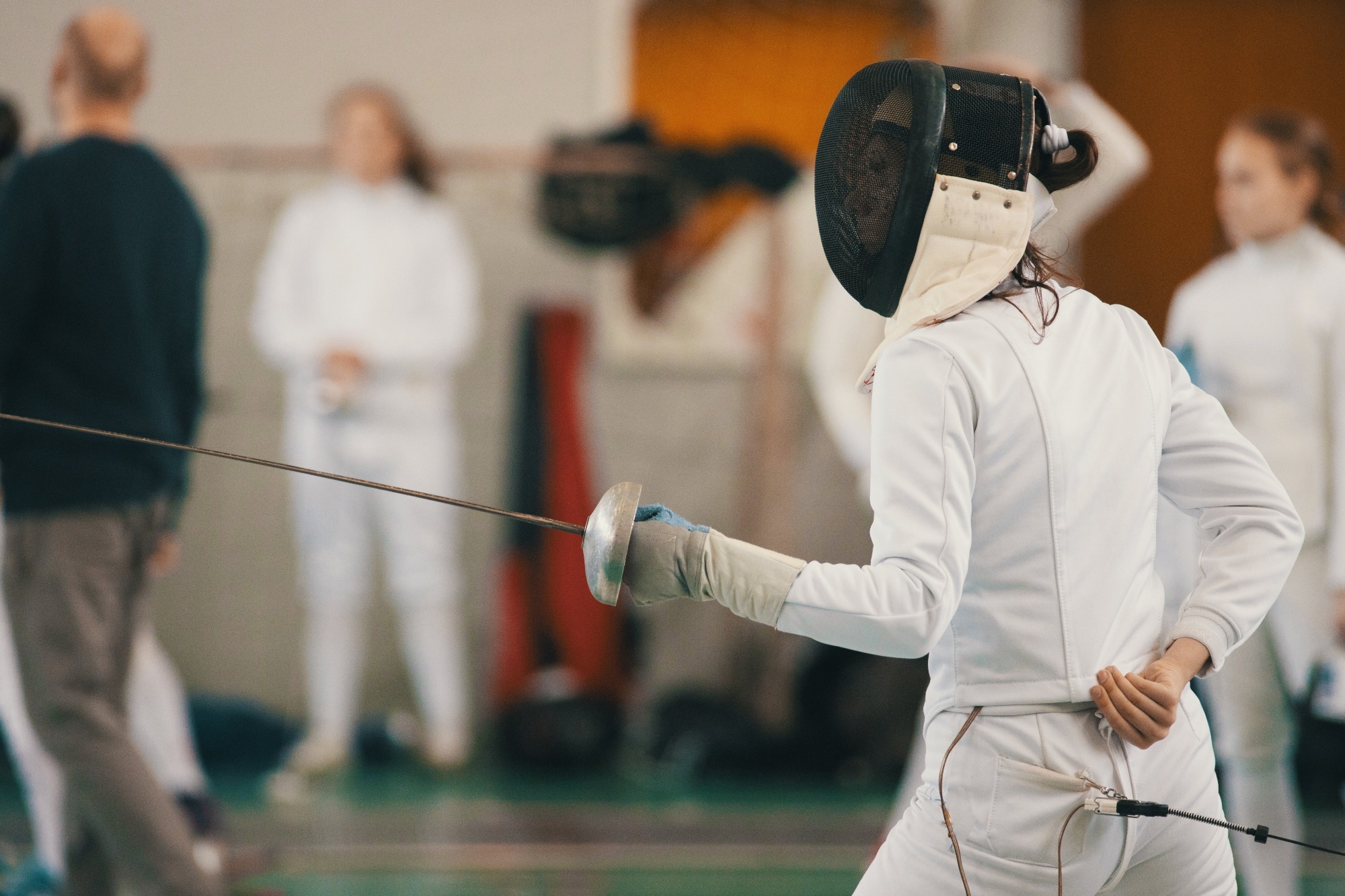 Study: Injury patterns and cumulative injury burden among U.S. competitive fencers: A survey. Image credit: KONSTANTIN_SHISHKIN/Shutterstock.com
A recent study in PLOS ONE investigated how training volume and experience shape injury risk in adult competitive fencers, mapping the patterns, mechanisms, and anatomical sites of reported injuries.
Fencing: Injuries and Research Gaps
Fencing is a sport that imposes distinct physical demands, characterized by explosive multidirectional movements and repetitive, asymmetric loading of both the upper and lower extremities. This combination gives rise to a mixed injury profile spanning acute traumatic events and chronic overuse conditions. Given that competitive participation often spans decades and a broad age range, understanding how cumulative training exposure contributes to injury risk is critical.
Prior research has largely focused on elite competition settings, emergency department visits, or clinic-based cohorts, which tend to overrepresent acute injuries while undercapturing overuse and training-related conditions. Despite differences in study design, lower extremity injuries consistently predominate, and upper extremity injuries almost exclusively involve the dominant weapon arm. The ankle and knee are the most frequently reported injury sites across populations.
Given the repetitive, one-sided demands of weapon handling, grip, and wrist and forearm motion, dominant-side injuries are likely more common than current data reflect. Broader, population-based data on upper-extremity injury patterns in fencing remain lacking. Furthermore, existing studies are largely limited to competition or clinical settings, leaving a gap in population-based data covering both practice and competition. Injuries that do not prompt medical care, such as chronic or recurrent conditions, are also likely underreported.
To date, few studies have clearly defined how training load contributes to injury risk. While increased training volume, greater experience, and higher competitive level have all been linked to higher injury risk, the nature of these relationships remains poorly defined.
Examining injury burden and risk factors in competitive fencing
A cross-sectional, population-based survey was conducted among adult competitive members of USA Fencing. This survey invited 14,839 fencers, aged 18 or older, who were listed as Competitive Members in USA Fencing’s database.
The 79-item survey was developed by a three-time US Olympic fencer, in consultation with medical experts and the USA Fencing Sports Medicine Director. It underwent pilot testing and independent review by four elite fencers, with minor revisions made for clarity.
The survey captured demographics, training, competition exposure, and self-reported injuries. Participants reported up to five lifetime injuries; those with more than five were asked to detail the five most impactful. For each injury, respondents reported type, anatomical location, laterality, mechanism, setting, time loss, treatment, and recovery.
A broad injury definition was used to capture both acute and overuse conditions, including those that do not result in medical evaluation or time loss. For descriptive analyses, participants were grouped as having no injuries, one to two injuries, or three or more injuries.
For multivariable modeling, injury burden was defined as a binary outcome comparing three or more injuries versus one to two injuries. Participants reporting no injuries were excluded from regression analyses to focus on factors associated with higher burden among injured fencers.
High injury burden is linked to experience and training volume in fencing
Of 303 respondents, approximately 89.1 % reported at least one fencing-related injury. Demographic characteristics, particularly age and sex, did not differ significantly across injury burden groups. Cumulative exposure measures, however, differed markedly. Fencers with three or more injuries reported significantly more years of experience, higher weekly training volume, greater competition participation, and higher competitive level compared to those with fewer injuries.
Across 571 reported injuries, overuse conditions were the most prevalent injury type, with tendonitis/tenosynovitis accounting for 26.4 % of all injuries. Among anatomical sites, the knee and ankle were most frequently affected, accounting for 18.2 % and 11.7 % of injuries, respectively. The majority of injuries were associated with non-contact or gradual-onset mechanisms and occurred during training rather than competition. Upper extremity injuries predominantly involved the dominant side, whereas lower extremity and trunk injuries were more evenly distributed.
Spearman correlations confirmed positive associations between injury count and both years of fencing (ρ = 0.30) and weekly training hours (ρ = 0.13). In multivariable logistic regression, years of fencing experience demonstrated a significant nonlinear association with injury burden, with steadily increasing odds of three or more injuries across the observed range.
Weekly training volume showed a comparable nonlinear pattern but did not reach statistical significance, with injury burden rising at moderate-to-high volumes and plateauing at the highest reported levels, potentially reflecting adaptation, selective retention of more resilient athletes, or changes in training following injury. Age at fencing onset, competition frequency, and gender were not independently associated with injury burden.
Sensitivity analyses using Poisson regression with categorized predictors yielded qualitatively consistent results, with years of fencing remaining the strongest and most consistent predictor throughout.
Conclusions
In the current population-based study of adult competitive fencers, injury burden was most strongly associated with cumulative training exposure, particularly years of fencing experience. Overuse injuries predominated, most frequently affecting the knee, ankle, and dominant upper extremity, consistent with the sport’s sustained, asymmetric mechanical demands. The nonlinear association between training exposure and injury burden highlights the importance of load management and adequate recovery in long-term participants.
However, the findings should be interpreted in light of several limitations, including a low response rate (approximately 2 %) that may introduce selection bias and limit generalizability, and the cross-sectional design, which precludes causal inference. Injury histories were self-reported and limited to a maximum of five detailed injuries, potentially underestimating the total injury burden. As such, these findings should be considered exploratory and hypothesis-generating.
Prospective studies incorporating longitudinal exposure tracking are needed to clarify these relationships and inform targeted injury prevention strategies.
Download your PDF copy by clicking here.
Journal reference:
-
Holmes, K., Rojas, M., Giannakis, P., Poeran, J., Bottoms, L., & Colvin, A. (2026). Injury patterns and cumulative injury burden among U.S. Competitive fencers: A survey. PLOS ONE, 21(3), e0344263. DOI: https://doi.org/10.1371/journal.pone.0344263. https://journals.plos.org/plosone/article?id=10.1371/journal.pone.0344263
 New lightweight knee exoskeleton helps older adults walk more easily