Children exposed to extreme levels of “forever chemicals” before birth were significantly more likely to develop asthma, offering rare real-world evidence from a highly contaminated community while raising urgent questions about early-life exposure risks.
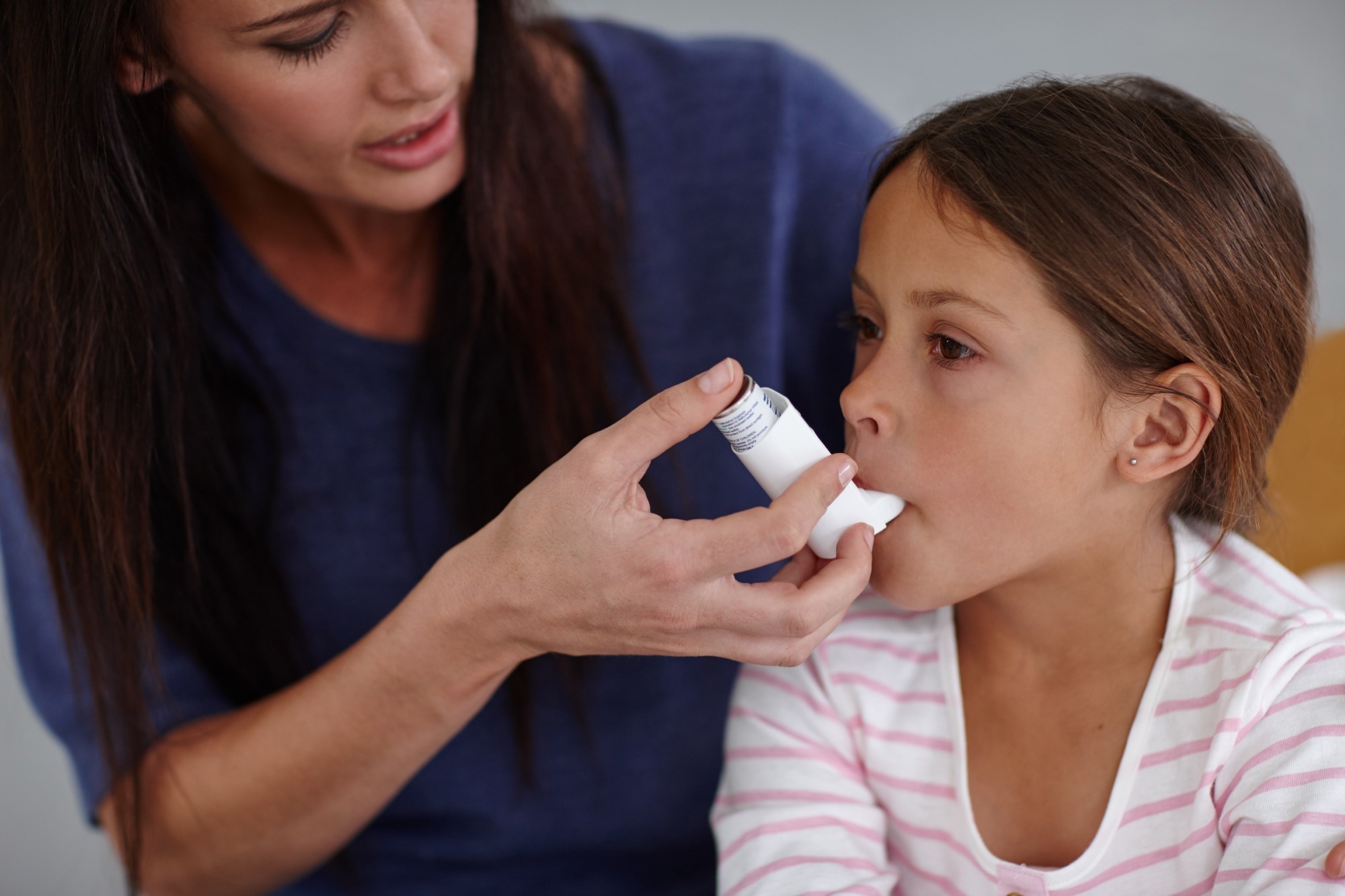 Study: Prenatal exposure to per- and polyfluoroalkyl substances (PFAS) and incidence of asthma and wheeze in childhood: A register-based cohort study in Ronneby, Sweden. Image credit: PeopleImages/Shutterstock.com
Per- and poly-fluoroalkyl substances (PFAS), often called “forever chemicals”, have been widely studied for their potential effects on human health and development. A recent study in PLOS Medicine reports that very high prenatal PFAS exposure is associated with a higher incidence of childhood asthma.
Rising childhood asthma linked to environmental exposures
Asthma is the single largest contributor to non-infectious childhood illness, with rising prevalence over the last 50 years. Environmental exposures, including air pollutants and infectious agents, have repeatedly been associated with increased asthma risk.
PFAS crosses the placenta, allowing prenatal exposure. Such early-life exposure has been linked to immunosuppression, including a higher risk of childhood infections and a reduced antibody response to vaccination. However, despite its biological plausibility, the association of PFAS exposure with childhood asthma remains inconclusive, with conflicting results from epidemiological studies based on background PFAS exposure.
To help resolve this question, the current study included a very high exposure group, unlike earlier research, which mostly focused on low-exposure populations.
The study included 11,488 children born in Blekinge County, Sweden. Blekinge County includes the town of Ronneby, where about a third of households were exposed to drinking water contaminated with PFAS from aqueous film-forming foam (AFFF) for over 30 years.
The PFAS concentration in the polluted water was 10380 ng/L versus 48 ng/L in a second Ronneby water work, and 5 ng/L in a neighboring town. Very high serum PFAS levels were found in approximately 3,400 residents two years after the contamination was discovered.
Water distribution records were used to create a proxy variable for prenatal PFAS exposure, stratified into very high, high, intermediate, and background exposure:
- Very high exposure: Mother lived at address with contaminated water supply for five or more years preceding delivery
- High exposure: Mother lived at such an address for at least one of the five years, but not all five years
- Intermediate exposure: Mother lived in Ronneby, but not within the contaminated supply area
- Background exposure: Mother did not live in Ronneby
To validate these categories, the authors compared serum PFAS levels in the mothers of children in this cohort with those in another group of women who had lived at addresses within the contaminated water supply range for five years before measurement.
Most of the children in the study had older siblings, non-smoking mothers, and had two Swedish-born parents. The median maternal age at delivery was 30 years. One or both parents had asthma in about 17 % of the children.
Very high exposure is associated with elevated asthma incidence
About 2 % of the children had very high prenatal exposure, compared to 4 % with high and 14 % with intermediate exposure. The remaining children lived outside Ronneby. About 18 % of children had a registry-based wheeze-related outcome (based on diagnoses and prescriptions) during the follow-up period, while 17 % had asthma.
Very high PFAS exposure was linked to a 44 % higher hazard of developing childhood asthma. No other exposure category showed any association, and no association was observed for wheeze, despite biological plausibility. The results were adjusted for maternal smoking and age, the child's sex, parental asthma, and socioeconomic factors, as well as additional factors such as parity and maternal education.
In absolute terms, 26.7 % of very highly exposed children developed asthma, compared to 16.1 % in a matched background exposure group. This difference of over 10 percentage points was repeated after restricting the diagnosis to children with clinically diagnosed asthma aged three years or older, using a stricter “asthma (3+)” definition.
Chemical exposure linked to inflammation and airway sensitivity
Lung development begins early in the prenatal period and is easily disrupted by environmental pollutants. Preclinical studies demonstrate that PFAS can concentrate in lung tissue. They may disrupt immune processes, increase lung inflammation, and alter gene expression profiles. Together, these effects could predispose the lung to hypersensitivity reactions, increasing susceptibility to asthma.
Earlier epidemiological studies have produced mixed evidence, perhaps because they were relatively small, used parental-reported outcomes, and were limited to background PFAS exposure. The current findings may suggest a threshold effect, where associations emerge only at very high exposure levels.
Strengths and limitations
This study covered the full range of PFAS exposure, including an atypical, very high-exposure subset. Detailed longitudinal follow-up information was available, and outcomes were based on clinical diagnoses and prescription records.
The use of residential addresses to determine prenatal exposure is less precise than direct biomarker measurements and could have introduced misclassification bias. It does not distinguish between prenatal versus early childhood exposure, and many highly exposed children continued to live in contaminated areas after birth, making it difficult to isolate prenatal effects. Parental smoking in postnatal life is a possible source of unmeasured confounding.
Extreme PFAS exposure may elevate childhood asthma risk
The study findings suggest that very high PFAS exposure may be associated with an increased risk of childhood asthma. These findings are unlikely to apply to lower levels of prenatal exposure, and may reflect combined prenatal and early-life exposure rather than prenatal exposure alone. Further studies using direct measurements are needed to confirm these results.
Download your PDF copy by clicking here.
 Superstorm Sandy reshaped indoor fungal communities, with an unexpected asthma result