A novel engineered microbial system transforms discarded plastic into a frontline Parkinson’s treatment, offering a glimpse into a future where waste becomes medicine.
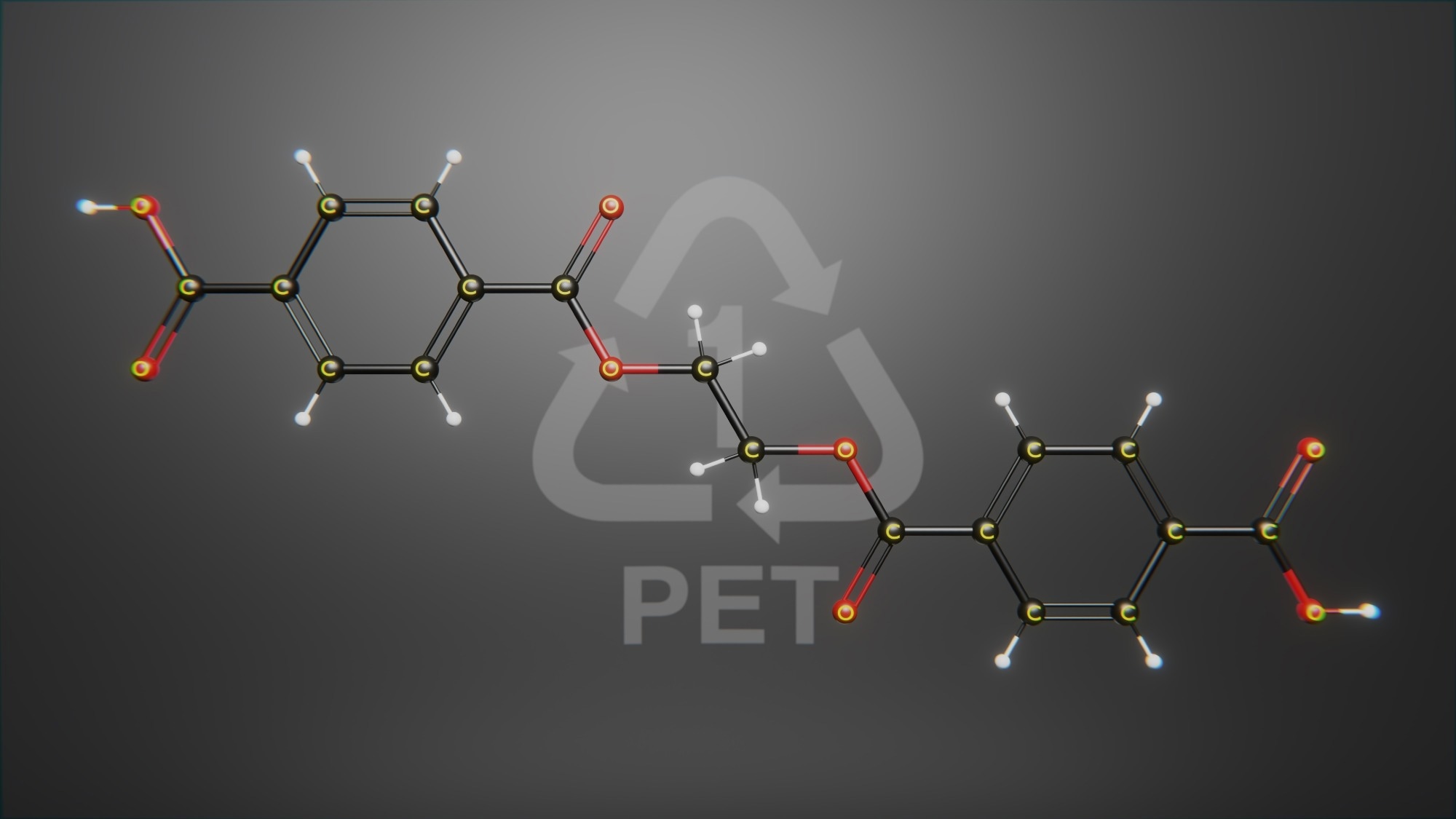
Study: Microbial upcycling of plastic waste to levodopa. Image Credit: jmcatholic / Shutterstock
In a recent study published in the journal Nature Sustainability, researchers demonstrate the successful engineering of a biological process to "upcycle" poly(ethylene terephthalate) (PET) into levodopa (L-DOPA), a frontline medication for Parkinson's disease (PD). The researchers modified Escherichia coli to convert plastic-derived monomers into high-value pharmaceuticals under mild, aqueous conditions.
The study overcame significant biochemical hurdles involving cellular transport and enzyme inhibition by separating the process across two cooperative microbial strains. The findings revealed a high production titre of 5.0 g L-1 in an optimized two-step preparative system. This approach offers a potentially more sustainable route than conventional fossil fuel-derived chemical or chemoenzymatic synthesis, although it remains a proof-of-concept rather than a fully optimized industrial process.
Plastic Waste Crisis and Sustainable Chemistry Challenges
The modern chemical industry, particularly pharmaceuticals, is built on a foundation of finite fossil resources, a model that, despite saving millions of lives, is inherently unsustainable and environmentally damaging. At the same time, the biosphere is under increasing stress from the global production and accumulation of plastics derived primarily from fossil fuels.
Environmental reports indicate that over 400 million metric tons of plastic are produced annually, of which approximately 360 million tons end up as waste. The majority of this waste is sent to landfills or incinerated, resulting in the loss of valuable carbon and significant greenhouse gas emissions. While traditional recycling exists, researchers increasingly focus on "upcycling", converting waste into higher-value products, as a more sustainable pathway toward a circular economy.
Levodopa (L-DOPA) is a widely used therapy for Parkinson's disease. Its commercial production typically relies on fossil fuel-derived chemical or chemoenzymatic synthesis, which often involves harsh conditions and generates significant waste.
Although biological production of L-DOPA from glucose or amino acids has been explored, these approaches often show low efficiency and face challenges for industrial scalability.
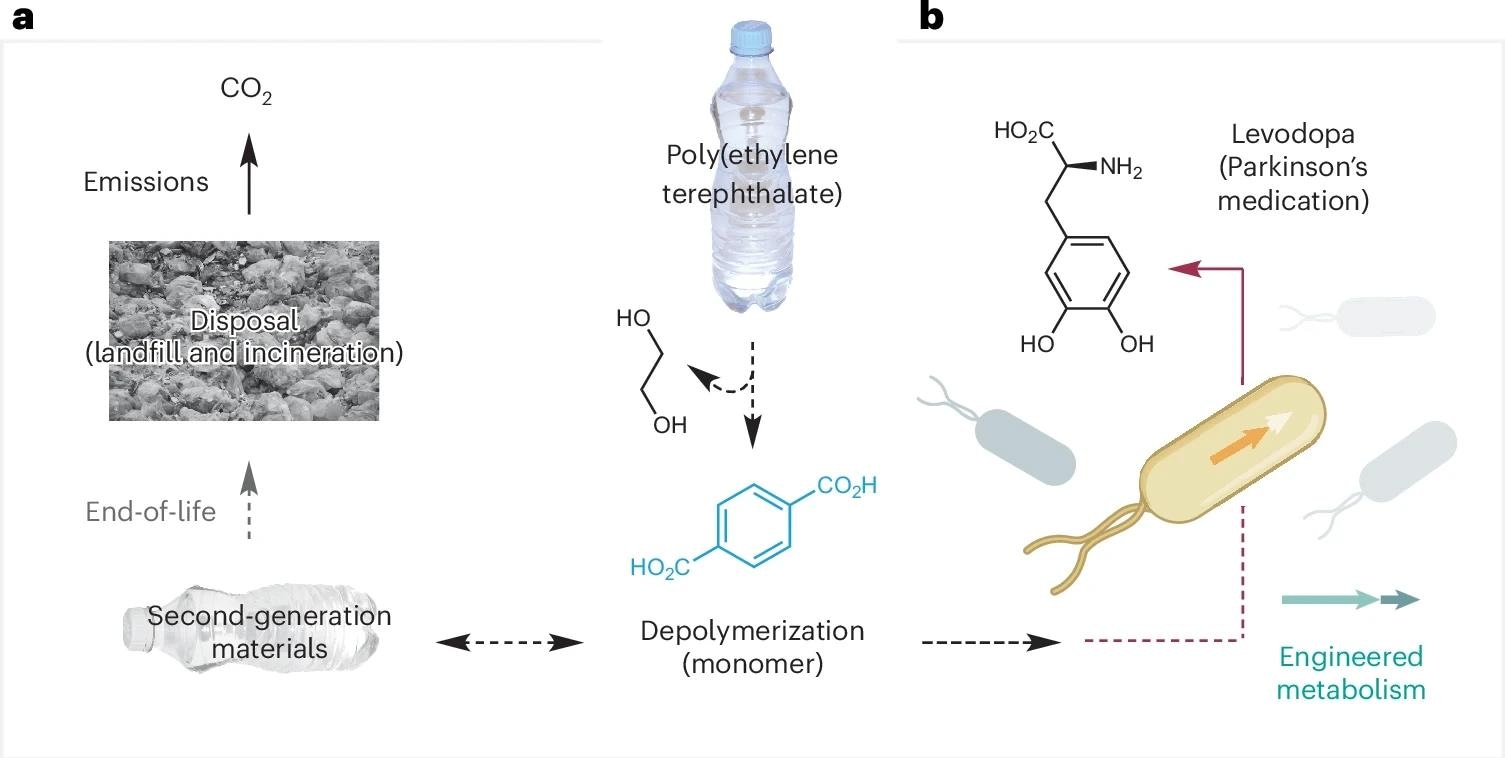
Approaches to the recycling, upcycling and environmental disposal of PET plastic waste, including the proposed bio-upcycling of PET waste to the Parkinson’s medication l-DOPA in engineered bacteria. a, Current: closed-loop recycling. b, This work: microbial upcycling. Credit: photographs in a, Rawpixel (https://www.rawpixel.com); bacterial icon in b, Bioicons (https://bioicons.com).
Engineered E. coli Pathway for Plastic Conversion
The study aimed to overcome these limitations by leveraging bioengineering strategies to convert plastic waste into a complex therapeutic product. The approach focused on terephthalic acid (TPA), a monomer derived from PET degradation.
The researchers designed a de novo four-step biosynthetic pathway involving seven genes, which were introduced into Escherichia coli BL21(DE3). Initial testing revealed two major bottlenecks.
First, the bacteria struggled to transport TPA across cell membranes at neutral pH. This was addressed by expressing the transporter protein TpaK from Rhodococcus jostii, which significantly improved uptake.
Second, a pathway intermediate, protocatechuate (PCA), inhibited the final enzyme, tyrosine-phenol lyase (TPL), through feedback inhibition. In vitro experiments showed that PCA concentrations above 2 mM eliminated detectable L-DOPA production, while whole-cell systems showed a drop in conversion efficiency from 80% to 0% above 1 mM PCA.
This challenge was overcome by splitting the pathway between two microbial strains. One strain converts TPA into catechol, while the second converts catechol into L-DOPA.
The system was also tested using real-world waste, including industrial hot-stamping foils (HSF) and post-consumer plastic bottles. Additionally, the microalga Chlamydomonas reinhardtii was used to capture carbon dioxide (CO2) generated during the process, supporting a proof-of-concept carbon-neutral production cycle.
Experimental Results and Production Efficiency Metrics
The engineered system achieved a L-DOPA titre of 5.0 g L-1, corresponding to an 84% conversion efficiency from industrial waste in an optimized two-step workflow using foil-derived TPA. The addition of the TpaK transporter significantly improved TPA-to-PCA conversion at neutral pH.
Incorporating C. reinhardtii reduced CO2 levels in the culture headspace to undetectable levels within 12 hours, demonstrating the integration of metabolic by-products into biomass under experimental conditions.
Using TPA derived from a discarded PET bottle resulted in a 49% conversion rate. In separate experiments with foil-derived TPA, the process yielded 193 mg of L-DOPA as a solid salt, corresponding to several clinical doses for early-stage Parkinson's disease.
Implications for Sustainable Pharma and Limitations
This study provides a proof-of-concept that plastic waste can be converted into valuable pharmaceutical compounds, highlighting a potential strategy to address both environmental pollution and sustainable drug production.
However, further optimization is required before industrial application. Key areas include direct precipitation of L-DOPA from fermentation broth, removal of residual contaminants from plastic waste streams, genomic integration of pathway genes to eliminate the need for antibiotic selection, and further development of algal CO2 capture systems.
 Low-cost interventions reduce neonatal sepsis from Klebsiella pneumoniae