A five-day course of ensitrelvir sharply reduced symptomatic COVID-19 in exposed household contacts, offering fresh evidence that targeted oral antivirals may help protect people soon after close exposure.
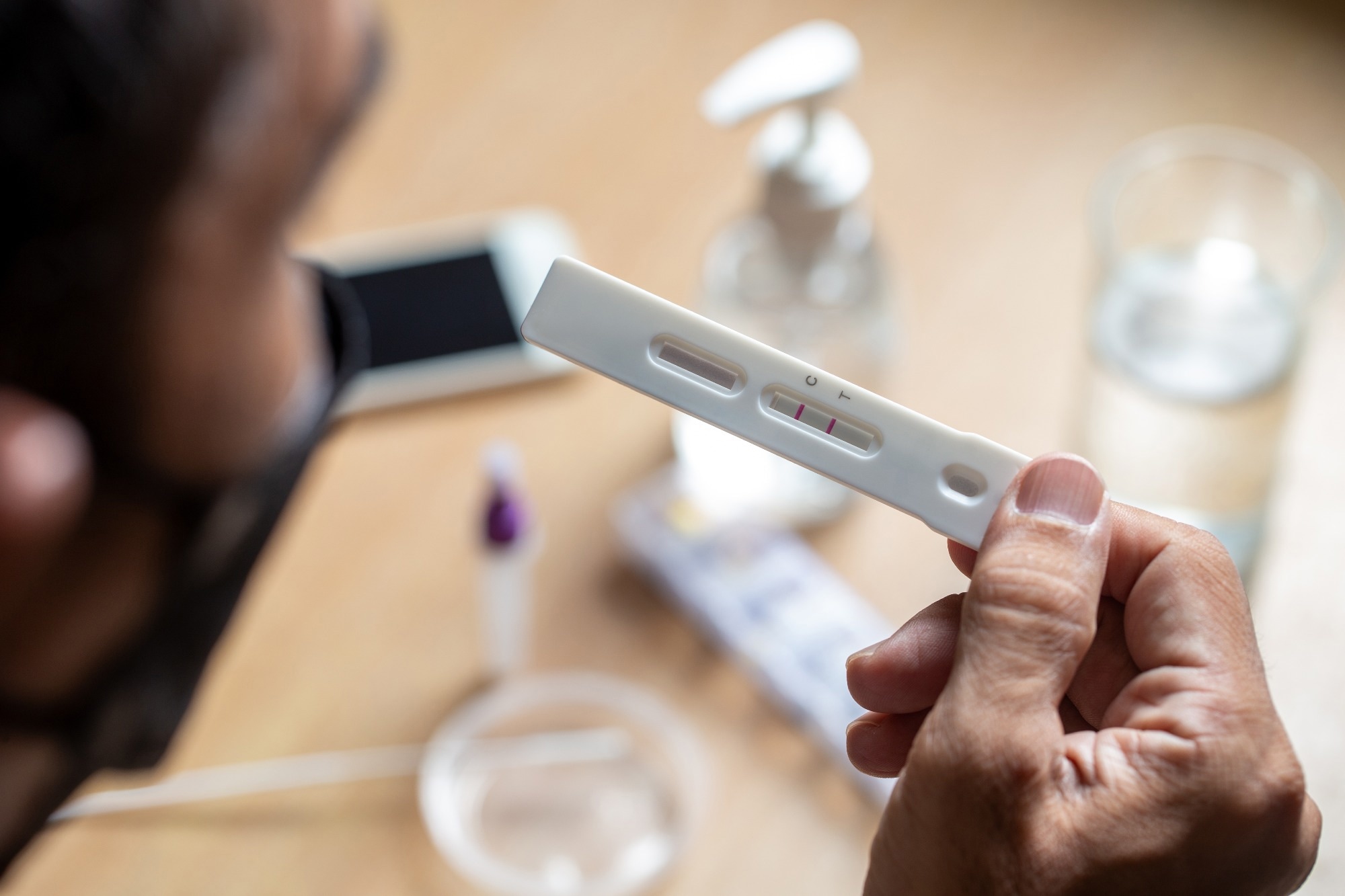
Study: Ensitrelvir for Covid-19 Postexposure Prophylaxis in Household Contacts. Image Credit: Anucha Naisuntorn / Shutterstock
Ensitrelvir is an oral inhibitor of the severe acute respiratory syndrome coronavirus 2 (SARS-CoV-2) that acts by inactivating its 3C-like protease. A recent study published in The New England Journal of Medicine suggests that it could prevent symptomatic RT-PCR-confirmed COVID-19 if used within 72 hours after symptom onset in an infected household index patient.
Ensitrelvir COVID-19 Prevention Background
The coronavirus disease 2019 (COVID-19) pandemic caused millions of deaths worldwide. Although its acute phase has waned, it continues to cause illness and death, especially in high-risk groups. This is partly due to its high mutation rate, waning immunity, and high household transmission rates of 32%-48%.
Since the use of masks and social distancing measures is not enough to completely prevent transmission, there is a need for effective preventive drugs, at least for those at increased risk. Earlier trials of nirmatrelvir-ritonavir and molnupiravir did not show significant protection against COVID-19 in exposed household contacts.
Ensitrelvir showed potent in vitro activity against multiple SARS-CoV-2 variants, including omicron. It is approved in Japan for the treatment of mild-to-moderate COVID-19 in patients aged 12 years or older. Currently, it has been approved in Japan for post-exposure prophylaxis in contacts aged 12 years or older, based on the findings of this study.
In the phase 3 SCORPIO-SR trial, it reduced COVID-19 symptoms when initiated within 72 hours of symptom onset. The phase 3 SCORPIO-HR trial demonstrated the drug's antiviral efficacy but failed to show a significant difference in time to symptom resolution.
This motivated the current phase 3 SCORPIO-PEP trial. It was conducted as a double-blind randomized controlled trial involving 2387 randomized household contacts, of whom 2041 were included in the modified intention-to-treat population. The mean age of the population was 42.4 years.
SCORPIO-PEP Trial Study Design
At baseline, all participants had a history of contact with someone with COVID-19, the index patient. All had nasopharyngeal swabs submitted on days 1, 3, 6, 10, 15, 21, and 28 for reverse transcriptase-polymerase chain reaction (RT-PCR) detection of SARS-CoV-2.
Those who were test-negative and asymptomatic at baseline were randomly assigned to receive either ensitrelvir (1,030 participants) or placebo (1,011 participants) for 5 days beginning within 72 hours after symptom onset in the index patient. The primary endpoint was symptomatic RT-PCR-confirmed COVID-19 by day 10.
This required symptomatic RT-PCR positivity within ten days of trial-drug or placebo administration. This included the appearance of one or more symptoms from a panel of 14, lasting at least 48 hours, or worsening in the case of preexisting symptoms.
Approximately 71% of participants were randomized within 48 hours of the index patient's onset of symptoms. About 37% had one or more risk factors for severe COVID-19, including obesity, smoking, and age above 65 years. Nearly 19% of index patients received antiviral therapy, mostly with ensitrelvir. Approximately 85% or more of those in each group completed the regimen.
Over 98% had antibodies to the SARS-CoV-2 nucleocapsid or spike antigens.
COVID-19 Prevention Efficacy Findings
Compared with the ensitrelvir group, the placebo group had a significantly higher rate of new COVID-19 cases (9% vs. 2.9%). The risk ratio in favor of the ensitrelvir group was 0.33, indicating a 67% reduction in relative risk in ensitrelvir recipients post-exposure, compared to placebo.
The observed reduction appears larger than reported in previous household contact PEP studies. However, comparisons of efficacy across trials should be interpreted cautiously in light of differences between trials, definitions of illness, and shorter time limits for delineating primary infection rates. Notably, these differences persisted even when adjusting for differences in the definition of COVID-19.
By day 2, the placebo group showed a rapid rise in symptomatic infections, which was both smaller and spread out over 12 days in the ensitrelvir group. The benefit appeared to be generally consistent across participants with and without risk factors, although subgroup analyses were not adjusted for multiplicity. Across the participating countries, COVID-19 incidence among household contacts was lower in the US than in Japan.
In this study, the drug maintained plasma concentrations above the estimated target concentration, compared to estimates derived from nonclinical studies. This might indicate the persistence of effective prophylaxis beyond the five-day regimen.
Viral Load and Safety Findings
RT-PCR-confirmed SARS-CoV-2 infection rates were also lower with ensitrelvir than with placebo. Among participants with baseline-positive RT-PCR, viral loads were lower, as were those among those who developed infection or symptomatic COVID-19 while on ensitrelvir.
Adverse events were similar in both groups, and neither group reported hospitalizations or deaths from COVID-19. Ensitrelvir was associated with reversible reductions in HDL cholesterol, and its use requires attention to potential drug-drug interactions because it is a moderately strong CYP3A inhibitor.
The researchers did not have data on other measures used to limit household transmission or on the difference in outcomes due to antiviral administration, which is common in Japan and was offered to 38% of patients versus 6% in the US. The risk of selecting for viral mutations associated with resistance following ensitrelvir administration could not be completely excluded due to missing viral sample data from index patients treated with ensitrelvir. Participants using contraindicated medications were also excluded, which may limit real-world generalizability in patients at risk of CYP3A-mediated drug interactions.
Ensitrelvir Post-Exposure Prophylaxis Implications
The findings suggest that when administered within 72 hours of symptom onset in a COVID-19 index patient, ensitrelvir effectively prevented symptomatic illness in household contacts and reduced the relative risk of the illness up to day 10 by 67% among participants who received at least one dose of the drug. Among high-risk participants, about 2.4% of those who received ensitrelvir developed COVID-19, compared with 10% in the placebo group.
Download your PDF copy by clicking here.
 CDC tracks SARS-CoV-2 BA.3.2 global rise and finds early signals in U.S. wastewater