As a surge of vaping-related lung injuries captured headlines, smokers began reassessing the risks of e-cigarettes, showing how quickly public perception can shift, even when the underlying science remains more nuanced.
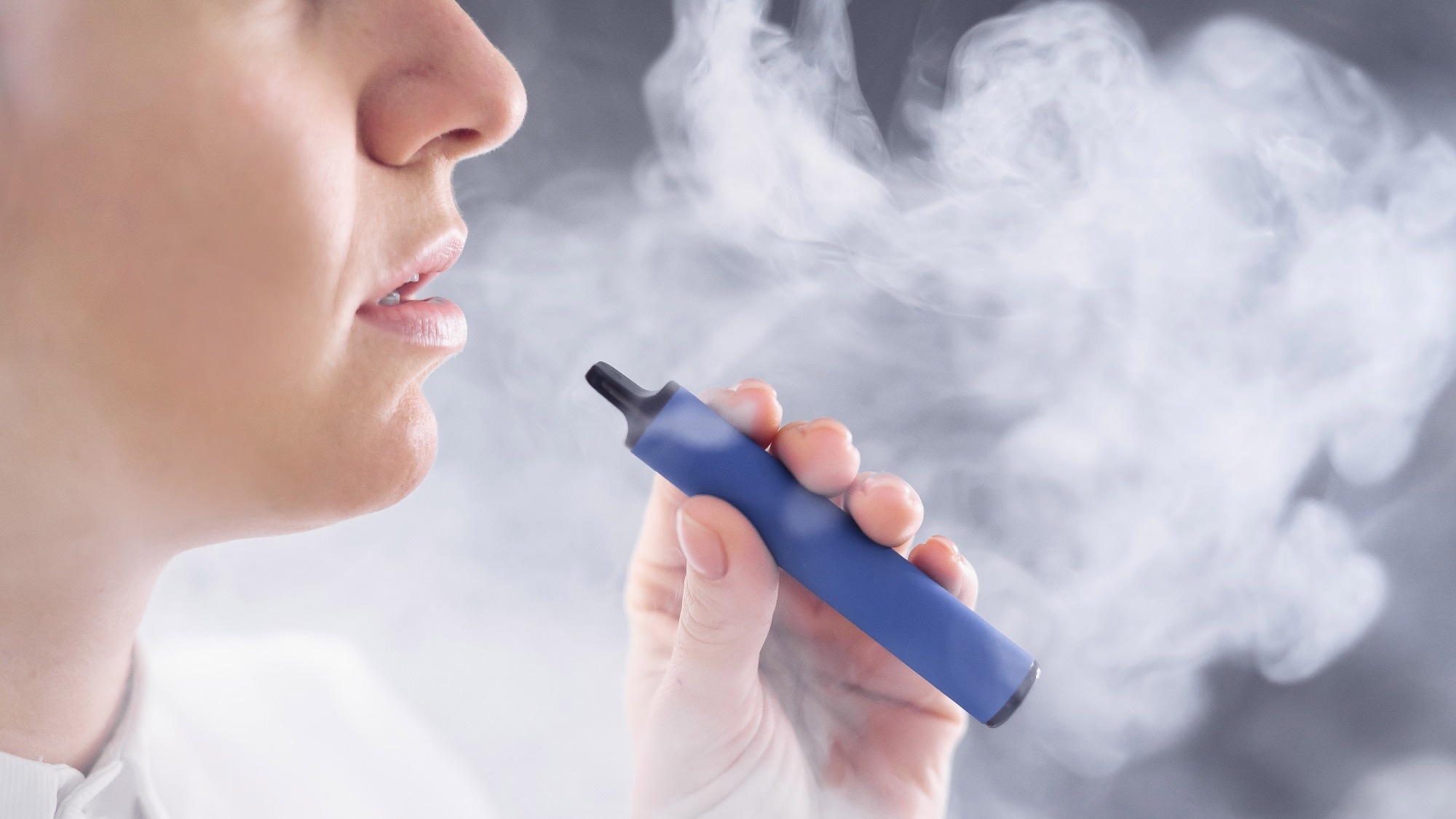 Study: Shifting perceptions of e-cigarette risk: A secondary analysis from a nationwide, randomized controlled clinical trial of e-cigarettes among smokers. Image credit: Reshetnikov_art/Shutterstock.com
The proportion of Americans who think electronic cigarettes (e-cigarettes, colloquially called vapes) are as dangerous to health, or more so, than combustible cigarettes is rapidly increasing, according to prior population-level studies cited in a paper recently published in the journal Addictive Behaviors.
Public perceptions of vaping risks have shifted over time
E-cigarettes entered the American market in 2007, and were embraced by smokers and nonsmokers on the assumption that they presented a lower risk to health than conventional or combustible cigarettes. This is in keeping with the US Food and Drug Administration’s conclusion that e-cigarettes expose users to a lower carcinogen and toxicant burden.
Notably, the FDA does not approve e-cigarettes as a smoking cessation aid. Rather, it promotes complete cessation of all tobacco products on health grounds.
Approximately 56 % of American adults in 2017 viewed e-cigarettes as being as dangerous as conventional cigarettes, while about 10 % thought they were more harmful. Women were more likely to have such perceptions, as were smokers of Hispanic or Black ethnicity, and less educated smokers.
The percentage of adults with the “e-cigarettes are as or more harmful” view more than doubled over the two years from 2018 to 2020.
The EVALI scare
A major contributor to this steep rise in negative harm perceptions may have been the occurrence of multiple cases of e-cigarette or vaping product use-associated lung injury (EVALI) beginning mid-2019, with cases peaking by September of that year.
Most EVALI cases were eventually linked to vitamin E acetate, an additive commonly found in THC vaping devices. However, with media coverage focused on the safety aspects and absolute risks of e-cigarettes, this crucial finding may have gone unnoticed, though it clearly differentiated the risk of EVALI from nicotine vaping devices compared to THC-containing devices.
This is likely to have left many in the dark and shaped public perceptions of relative harm about e-cigarettes.
Finding relative risk perceptions for e-cigarettes
The current study is a secondary analysis of data from a US randomized controlled trial of e-cigarettes. It comprised 638 enrolled participants, of whom 637 were included in the analysis, who were current smokers (five or more cigarettes per day for over a year) but not regular e-cigarette users. Participants also had minimal prior e-cigarette use, which may influence how they perceived risk, and means the findings may not fully generalize to the broader US population. A relative risk perception score was obtained by subtracting the cigarette absolute risk score from the e-cigarette absolute risk score.
Participants were stratified by recruitment time: before, during, or after EVALI. “During” EVALI denoted the period between September 1, 2019, and February 29, 2020. Most participants were recruited before EVALI, followed by after it.
Overall, cigarettes considered more dangerous
The average relative risk score remained negative throughout the study, indicating that e-cigarettes were consistently perceived to be less risky than cigarettes. This trend persisted despite increasing harm perceptions for e-cigarettes.
The authors comment that the participants were partly motivated to enroll in the study because they were interested in e-cigarettes, which might influence their perceived risk of these devices.
EVALI associated with higher relative risk scores for e-cigarettes
Relative risk scores were, on average, about one point higher on a 0–10 scale during and after EVALI than before it. This suggests that post-EVALI participants were more likely to consider e-cigarettes as riskier relative to cigarettes, although the magnitude of change was modest.
However, there was no significant difference in the relative risk score between before and after EVALI, indicating a relatively rapid shift in negative perception that then stabilized over time.
Non-Whites had larger increases in relative risk perception scores (approximately 2.3 and 1.9 points higher, respectively) during and after EVALI, compared to pre-EVALI. Such differences were not statistically significant among White participants.
Risk perceptions of e-cigarettes among smokers need to be monitored in future studies, especially as smokers often begin to use these devices during their transition to no-tobacco. However, the study also notes that such perceptions may not strongly predict actual e-cigarette uptake or use.
Study limitations
The coronavirus disease 2019 (COVID-19) pandemic affected the US just subsequent to the EVALI peak, and much media coverage was devoted to the risk of COVID-19 in relation to smoking and e-cigarette use. This could have contributed to risk perceptions among the post-EVALI cohort, although the increased risk might have been driven by fear of COVID-19 rather than EVALI. This requires further study for clarification.
Misperceptions may discourage switching from cigarettes to vaping
Public FDA communications have attempted to correct negative or inaccurate perceptions about the relative risks of e-cigarettes compared to cigarettes, since this could prevent smokers from switching to the former. Further steps might include smoker-directed messaging about the risks of tobacco vis-à-vis e-cigarettes, across cultural and ethnic contexts.
Despite the relatively lower harm associated with e-cigarettes, clinicians should recommend FDA-approved smoking cessation aids rather than non-approved e-cigarettes. Overall, the message should promote cessation of all tobacco use in any form.
Download your PDF copy by clicking here.
Journal reference:
-
Barros, E. M., Ferreira, A. C., Neelon, B., et al. (2026). Shifting perceptions of e-cigarette risk: A secondary analysis from a nationwide, randomized controlled clinical trial of e-cigarettes among smokers. Addictive Behaviors. DOI: https://doi.org/10.1016/j.addbeh.2026.108672. https://www.sciencedirect.com/science/article/pii/S0306460326000821
 Researchers changed the music in a cafeteria. Food choices shifted too