Water is vital to pharmaceutical production, serving as a component of fermentation media, a solvent in manufacturing, and the cornerstone of cleaning and rinsing processes.
Image Credit: Tagwaran/Shuttertstock.com
Since each application demands distinct quality requirements, the water system must provide consistently controlled attributes aligned to its intended use. Any microbial or particulate impurities introduce direct or indirect contamination risks that can compromise various phases of the production process.
Protecting patients and safeguarding product integrity requires disciplined preventive maintenance, practical risk evaluation, and routine monitoring at every critical point of use across the system.
Combined, these measures establish a resilient, well-characterized water system that allows for confident operation and sustained environmental control.
Introduction
Water for injection (WFI) is a form of purified water. As reported in the Pharmacopoeia, WFI "is used as an excipient in the production of parenteral and other preparations where product endotoxin content must be controlled, and in other pharmaceutical applications, such as the cleaning of certain equipment and parenteral product-contact components."1
WFI production usually begins with potable water sourced from municipal or certified private water supplies, ensuring that chemical pollutants remain within legal limits. This feed water is then subjected to purification processes, most notably reverse osmosis, which substantially reduces the chemical, microbial, and endotoxin content.
Additional purification stages further refine the water, ultimately producing WFI with virtually no impurities. This is often achieved through distillation or other equivalent/superior purification techniques proven to remove both chemical and microbial contaminants.
Nevertheless, each purification stage requires thoughtful design and management. Without adequate control, the very procedures intended to purify water can introduce new contamination risks. In well-engineered and properly maintained systems, these risks are reduced or eliminated entirely, preventing endotoxin accumulation in the still reservoir and ensuring a stable, dependable water system that can safeguard crucial pharmaceutical operations.
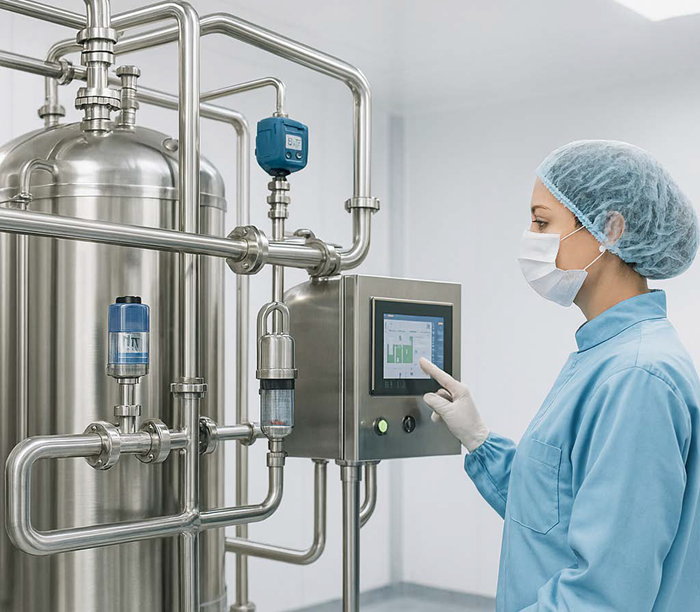
Figure 1. Water for Injection Technician. Image Credit: Particle Measuring Systems
Defining well-designed systems
A well-designed water system begins with a clear understanding of the objective. From early planning stages, the focus should be on defining water quality requirements, acceptance criteria, and intended applications, instead of focusing primarily on system design and size.
Clearly establishing these parameters from the beginning minimizes system complexity, cuts down on both initial and long-term maintenance expenses, and ensures the system meets and maintains the desired quality standards over time. Therefore, planning must be approached systematically, beginning with the determination of water quality.
Planning then shifts to evaluating the point of use (POU) delivery criteria and an initial system planning exercise. As each step is completed, new evaluations are made to refine and supersede prior assessments based on emerging insights and system knowledge, such as additional criteria regarding the overall system boundaries.
Ultimately, the combination of the point-of-use requirements and future projections will govern the appropriate sizing of the distribution piping system.
After establishing this starting framework, the comprehensive design of the pretreatment and final treatment systems can begin. These systems, which aim to treat the feed water to optimize the treatment process and minimize conductivity, TOC, microbial contaminants, and other parameters, typically consist of piping, equipment, and sampling or use points.2
Except for Annex 1, which requires that the system “should be designed, constructed, installed, commissioned, qualified, monitored and maintained to prevent microbiological contamination and to ensure a reliable source of water of an appropriate quality”, there are no regulations governing materials and construction practices.3
Certain industry guidelines, such as the ISPE, offer valuable insights. They recommend using materials such as copper, galvanized steel, stainless steel, or suitable thermoplastics for the pre-treatment system, selected based on the temperatures, pressures, and sanitization expected in the facility. For the final system, the choice is primarily between 316 L stainless steel and titanium, though the elevated cost of titanium restricts its application.4
Methods for maintaining the most stable quality standards possible
A disciplined routine maintenance program that reduces system alterations caused by rust, corrosion, or other factors is essential. Concurrently, the program itself must be designed to avoid altering the system or introducing any new risks to water quality.
While chemical agents such as sodium hydroxide (NaOH) can be highly effective at removing biofilm, their organic components can be challenging to flush out, potentially increasing TOC levels.
This is a primary reason why risk analyses are conducted when designing and creating a maintenance program. Such evaluations can be applied during system design as well as within existing systems to analyze how known vulnerabilities and sources of water quality changes might impact product quality and, ultimately, patient safety.
Maintenance and repair operations must always be conducted by appropriately trained personnel following clear, detailed protocols to prevent avoidable errors that could result in additional system changes.
As an example, surface scratches or poorly executed welds can create sites prone to corrosion and rust formation, which compromises system integrity. Adopting remediation practices such as de-rouging, alongside scheduled inspections every one to three years, is recommended. These practices maintain system control and support long-term dependability in pharmaceutical water production.5
How is water for injection obtained?
Once all these requirements have been met and planned, the water manufacturing and distribution system must reliably produce water for injection (WFI). The selected treatment technique is fundamental to the overall system design, and the facility should be engineered around a series of “fixed points”, including the water treatment technique. While the specific treatment that the feed water undergoes may vary, the aim must always be to make the water suitable for optimizing final treatment performance.
It should be noted that if the feed water does not fulfill regulatory criteria for drinking water, additional treatments must be conducted upstream of the system and documented appropriately. Importantly, while USP 1231 prohibits the addition of chemical agents to the final compendial water, it does not prevent their use during pre-treatment or for system sanitization, provided they are completely removed and their absence is validated through required testing.1
Irrespective of the chosen treatment system, parameter variations such as hardness, temperature, and flow rate must remain stable, except during scheduled maintenance intervals. This stability ensures predictable system performance and helps maintain control over vital quality characteristics. Pretreatment prepares feed water for final purification by reducing at least the following elements:
- Turbidity and particulates
- Inorganics
- Organics
- Microbial
- Microbial-control agents
- Dissolved gases
Multiple technologies can meet each requirement, and the final configuration should reflect user needs and risk profiles. Once the pretreatment has enhanced the feed water quality, the system proceeds to final purification.
The water passes through additional treatments, which, as mentioned previously, aim to minimize the conductivity, TOC, microbial contaminants, nitrates, and, most importantly, endotoxins generated by the types of microorganisms that tend to inhabit water.
Like pretreatment, multiple technologies and options are available for final treatment based on user requirements. Reverse osmosis (RO) and distillation are among the best-known and most commonly utilized treatments.
Reverse osmosis (RO) utilizes semi-permeable membranes to block hydrated ions and reduce chemical, microbial, and endotoxin content. Distillation induces phase changes that separate water vapor from dissolved solids, non-volatile impurities, and other contaminants before condensing the purified vapor into WFI.
Additional viable final treatment options include ion exchange, continuous electro-deionization (CEDI), membrane degasification, ultrafiltration, microfiltration, and UV light. Purification technologies can be chosen and combined to develop a powerful, dependable system tailored to the needs of the user and designed to safeguard water quality.
How is a state of control maintained and validated?
The effectiveness of the final treatment must be demonstrated and validated. This requires understanding whether the measures implemented allow the system to consistently produce water that fulfills Water for Injection (WFI) criteria.
Early detection of any parameter deviations that could impair water quality is crucial, which is why both in-process control and final quality control evaluations are advised. The goals of these two controls differ, as noted by the USP: "In-process control analyses are usually focused on the attributes of the water within the system," whereas "quality control is primarily concerned with the attributes of the water delivered by the system to its various uses."1
In general, process control sampling points are strategically positioned throughout the water purification system. Placing them at the beginning and end of distribution circuits, near critical points of use, and at distribution system valves provides clear, relevant, and timely insights into system performance.
Sampling points designed for final water quality monitoring must be located in areas that accurately reflect the water used during production. Sampling should mirror actual point-of-use conditions, including sanitization steps, outlet preparation, and any connected equipment. This approach enables the detection of any contaminants that are heterogeneously or unevenly distributed, such as bacteria originating from associated biofilms on or within the system or its components.
Sampling location selection, as well as the frequency of both in-process and final quality control testing, should be guided by a structured risk analysis. This ensures that monitoring efforts are aligned with system vulnerabilities and designed to maintain a strong, dependable state of control.
How can Particle Measuring Systems help clients?
The Particle Measuring Systems Advisory department supports a broad variety of diverse needs and requests, providing a range of solutions that can be tailored to each client.
This includes providing documented risk evaluations to help assess vulnerabilities in water systems and providing guidance on how the water system integrates into a facility’s overall contamination control strategy.
The team also carries out theoretical and practical training to increase personnel understanding of sampling practices and their effect on data quality.
Each service is designed to provide the clarity, confidence, and skill needed to safeguard manufacturing procedures – ensuring that water systems remain dependable, compliant, and under control.
Conclusion
A thorough understanding of water systems and constant attention to their performance are crucial. In a number of facilities, the number and placement of sampling points do not accurately reflect the true state of water quality.
This is frequently the result of a lack of specific rationale defining why one point is more representative than another, creating either a surplus of data or an absence of data that truly reflects system conditions.
Another frequent misconception is that satisfactory results at points of use automatically signify that upstream segments of the system are in control. This assumption can lead to a significant reduction in sampling frequency or coverage early in the process, allowing hidden, early-stage issues to develop long before they appear at the outlet.
It is crucial to recognize that once a water system, whether at the pretreatment or final treatment stage, loses control, restoring regulatory compliance can be complicated and time-consuming. Proactive monitoring and a preventive understanding are far more effective than implementing corrective actions after a deviation has already progressed.
In conclusion, as this paper demonstrates, understanding and maintaining a strong awareness of system design, maintenance practices, and preventive measures is critical for ensuring quality in one of the most valuable components of pharmaceutical procedures, WFI.
Acknowledgments
Produced from materials originally authored by Irene Maccagli, Junior Advisory Specialist.
References and further reading
- U.S. Pharmacopeia. (2004). <1231> Water for Pharmaceutical Purposes. Pharmacopeial Forum, 30(5), 1744. Available at: https://doi.org/10.31003/uspnf_m99956_70101_01.
- WHO (2017). Guidelines for drinking-water quality, 4th edition, incorporating the 1st addendum. WHO. Available at: https://www.who.int/publications/i/item/9789241549950.
- European Commission. (2022). The Rules Governing Medicinal Products in the European Union Volume 4 EU Guidelines for Good Manufacturing Practice for Medicinal Products for Human and Veterinary Use. Available at: https://www.gmp-compliance.org/files/guidemgr/20220825_gmp-an1_en_0.pdf.
- ISPE | International Society for Pharmaceutical Engineering. (2019). Baseline Guide Vol 4: Water & Steam Systems 3rd Edition. Available at: https://ispe.org/publications/guidance-documents/baseline-guide-vol-4-water-steam-systems-3rd-edition.
- ASME. (2024). ASME BPE Bioprocessing Equipment. Available at: https://www.asme.org/codes-standards/find-codes-standards/bpe-bioprocessing-equipment-(1).
About Particle Measuring Systems
Particle Measuring Systems has 35 years of experience designing, manufacturing, and servicing microcontamination monitoring instrumentation and software used for detecting particles in air, liquid, and gas streams, as well as molecular contamination monitoring.
Specific applications include cleanroom monitoring, parenteral sampling, filter and in-line testing in deionized water and process chemicals, and point-of-use monitoring of inert gases and in-situ particle monitoring. Specialty monitoring includes parts cleanliness testing with a highly automated solution.
Particle measuring systems
Whether you want to protect a product or meet industry requirements, such as ISO 14644, USP 797, or GMP, Particle Measuring Systems has a large variety of particle counters and molecular monitors to meet your needs. With 35 years of experience, it has proven reliability to support your application.
Particle counters
Protect your product with reliable particle counters. PMS has airborne, portable, and liquid particle counters for a wide variety of applications, including DI water, chemicals, and cleanroom monitoring. Compare particle counters or learn how to monitor your cleanroom or product by reading our papers.
Molecular contamination monitors
Molecular contamination causes costly problems for high-value products, production processes, and equipment surfaces. PMS has solutions for both Airborne Molecular contamination (AMC) and Surface Molecular contamination (SMC). With parts-per-trillion limits of detection, real-time sampling, NIST traceable calibrations, and various data analysis packages, you can monitor in confidence.
Gas detectors
If you need gas detectors for process control or continuous emissions monitoring, Particle Monitoring Systems can help. Get real-time, reliable results with its ammonia, hydrogen fluoride, and chlorine detectors for worker protection, CEMs, and pollution monitoring.
Sponsored Content Policy: News-Medical.net publishes articles and related content that may be derived from sources where we have existing commercial relationships, provided such content adds value to the core editorial ethos of News-Medical.net, which is to educate and inform site visitors interested in medical research, science, medical devices, and treatments.