Typical ISO class cleanrooms in sectors such as Pharmaceuticals and Semiconductors require a standard set of demands for particle counting instruments and accessories to help clients comply with the mandatory guidelines established by regulatory committees.
Image Credit: Andrey_Popov/Shutterstock.com
The Aerospace and Defense sectors must fulfill their own unique set of standards, which are frequently more variable and client-specific than those in other markets. This is an area where Particle Measuring Systems instrumentation and expertise can provide support.
Aerospace and defense industry requirements
The Aerospace and Defense sectors rely on particle counting to ensure quality assurance, dependability, and safety.
However, the nature of Aerospace and Defense work presents unique environments and applications for particle counting. Effective contamination control helps avoid failures, minimize maintenance expenses, ensure regulatory compliance, and guarantee that delicate systems perform as intended in extreme, demanding, and constantly evolving settings.
Application-specific techniques are considered to mitigate particles in crucial areas. Particle-counting best practices are maintained to monitor and control these areas within specifications, while instantaneous particle monitoring helps verify that particle-control techniques are functioning effectively. Without measurement, there is no control.
Applications
Particle Measuring Systems continually pushes the boundaries of contamination monitoring to support clean producers by delivering valuable insights through leading technology, quality service, collaborative solutions, and unparalleled expertise. Their experience spans a wide variety of aerospace and defense case uses, and they are confident in their ability to meet the requirements of client-specific applications.
Near field communications compatibility
In numerous defense applications, near field communication (NFC) features such as radio frequencies (RF), WiFi, or Bluetooth cannot be present. Disabling this feature is often insufficient; the hardware containing this technology must be removed. PMS products that have NFS can have this feature enabled or disabled. These products are also available as specialized models that do not contain NFC-compatible hardware (Figure 2).
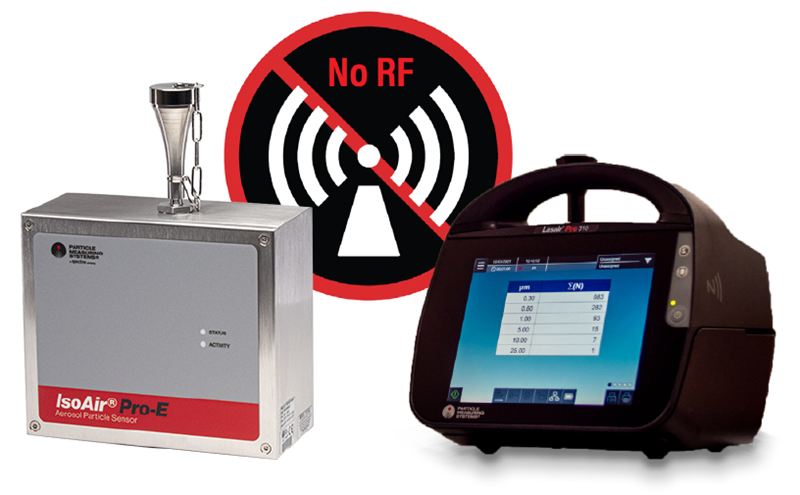
Figure 2. Non-NFC Particle Counters: IsoAir Pro-E (Left) and Lasair Pro (Right). Image Credit: Particle Measuring Systems
Mobile cleanrooms
The Aerospace and Defense sectors often require mobile cleanrooms that can pop up as needed and be relocated as projects evolve. Wherever mitigation is implemented, monitoring should be included to assess the integrity and failure of the mitigation technique.
In some cases, these cleanrooms resemble filter fan units (FFUs) on top of a scaffold with plastic sheets for walls (Figure 3). In other cases, they resemble spacecraft fairings used to protect the payload during launch. Although mobile cleanrooms need to come and go according to project development, they must be monitored for their efficiency.
Filter monitoring
Similarly, filter monitoring is a popular application across sectors and can be used to verify makeup air, purge air, and air introduced directly to the product. Filter monitoring helps protect against yield loss by identifying exactly when filter failure occurs and when replacement is required.
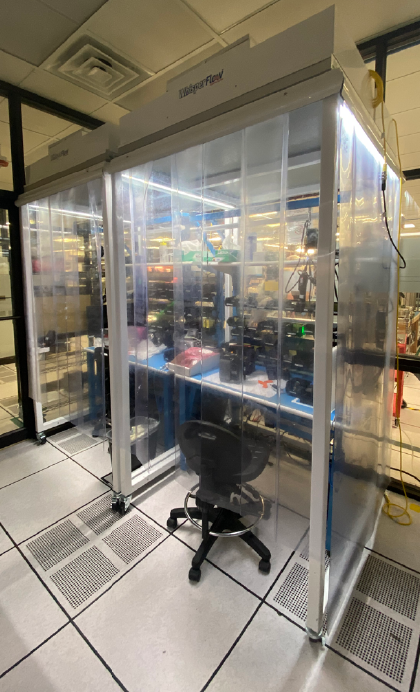
Figure 3. Pop-up Clean Space on Wheels. Image Credit: Particle Measuring Systems
Variable flow and pressure monitoring
Monitoring ducts downstream of filters can produce samples that vary across a wide range of flows and pressures. As air exits the duct for a mobile cleanroom or fairing, monitoring can be performed to ensure that clean air enters areas where products or critical technologies are exposed.
In general, variable-pressure sample lines are slightly above ambient under elevated flow conditions. In these situations, the flow is too low for a High Pressure Diffuser (HPD) yet too high for the particle counter. If the sample line directly enters the particle counter while outside the flow and pressure specifications, these conditions negatively affect sizing resolution and count data integrity and can cause the particle counter to enter a flow error state.
Venting the sample line to the particle counter or sampling through a mini-environment allows representative samples to be gathered without impairing data integrity. If monitoring at elevated pressures is required, a high-pressure diffuser can be installed immediately upstream of the particle counter to ensure the sample passing through the OPC is representative of the sampled plane (Figure 4).
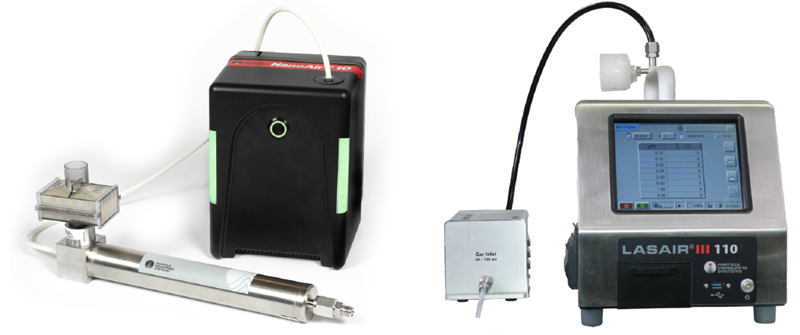
Figure 4. NanoAir 10 Particle Counter with HPD III (Left) and Lasair III 110 Particle Counter with HPD II (Right). Image Credit: Particle Measuring Systems
Conclusion
While cleanroom certification has been the most common application for OPCs in the Aerospace and Defense industries, these instruments cover a wide range of other critical applications in these sectors. OPCs are excellent tools for instantaneous, continuous, or semi-continuous monitoring, with portable and handheld varieties for more in-depth monitoring.
It is essential to monitor areas where particle contamination could result in yield or efficiency losses, as well as areas where contamination-control techniques are implemented to verify the integrity of the mitigation technique. It is always important to remember that “without measurement, there is no control.”
Acknowledgments
Produced from materials originally authored by Lexi Lake, Applications Engineer, PMS Electronics Division.
About Particle Measuring Systems
Particle Measuring Systems has 35 years of experience designing, manufacturing, and servicing microcontamination monitoring instrumentation and software used for detecting particles in air, liquid, and gas streams, as well as molecular contamination monitoring.
Specific applications include cleanroom monitoring, parenteral sampling, filter and in-line testing in deionized water and process chemicals, and point-of-use monitoring of inert gases and in-situ particle monitoring. Specialty monitoring includes parts cleanliness testing with a highly automated solution.
Particle measuring systems
Whether you want to protect a product or meet industry requirements, such as ISO 14644, USP 797, or GMP, Particle Measuring Systems has a large variety of particle counters and molecular monitors to meet your needs. With 35 years of experience, it has proven reliability to support your application.
Particle counters
Protect your product with reliable particle counters. PMS has airborne, portable, and liquid particle counters for a wide variety of applications, including DI water, chemicals, and cleanroom monitoring. Compare particle counters or learn how to monitor your cleanroom or product by reading our papers.
Molecular contamination monitors
Molecular contamination causes costly problems for high-value products, production processes, and equipment surfaces. PMS has solutions for both Airborne Molecular contamination (AMC) and Surface Molecular contamination (SMC). With parts-per-trillion limits of detection, real-time sampling, NIST traceable calibrations, and various data analysis packages, you can monitor in confidence.
Gas detectors
If you need gas detectors for process control or continuous emissions monitoring, Particle Monitoring Systems can help. Get real-time, reliable results with its ammonia, hydrogen fluoride, and chlorine detectors for worker protection, CEMs, and pollution monitoring.
Sponsored Content Policy: News-Medical.net publishes articles and related content that may be derived from sources where we have existing commercial relationships, provided such content adds value to the core editorial ethos of News-Medical.net, which is to educate and inform site visitors interested in medical research, science, medical devices, and treatments.