Cleanroom environmental monitoring is a fundamental component of sterile pharmaceutical production, offering crucial information to ensure product safety and quality. This process allows producers to maintain confidence in their aseptic procedures and respond decisively whenever conditions change.

Image Credit: FOTOGRIN/Shutterstock.com
To assess viable airborne particulate contamination, regulatory agencies currently mandate routine active air sampling within controlled environments. Active air sampling techniques allow the collection of large volumes of air within a short period, delivering timely and actionable insight into cleanroom contamination during operations. According to the EU GMP Annex 1 (2022 Revision), sampling devices should be strategically placed near areas where crucial operations occur.
Grade A environments are the most crucial areas in aseptic production. For these high-risk cleanroom environments, continuous active air monitoring is required throughout the full duration of critical operations (including assembly and setup activities).
A similar strategy should also be considered for Grade B cleanrooms, which surround Grade A zones and must maintain a high level of control to prevent contamination:
“9.24 Continuous viable air monitoring in grade A (e.g. air sampling or settle plates) should be undertaken for the full duration of critical processing, including equipment (aseptic set-up) assembly and critical processing. A similar approach should be considered for grade B cleanrooms based on the risk of impact on the aseptic processing.”1
Active air sampling depends on culture media to capture and support the growth of microorganisms. For this reason, agar plates remain the standard consumable utilized in most sampling devices. These plates contain a nutrient-rich solid medium that facilitates the recovery of viable airborne particulates and serves as the foundation for cleanroom microbiological assessments.
However, agar-based culture plates cannot maintain their ideal attributes if exposed for extended durations. Prolonged airflow causes the medium to dehydrate, which can result in cracking and a diminished capability to support microbial growth.
Consequently, active air sampling devices require replacement at verified intervals. This inherent limitation frequently conflicts with the practical demands of production procedures and represents a key consideration and discussion point when companies define the maximum allowable aspiration time for each device.
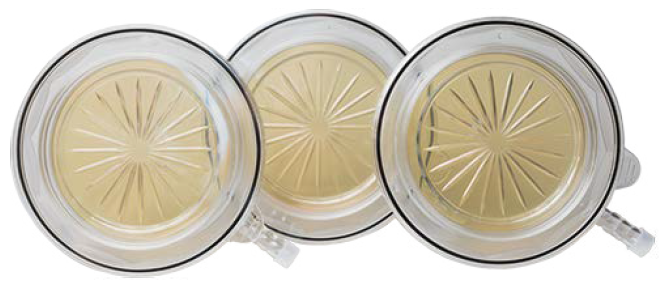
Figure 1. BioCapt Single Use Microbial Impactors. Image Credit: Particle Measuring Systems
BioCapt Single Use (BCSU) impactors address this challenge as a single-use microbiological impactor engineered for microbiological analysis and environmental air monitoring.
The impactor utilizes a radial slit design verified at the Centre for Applied Microbiology & Research (CAMR), part of the Health Protection Agency (HPA) at Porton Down. This design achieves isokinetic sampling for minimal air turbulence, in accordance with ISO 14698-1, and is well suited for sampling at 25-50 L/min. BCSU Microbial Impactors are manufactured from transparent polystyrene, allowing visibility of the culture media, and consist of three parts:
- The base containing the culture media
- The lid with radial cuts for air aspiration
- The cap that covers the lid containing the cuts
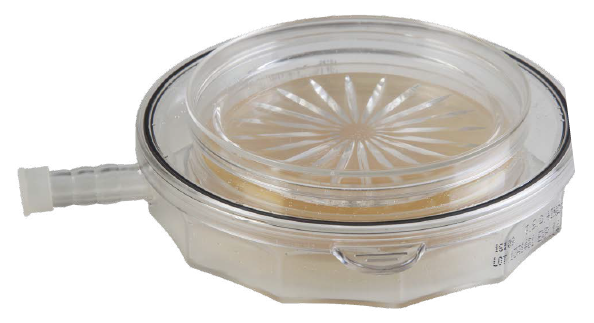
Figure 2. BioCapt Single Use Microbial Impactor. Image Credit: Particle Measuring Systems
The operation of a BCSU plate involves connecting it to an external vacuum source, which ensures stable and controlled airflow. Once sampling concludes, the cap is replaced, the single-use impactor is plugged and sealed, and the device is transferred directly into an incubator. Following incubation, the cap and lid can be removed to access the colonies.
Multiple culture medium formulations are available to support diverse requirements across varying production conditions. Formulation options can include neutralizing agents that counteract the effects of bactericidal or bacteriostatic disinfectants used on surfaces, as well as Lactamator®, an enzyme designed to inactivate a wide range of beta-lactam antibiotics.
By neutralizing residual disinfectants and antibiotics, these formulations help prevent the inhibition or suppression of microorganism growth during incubation, thereby maintaining the precision of monitoring results.
NOTE: The sampling time must be verified through a Performance Qualification (PQ) procedure, and the final outcome may vary based on key cleanroom environmental parameters that influence device performance. The values of these critical parameters can differ substantially between companies and facilities, depending on installed equipment and the specific nature of the manufacturing process.
To better comprehend current practices in continuous sampling applications, a global survey was carried out among Particle Measuring Systems (PMS) clients who use the BSCU device. Survey responses were systematically acquired and evaluated to characterize operational strategies, identify common obstacles, and document approaches used to implement continuous active air monitoring in routine production settings.
Data analysis and considerations
The survey findings provided an overview of how BCSU devices are used across the Asia Pacific Region (APAC), Europe (EU), and the Americas (AMER), reflecting a wide variety of operational contexts and environmental conditions.
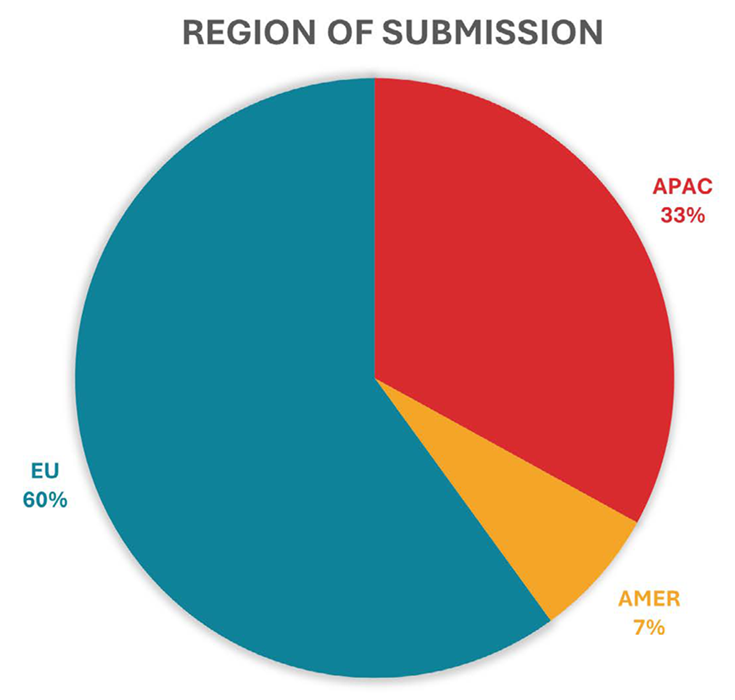
Figure 3. Region of Submission Chart. Image Credit: Particle Measuring Systems
Notably, clients reporting the longest exposure timings were predominantly operating within barrier systems, specifically closed isolators. Closed setups provide greater environmental stability and control compared with open systems, creating conditions that are more conducive to extended sampling durations.
Using agar as the collection medium for continuous monitoring or prolonged exposures during fractionate sampling presents distinct challenges. Since agar consists primarily of water, it is susceptible to dehydration. Consequently, device performance and achievable exposure duration are directly impacted by the environmental parameters to which the BCSU is exposed during operation.
The following environmental operational parameters for the BSCU device were identified and can be classified as Key or Non-Key based on their impact on the agar dehydration procedure.
Table 1. Environmental Parameters of Agar Plate Dehydration. Source: Particle Measuring Systems
| Environmental Parameters |
Parameter Designation |
Rationale |
| Temperature (°C) |
Key |
High-temperature settings could lead to excessive dehydration of the culture medium |
| Humidity (%) |
Key |
Too low humidity % could lead to excessive dehydration of the culture medium |
UDAF Airflow Rate
(m/s) |
Not-key/ Key
(Context -Dependent) |
Based on the studies conducted to determine the conformation of the aspiration slides and air distribution, this parameter should not have an impact on the recovery efficiency when the aspiration device is active. However, in the fractionated sampling setups utilized by some companies, UDAF airflow plays a key role when the device is exposed to a Grade A environment without active air aspiration. |
| Pump Flowrate (LPM) |
Key |
Significant variation of the parameters set for the aspiration speed could have an impact on the BCSU performance |
Length of Connection
Tube (m) |
Non-key |
This parameter should not have an impact on performance because it doesn’t affect the aspiration |
Parameters that are more effective at preventing and limiting dehydration allow the plate to remain exposed for longer periods before the medium cracks, discolors, or inhibits microbial growth.
There is a direct relationship between airflow rate and culture medium dehydration: increased flow rates speed up the dehydration process and shorten the effective exposure time. As a result, operating at a flow rate of 100 LPM is not practical when the goal is to expose the plates for multiple hours.
To achieve extended sampling times, a flow rate of 25 LPM is advised and represents the most frequently applied setting in the field, with only a limited number of clients operating at 28 LPM.
Temperature and humidity conditions in production filling lines are dictated by a combination of regulatory guidelines, technical requirements, and product specifications. In pharmaceutical companies (particularly those involved in sterile production), these parameters are also controlled to minimize microbial risk, such as by preventing condensation.
In practice, temperature and humidity are controlled within operational ranges to support continuous operation, as maintaining exact single values is not operationally feasible.
This approach ensures process continuity while maintaining environmental control. According to survey data acquired from PMS clients, the BSCU exhibited exceptional performance within temperatures ranging from 15 to 35 °C and humidity levels ranging from 20 to 80 %, successfully supporting exposure durations of up to four hours (240 minutes) for many users.
These prolonged duration values are usually achieved using a fractionated sampling mode. This strategy alternates an active phase with a passive exposure phase (delay phase). Air is aspirated and affects the culture plate during the active phase and is paused during the passive delay phase.
This technique lengthens the overall exposure duration of a single plate, satisfying manufacturing requirements while avoiding the need for frequent plate replacement. The four hours of aspiration can therefore be distributed across the entire shift.
NOTE: It should be noted that this strategy must align with a holistic Contamination Control Strategy (CCS) to ensure effectiveness.
During the delay phase, only a limited portion of the medium inside the BCSU is exposed to the UDAF flow, as the slides cover most of the plate surface. Consequently, dehydration during these periods is minimized compared with continuous aspiration or fully exposed passive plates, allowing for prolonged exposure times without loss of performance.
In continuous sampling or extended exposure, processed air volumes may surpass one cubic meter. In such cases, normalization of results to CFU/m3 (colony-forming units (CFU) to cubic meter (m3)) is not advised. Guidance on how to appropriately express findings in compliance with current specifications can be found in the PMS position article Normalized Data in Microbial Continuous Monitoring.
Performance Qualification (PQ) remains the primary tool for determining the feasibility of extended exposure times within a specific manufacturing environment. In addition to examining the sampling exposure, a proper PQ should also assess all dehydration-related variables and stress conditions that may arise from the specific manufacturing procedure or device handling. Examples include the VHPH process, shipment of plates to external labs, exposure to active principle that inhibits the culture medium, incubation conditions and duration, and long-term storage at ambient temperature prior to incubation.
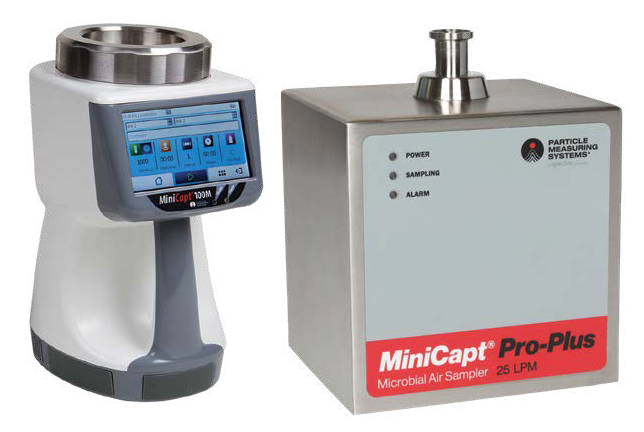
Image Credit: Particle Measuring Systems
Summary and conclusion
EU GMP Annex 1 requires continuous viable air monitoring throughout all vital operations, including setup and aseptic processing. Fulfilling this expectation requires more than procedural compliance; it requires monitoring solutions that remain dependable throughout the entire duration and intensity of actual production conditions.
Achieving prolonged exposure times with a single sampling device is heavily impacted by operational conditions, especially those influencing agar dehydration. Temperature, humidity, and pump flow rate were all identified as key variables influencing moisture loss from the culture medium over time, while the UDAF flow rate may become a significant factor when fractionated sampling is employed. Together, these parameters directly determine the ability of the culture medium to maintain its integrity and support microbial growth following prolonged sampling.
For continuous microbial monitoring data to remain meaningful, the sampling system must be engineered to preserve culture medium performance throughout the entire required exposure duration.
When a device’s verified exposure duration is insufficient to fulfill production requirements, alternative approaches may be implemented. This challenge is particularly relevant in specialized manufacturing settings such as radiopharmaceutical production, where operator access is restricted when the chamber becomes “hot.” In these situations, replacing or resetting a sampling device during manufacturing may be impractical or even impossible, making extended, uninterrupted sampling not just preferable, but indispensable.
When operational limitations prevent routine device intervention, the following approaches may support extended viable air sampling in a compliant manner:
- Fractionated sampling, which redistributes the verified sampling duration across an extended timeframe to accommodate production requirements. This approach can effectively support continuous monitoring requirements; however, it must align with a comprehensive Contamination Control Strategy (CCS).
- Sophisticated engineering solutions, such as microbiological sampling devices engineered for robotic replacement, can ensure adherence to continuous sampling guidelines. In this context, gloveless isolators are crucial in advancing automation. Although integrating robotic systems into facility designs requires greater initial investment, it provides clear, significant benefits, including the elimination of manual handling and enhanced operational efficiency.
Additional details regarding PMS solutions for gloveless isolators, such as the BCSU AutoM, can be found on the website. Regardless of the selected approach, a Performance Qualification (PQ) must be used to validate its feasibility. PQ should assess not just the sampling exposure itself, but also the entire BSCU device lifecycle, including handling, transportation, and incubation.
In parallel, the selected monitoring strategy must be formally justified within the CCS. Together, PQ and CCS are essential for demonstrating adherence to regulatory requirements while maintaining process control and ultimately preserving product quality and protecting patient safety.
Acknowledgments
Produced from materials originally authored by Giulia Paternò, Advisory Specialist, Particle Measuring Systems.
References and further reading:
- European Commission. (2022). The Rules Governing Medicinal Products in the European Union Volume 4 EU Guidelines for Good Manufacturing Practice for Medicinal Products for Human and Veterinary Use. Available at: https://www.gmp-compliance.org/files/guidemgr/20220825_gmp-an1_en_0.pdf.
About Particle Measuring Systems
Particle Measuring Systems has 35 years of experience designing, manufacturing, and servicing microcontamination monitoring instrumentation and software used for detecting particles in air, liquid, and gas streams, as well as molecular contamination monitoring.
Specific applications include cleanroom monitoring, parenteral sampling, filter and in-line testing in deionized water and process chemicals, and point-of-use monitoring of inert gases and in-situ particle monitoring. Specialty monitoring includes parts cleanliness testing with a highly automated solution.
Particle measuring systems
Whether you want to protect a product or meet industry requirements, such as ISO 14644, USP 797, or GMP, Particle Measuring Systems has a large variety of particle counters and molecular monitors to meet your needs. With 35 years of experience, it has proven reliability to support your application.
Particle counters
Protect your product with reliable particle counters. PMS has airborne, portable, and liquid particle counters for a wide variety of applications, including DI water, chemicals, and cleanroom monitoring. Compare particle counters or learn how to monitor your cleanroom or product by reading our papers.
Molecular contamination monitors
Molecular contamination causes costly problems for high-value products, production processes, and equipment surfaces. PMS has solutions for both Airborne Molecular contamination (AMC) and Surface Molecular contamination (SMC). With parts-per-trillion limits of detection, real-time sampling, NIST traceable calibrations, and various data analysis packages, you can monitor in confidence.
Gas detectors
If you need gas detectors for process control or continuous emissions monitoring, Particle Monitoring Systems can help. Get real-time, reliable results with its ammonia, hydrogen fluoride, and chlorine detectors for worker protection, CEMs, and pollution monitoring.
Sponsored Content Policy: News-Medical.net publishes articles and related content that may be derived from sources where we have existing commercial relationships, provided such content adds value to the core editorial ethos of News-Medical.net, which is to educate and inform site visitors interested in medical research, science, medical devices, and treatments.