Scientists developed an AI-powered MRI body composition calculator using data from over 66,000 adults, revealing how hidden changes in fat and muscle with age can signal future risks of diabetes, heart disease, and premature death.
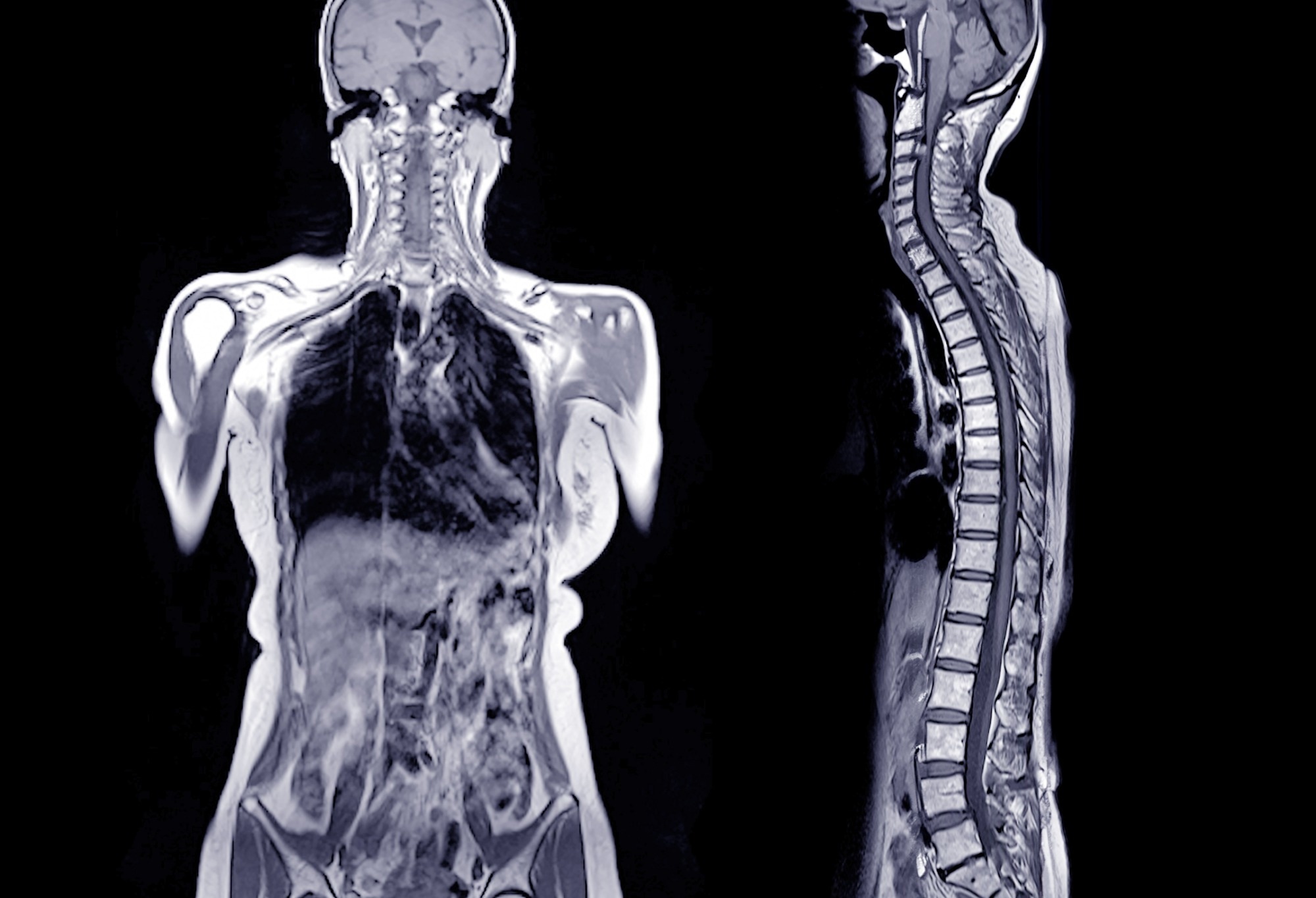 Study: Body Composition in the General Population: Whole-body MRI–derived Reference Curves from Over 66 000 Individuals. Image credit: Radiological imaging/Shutterstock.com
In a recent study published in Radiology, researchers estimated body composition (BC) metrics from magnetic resonance imaging (MRI) scans in the general population.
MRI body composition reveals hidden cardiometabolic disease risks
Computed tomography (CT) and MRI have been pivotal in supporting diagnosis, prognosis, and disease monitoring. Evidence indicates that BC metrics, such as skeletal muscle (SM) and adipose tissue compartments, derived from CT and MRI scans, are risk factors for cancer, cardiometabolic diseases, and mortality. Nevertheless, these measures are influenced by sex, height, and age. Moreover, comprehensive reference curves of BC variations across the lifespan are lacking.
Thus, tools that can adjust BC metrics derived from MRI images to account for confounders can improve screening accuracy and guide treatment decisions and prevention strategies. Large-scale imaging studies conducted in the general population can be leveraged to establish BC reference curves. While manual measurement of BC in large datasets is time-consuming, deep learning methods enable automated, efficient, and accurate quantification from imaging.
AI framework quantified muscle and fat compartments
In the present study, researchers calculated age-, height-, and sex-normalized BC measures derived from MRI scans of more than 66,000 individuals using an automated deep learning framework. Data from two general-population cohort studies were used: the German National Cohort (NAKO) and the United Kingdom Biobank (UKB) cohort. A comprehensive MRI was performed in a subset of participants in both studies.
The current study used MRI data of 30,291 NAKO subjects and 36,317 UKB subjects to quantify BC. Furthermore, a fully automated, open-source deep learning framework was applied to quantify BC measures, including SM, visceral adipose tissue (VAT), SM fat fraction (SMFF), intramuscular adipose tissue (IMAT), and subcutaneous adipose tissue (SAT). Survival analyses were conducted only in the UKB cohort because data were unavailable in the NAKO cohort.
Incident outcomes included major adverse cardiovascular events (MACE), including myocardial infarction, ischemic stroke, or cardiovascular death, diabetes, and all-cause mortality. Covariates included age, body mass index (BMI), sex, smoking status, race, alcohol intake, cancer history, hypertension, and use of antihypertensive medications. Reference curves based on height and age, and stratified by sex, were generated for BC measures. A z-score was calculated for each BC measure relative to age-, sex-, and height-matched peers.
The associations between z-scores and outcomes were investigated for z-score categories: low (z < -1), high (z> 1), and middle (z: -1 to 1). Kaplan-Meier survival estimates were calculated to evaluate time to outcome in the UKB. Cox proportional hazards regression was used to investigate associations between z-score categories and outcomes, while adjusting for the specified covariates.
Abnormal body composition predicts diabetes and mortality risks
The study included 66,608 individuals, aged 57.7 years, on average, from the NAKO and UKB cohorts. The mean BMI of the entire cohort was 26.2 kg/m2. Females had higher SAT, IMAT, and SMFF than males, whereas males had higher VAT and SM than females. SAT was positively associated with age, with a slight decrease in variability across the lifespan. VAT showed increases across the lifespan, with much higher variability in older adults.
Skeletal muscle declined with age and became less variable beyond age 50, although reference-curve analyses suggested SM decline may begin as early as age 30, while IMAT and SMFF increased and were more variable across age decades. Further, SAT was the predominant BC metric in females across age decades, with only marginal differences, ranging from 57 % at 20–30 years to 61 % at 50–60 years and >70 years. In males, SM was the predominant BC measure between 20 and 70 years.
In both sexes, VAT shifted from the pelvis to the abdomen with advancing age, and SAT shifted from the gluteal region to the chest. Paraspinal IMAT shifted from the lower lumbar spine to the upper thoracic spine over the age decades in both males and females. Differences in SM were less pronounced, but it shifted from the chest to the gluteal region in males and from the gluteal region to the chest and trunk in females.
In the UKB cohort, after excluding individuals with prevalent diabetes, insulin use, or prior myocardial infarction or stroke, diabetes was diagnosed in 532 subjects, MACE occurred in 553 individuals, and 563 deaths were recorded. High z-score categories of SMFF and VAT were associated with a higher risk of incident diabetes. High z-score categories of IMAT and SMFF were associated with a higher MACE risk and all-cause mortality. The low z-score category of SM was associated with increased all-cause mortality.
AI body composition calculator supports opportunistic health screening
In sum, the study quantified BC metrics derived from MRI scans in the general population. The findings showed that high visceral fat and SM fat fraction were associated with a greater risk of diabetes, whereas high intramuscular fat and SM fat fraction were associated with a higher risk of MACE. Low SM, along with high SM fat fraction and intramuscular fat, was also associated with increased all-cause mortality beyond conventional risk factors.
The study’s limitation was the inclusion of a predominantly White Western European adult sample from the United Kingdom and Germany, with a mean BMI in the overweight range, which limits generalizability to other racial and ethnic groups, populations with different BMI distributions, children, and clinical populations.
Download your PDF copy by clicking here.
Journal reference:
-
Jung M, Reisert M, Rieder H, et al. (2026). Body Composition in the General Population: Whole-body MRI–derived Reference Curves from Over 66 000 Individuals. Radiology, 319(2), e251939. DOI: 10.1148/radiol.251939. https://pubs.rsna.org/doi/10.1148/radiol.251939
 A survey of 371,000 adults links heart disease to eating whole fruit less often