As antibody-drug conjugates move beyond traditional cytotoxic payloads, researchers are rethinking how to make these powerful cancer therapies more precise, more durable, and safer for patients.
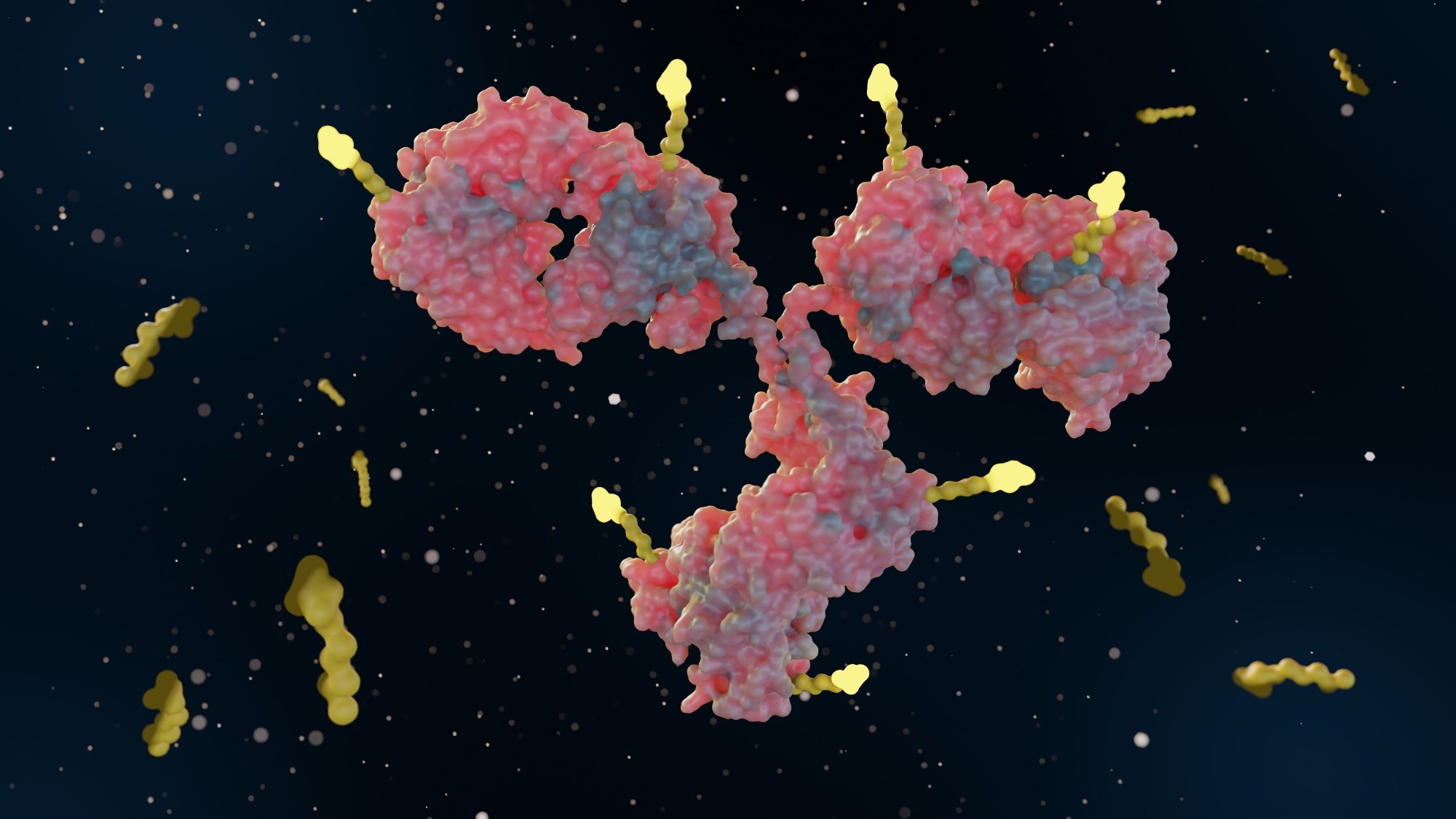
Review: Navigating the clinical progress of antibody-drug conjugates: Emerging opportunities and remaining challenges. Image Credit: Love Employee / Shutterstock
A recent review published in the journal Cell summarized the ongoing challenges in the design and application of antibody-drug conjugates (ADCs).
ADCs are among the fastest-growing anticancer therapies that aim to preferentially deliver potent payloads to tumor cells or the tumor microenvironment. The landscape of ADCs has significantly evolved since the approval of the first ADC, gemtuzumab ozogamicin, in 2000. So far, 19 ADCs have been approved, with 13 indicated for solid tumors and six for hematological malignancies. Existing ADCs deliver payloads, such as DNA-damaging agents, microtubule inhibitors, and topoisomerase I inhibitors.
Emerging classes include novel cytotoxic chemotypes and immunomodulatory and non-cytotoxic payloads. Despite considerable progress, various challenges impede the development of novel ADCs, such as identifying new targets and payloads, addressing resistance, and improving the administration regimen. In this review, the authors examined current technical and translational challenges in ADC design and application.
ADC Target and Payload Challenges
Identification of novel antigen targets remains a major endeavor in ADC development. Target selection considerations include the homogeneity and intensity of tumor expression, expression levels in normal tissues, expression prevalence across patient subsets and disease types, and the antigen’s capacity for cleavage, shedding, or internalization. High and homogeneous expression of the antigen has traditionally been considered an important prerequisite for ADC efficacy, although emerging clinical evidence suggests that some ADCs can be effective even in lower or heterogeneous target expression settings.
Available ADCs primarily target antigens, such as cluster of differentiation 30 (CD30), human epidermal growth factor receptor 2 (HER2), trophoblast cell surface antigen 2 (TROP2), and CD33, which are highly expressed in malignant tissues and are efficiently internalized. Furthermore, the conjugation of novel payloads can potentially enable the use of compounds with unfavorable toxicity profiles, novel mechanisms of action, and formulation difficulties.
However, producing safe and potent ADCs with novel payloads is complicated. Specifically, key design requirements include low immunogenicity, very high potency, and suitable chemical requirements for coupling. The extreme potency of DNA-damaging payloads has also raised safety concerns, limiting deployment. Nevertheless, recent advances in site-specific conjugation, linker chemistry, and drug-antibody ratio (DAR) optimization have expanded therapeutic windows.
Notably, translating preclinical results into clinical benefit presents a significant hurdle owing to the complexities of ADCs, potential adverse effects, and the need to align manufacturing, pharmacological, and clinical strategies. In particular, preclinical modeling poses a major challenge, as species-specific differences in model sensitivity, antibody reactivity, and tumor antigen expression can misrepresent efficacy and lead to overassessment of clinical potential. As ADCs move into earlier-stage disease and combination regimens, careful patient selection, dose optimization, and toxicity management are also increasingly important.
Bispecific and Multi-Payload ADC Innovation
Novel strategies are being investigated to enhance therapeutic efficacy and address existing limitations. These include ADC design innovations, such as multi-payload ADCs, single-payload ADCs with enhanced features, and integration of novel antibody formats. Antibody format improvements aim to increase tumor-binding specificity and affinity, thereby augmenting the therapeutic index and diversifying antigen targets.
To this end, several strategies are being investigated, including bispecific and biparatopic antibodies. Bispecific antibodies can bind two different antigens, whereas biparatopic antibodies target distinct epitopes on a single target. Biparatopic and bispecific ADCs are also being used to improve intracellular uptake via obligate mechanisms, e.g., receptor hijacking, thereby decreasing resistance.
The risk with single-payload ADCs is the inherent emergence of resistance to the payload in some tumor cells. In contrast, multi-payload ADCs simultaneously expose cells to distinct insults, decreasing their survival probability. Some ADCs may also produce bystander killing, which can help target antigen-heterogeneous tumors but may also increase toxicity in nearby normal cells. The introduction of additional payload(s) introduces new complexity; however, advances in conjugation technology and linkers have enabled the design of complex architectures. These approaches remain largely investigational, and their clinical value will depend on whether added complexity translates into safer or more durable benefit.
Immune-Stimulating and Non-Cancer ADCs
An emerging class of ADCs is immune-stimulating antibody conjugates (ISACs), which carry an immune-stimulatory agent as a payload. Such payloads can trigger innate immune cell activation, promote immune cell recruitment, induce the secretion of inflammatory cytokines, and drive antigen-presenting cell (APC) maturation. As such, ISACs can transform cold tumors into hot tumors, thereby bridging the innate and adaptive immune systems.
Antibody-steroid conjugates are another class of ADCs with unconventional payloads; these contain monoclonal antibodies (mAbs) conjugated to glucocorticoid receptor modulators and can also be designed for non-cancer indications. Antibody-oligonucleotide conjugates constitute another unconventional class, which consists of a mAb conjugated to oligonucleotides. They are designed to be internalized after antigen binding and release the payload to modulate gene expression.
ADC Clinical Development Implications
In sum, the development of ADCs has substantially advanced over the past five years, with more than 260 investigational products currently in development. Around 50 ADCs are in late-stage clinical evaluation, and nearly half are innovative ADCs targeting unique antigens distinct from those of existing ADCs. The approval of innovative ADCs, including multi-payload and multi-specific ones, could offer new hope to patients with unmet needs. However, the review emphasizes that future progress will depend not only on novel designs but also on better target validation, resistance monitoring, predictive models, patient selection, and management of payload-related toxicities.
Download your PDF copy by clicking here.
Journal reference:
- Conilh L, Metrangolo V, Crescioli S, Reichert JM, Dumontet C (2026). Navigating the clinical progress of antibody-drug conjugates: Emerging opportunities and remaining challenges. Cell, 189(10), 2791-2820. DOI: 10.1016/j.cell.2026.04.016, https://www.cell.com/cell/fulltext/S0092-8674(26)00451-4
 New scanning method detects basal cell carcinoma early using AI