Two dates printed on everyday food packaging carry very different meanings. A survey of 602 adults examined whether consumers understand the difference and how that knowledge relates to what they actually eat.
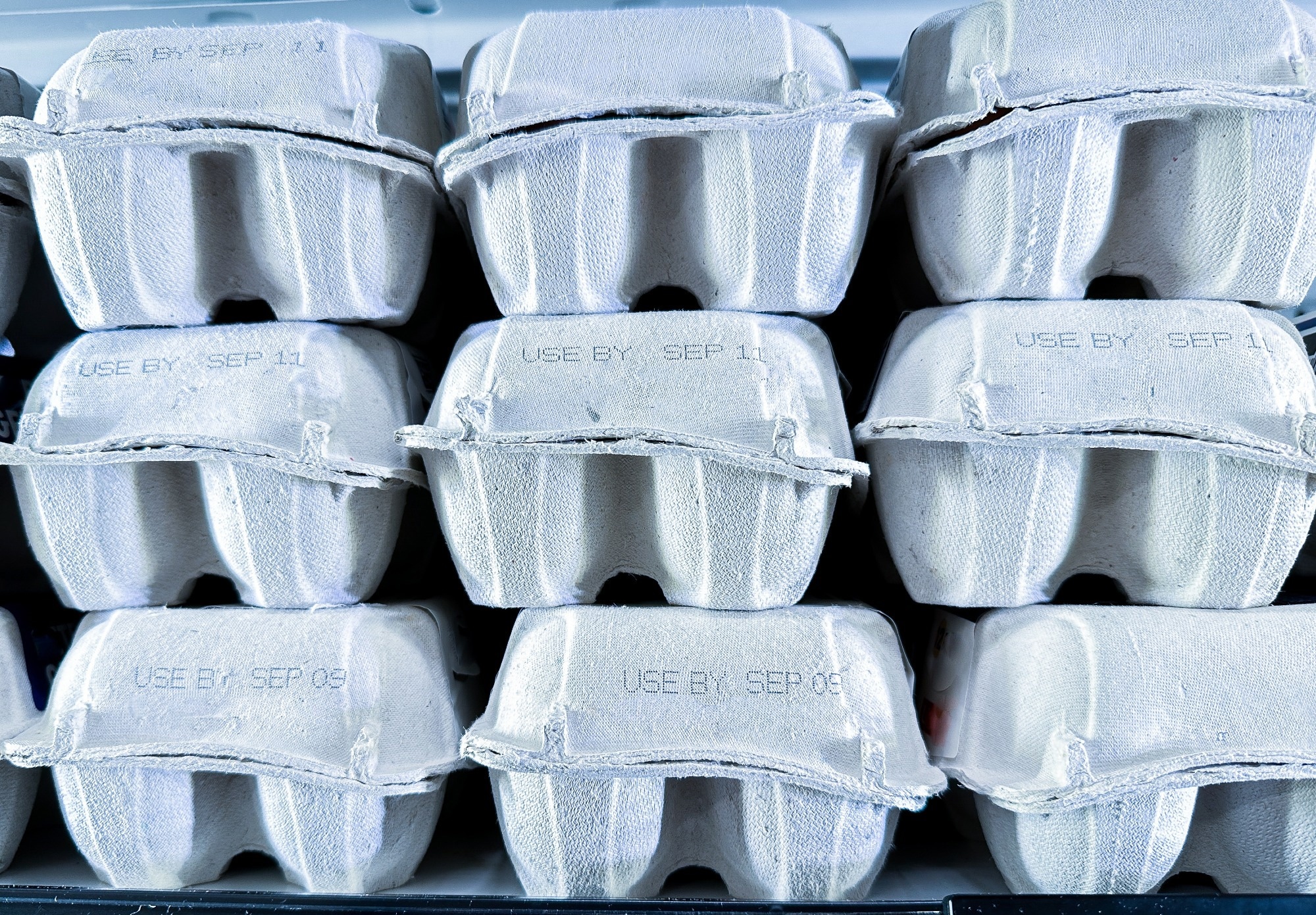
Study: “Best Before” and “Use by” Dates: A Survey on Consumers’ Knowledge, Perceptions and Behaviours. Image Credit: Miro Vrlik Photography / Shutterstock
European estimates suggest that roughly 10% of food waste in the European Union (EU) is linked to confusion over date labels. In a recent study published in the journal Foods, researchers at the University of Foggia, Italy, surveyed 602 adults to examine how knowledge and perceptions of date labels on food items relate to self-reported consumption and purchasing decisions.
Food safety labels
Food waste remains an environmental and social problem, with between 1.5 and 1.6 billion metric tons of food lost worldwide each year. In the EU, food waste reached 58.2 million metric tons in 2023, with most of it occurring at the consumer level.
Households discard food for many reasons, including misreading date labels. Under EU rules, a "use by" date marks the point after which a highly perishable food is no longer considered safe, while a "best before" date signals how long quality stays at an acceptable level for foods with a longer shelf life. Eating food after a “use by” date carries a health risk, but food may still be safe shortly after a “best before” date if it has been stored correctly. Consumers often use the two terms interchangeably.
About the study
In this study, the researchers designed a 17-item online questionnaire and shared it through Telegram, WhatsApp, Instagram, and Facebook with adult participants. The survey was anonymous and collected no personal identifiers, including names, email addresses, or IP addresses.
The questionnaire had four sections and an optional comment box for suggestions. The first section gathered background details on role in household food shopping, education, occupation, age, and gender. The second tested knowledge by asking participants to identify the meanings of "use by" and "best before" and to match foods with each label. The third section covered purchasing and consumption habits, and the last section examined whether participants felt the available information was sufficient, where they mainly got it, and whether they supported changes such as visual symbols.
Three knowledge questions were scored as correct or not fully correct and added into a descriptive score of up to 3 points. Because the questions did not form a consistent single measure, the score was used only to describe the number of correct answers.
Statistical models compared responses about eating beyond each date, accounting for knowledge answers, perceived information sufficiency, shopping responsibility, education, gender, and age. The study also examined requests for clearer labels in relation to respondents' main information sources, with information obtained from family as the reference. School was excluded from the adjusted comparison because all respondents citing it as their main source wanted clearer labels.
“As a consumer, I find it difficult to understand the difference between the use-by date and the best-before date. Simpler explanations would be helpful.”
Major findings
The study found that many respondents struggled to distinguish between the two date labels. Correct interpretation of the terms was not independently associated with reported consumption habits, but respondents who considered the available information sufficient were less likely to report eating food past the “use by” date.
Only 40.5% correctly identified the meaning of "use by," and 32.2% correctly identified the meaning of "best before." Only 3.7% answered all three knowledge questions correctly, and 60.6% wrongly believed food could not be sold after its "best before" date.
More than a quarter of respondents reported eating food past its "use by" date at least occasionally, which raises safety concerns because this date marks a safety limit. For "best before," 46.7% said they never ate food beyond the date, which may point to unnecessary disposal of food that is still of acceptable quality. Another 14.0% did not know what the minimum durability date meant.
“I find labels unclear, especially for people with limited knowledge. Simplifying date information would be helpful.”
Among respondents who correctly identified the meaning of "use by", 29.5% still reported eating food past it. Among those who found the available information insufficient, 34.1% reported eating food beyond the "use by" date, compared with 14.3% of those who found it sufficient. After accounting for age, gender, education, and responsibility for household food shopping, this difference remained.
Only 14.0% of respondents considered the available information fully sufficient. More than eight in ten respondents wanted clearer labels or explanatory symbols, and the demand was highest among those relying on school or information campaigns rather than family for information. Compared with respondents who relied primarily on family, those who obtained information from media, food labels, or campaigns were more likely to request clearer labels after adjustment for demographic characteristics.
The authors noted several limitations in the study design. Participants were recruited through a convenience sample, which limits the generalisability of the results to the wider population and prevents the findings from being treated as EU-wide estimates. The cross-sectional design could not show cause and effect, and all answers were self-reported. The questionnaire also did not measure actual food waste or the safety of foods eaten past their dates.
“Information on packaging should be more intuitive, perhaps with symbols or clear examples.”
Conclusion
The study showed that while gaps in understanding of "best before" and "use by" dates were common among the adults surveyed, knowing these definitions was not independently associated with their reported consumption habits. Feeling sufficiently informed was linked to a lower likelihood of reporting eating food past the "use by" date. Most respondents also requested clearer labels or explanatory symbols, suggesting a need for communication that more clearly distinguishes food safety from food quality.
Source:
Journal reference:
- Terlizzi, M., Speranza, B., Racioppo, A., Sinigaglia, M., Corbo, M. R., & Bevilacqua, A. (2026). “Best Before” and “Use by” Dates: A Survey on Consumers’ Knowledge, Perceptions and Behaviours. Foods, 15(22), 4087. DOI:10.3390/foods15224087, https://www.mdpi.com/2304-8158/15/22/4087
 Why do we turn to comfort food? A survey of 1,203 adults offers clues