A sweeping cohort-based analysis of four decades of mortality data reveals how cardiovascular deaths, external causes, and generational health patterns are reshaping longevity in the United States.
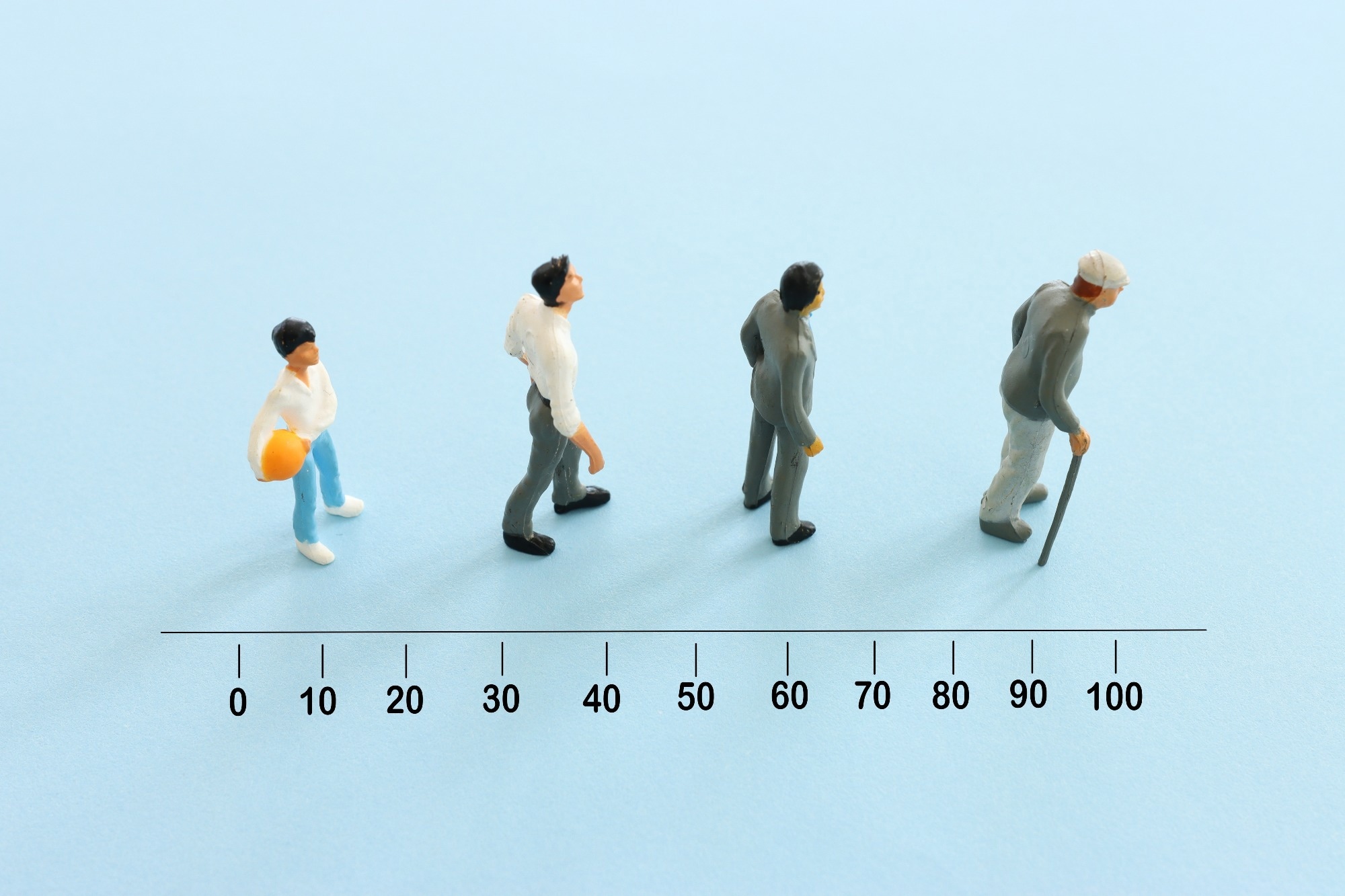
Study: Insights into US life expectancy stagnation from birth cohort mortality dynamics. Image Credit: tomertu / Shutterstock
In a recent study published in the Proceedings of the National Academy of Sciences, researchers analyzed changes in mortality in the United States (US) between 1979 and 2019, with supplementary analyses covering 2019- 23.
US life expectancy gains have slowed dramatically in recent decades
The US is experiencing stagnation in life expectancy, which improved by 0.26 years during 2010-2019, compared with an average of 1.78 years per decade over the preceding five decades. This slowdown is not exclusive to the US and has been observed in multiple high-income countries, though the US slowdown exceeds that of other high-income nations. Understanding the causes of changes in life expectancy requires accounting for the underlying cause and age-specific mortality rates.
Studies have identified suicides, alcohol-related deaths, and drug overdose deaths as contributors to the life expectancy stagnation in the US, with more recent evidence suggesting that the stagnating decreases in cardiovascular disease (CVD) deaths are the primary driver. Notably, mortality trends by birth cohort have received limited attention. A cohort perspective provides unique insights into mortality dynamics by tracking people born in the same time period.
Researchers analyze four decades of mortality data using cohort-based models
In the present study, researchers analyzed changes in mortality in the US from 1979 to 2019 using Lexis diagrams, with additional analyses extending to 2023 to examine pandemic-era mortality patterns. Mortality data by year, age, and cause of death were acquired from the National Vital Statistics System and the Human Mortality Database. Data included cohorts born between the 1890s and the 1980s. The team evaluated all-cause mortality, cancer deaths, CVD mortality, and deaths from external causes.
Lexis diagrams were used to visualize cohort patterns, and the proportionate change in mortality was plotted. Before examining Lexis diagrams, the team used age-, cohort-, and age-period regression models of all-cause mortality. The age, period model showed that declines in mortality plateaued in the 2010s and, for females, in the 1990s. The age, cohort model revealed increased mortality for the 1950s cohorts and a spike in mortality for the most recent 1970s cohorts.
1950s birth cohorts emerge as a turning point in US mortality trends
The Lexis diagram of percentage change in all-cause mortality revealed three patterns. First, the 1950-1959 birth cohorts showed higher mortality than their predecessors at virtually all adult ages. Second, mortality improvements starting around 2000 at ages ≥ 55 years began to deteriorate around 2010. Third, an alarming mortality deterioration was observed in 1970-1980 birth cohorts at ages 30 to 45 years in the 2010s.
Further, the 1950s birth cohorts, especially females, showed elevated mortality from CVD relative to their predecessors at most ages; some favorable trends in CVD mortality were noted during 2000- 2009 in their 50s. However, a broad period-related worsening in mortality began around 2010 and affected most adults alive at the time, driven largely by changes in CVD mortality. Cohorts born before 1915 for males and 1925 for females experienced worsening cancer mortality compared to their predecessors.
Cancer mortality improved overall but some younger cohorts show concerning patterns
After the oldest smoking-exposed cohorts, cancer mortality generally improved across many cohorts; however, the 1950 59 cohorts exhibited higher mortality or stagnating mortality declines relative to their predecessors, particularly among females, and cohorts born around 1970-1985 showed adverse cancer patterns at younger adult ages.
External causes of death rise sharply in younger cohorts
Mortality from external causes declined from 1980 to 1995 and increased thereafter. In particular, the 1950 and 1959 cohorts had higher mortality from external causes at ages 40 and 69 years than their predecessors. Subsequent cohorts showed progressively higher rates of mortality from external causes, with markedly adverse patterns noted in cohorts born between 1970 and 1989. Further, drug overdose deaths exhibited a substantial increase in the late 1990s, persisting until the end of the period.
Suicide mortality among females showed worsening trends from 2000, and by 2010, all cohorts were impacted. Stark period increases in traffic accidents and homicides were observed in the 2010s.
COVID-19 pandemic further worsened mortality trends across most cohorts
Finally, mortality from all causes, external causes, cancer, and CVD increased largely in the years impacted by the coronavirus disease 2019 (COVID-19) pandemic (2019-2023) in most cohorts. In particular, CVD mortality increased from 2019 to 2022 and showed some recovery by 2023, while external deaths increased and cancer mortality improved during these years.
Findings highlight complex drivers behind the US life expectancy stagnation
In sum, the 1950s birth cohort represented a transition cohort marking a shift from generally improving mortality in earlier cohorts to worsening mortality in later cohorts. In addition, a broad mortality deterioration began around 2010 for all living adults at the time, driven by CVD mortality. These dynamics reflect the multifaceted and complex nature of the life expectancy stagnation crisis, which is not attributable to any single temporal mechanism, cause, or biological phenomenon and may signal the risk of prolonged stagnation or even sustained declines in US life expectancy if current cohort trends persist.
Journal reference:
- Abrams L, Bramajo O, van Raalte A, Myrskylä M, Mehta NK (2026). Insights into US life expectancy stagnation from birth cohort mortality dynamics. Proceedings of the National Academy of Sciences, 123(11), e2519356123. DOI: 10.1073/pnas.2519356123, https://www.pnas.org/doi/full/10.1073/pnas.2519356123
 COVID-19 ARDS survivors face lasting disability and high late mortality, researchers report