A sweeping national analysis suggests that counties nearer to nuclear power plants experience higher cancer mortality, raising urgent questions about long-term environmental exposure, aging populations, and the limits of proximity-based risk assessment.
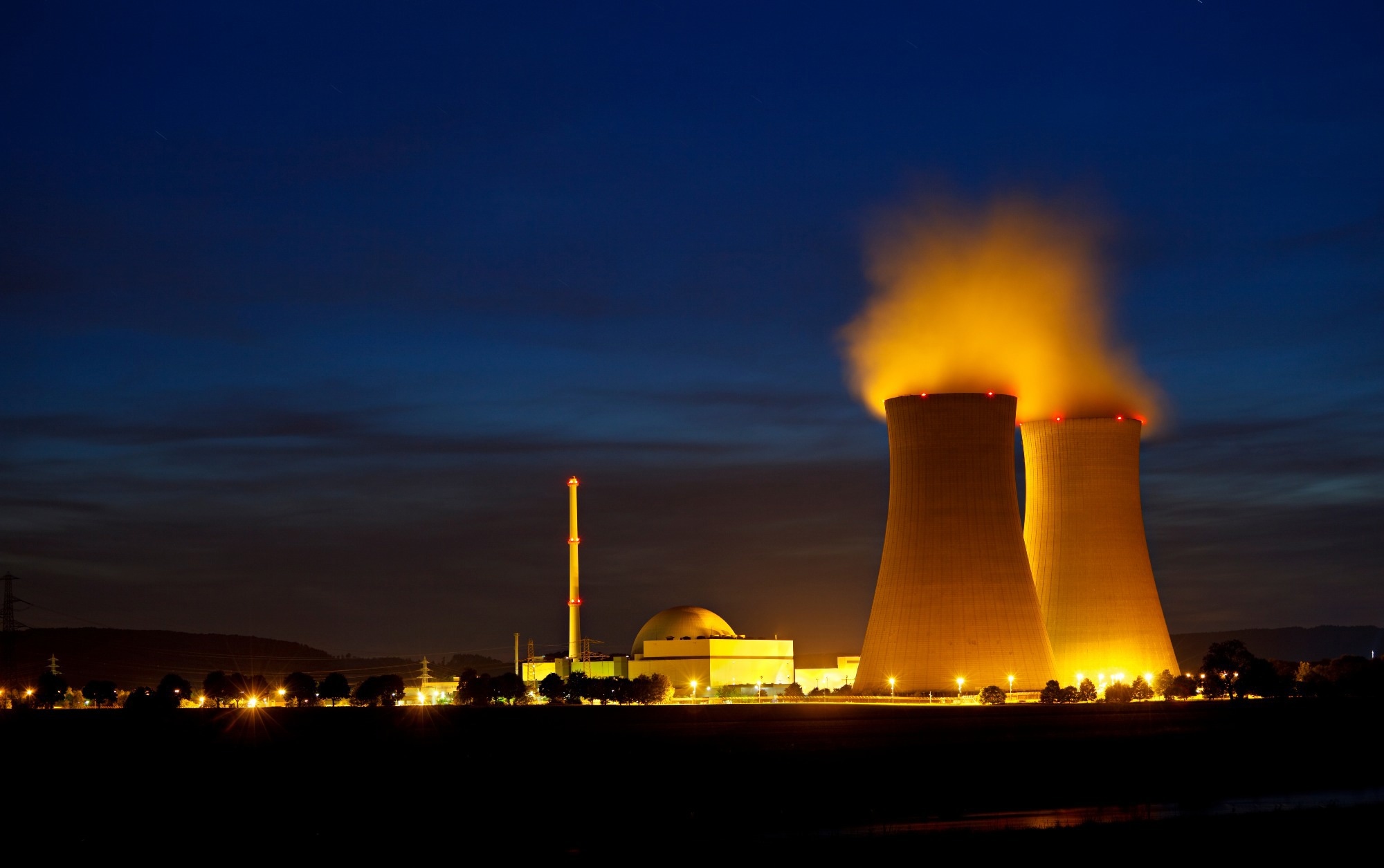
Study: National analysis of cancer mortality and proximity to nuclear power plants in the United States. Image Credit: IndustryAndTravel / Shutterstock
A recent study published in the journal Nature Communications reports higher cancer mortality rates in the United States (US) counties within 200 km of operational nuclear energy plants compared with more distant counties, with the greatest burden observed among older adults.
Analyzing cancer mortality data between 2000 and 2018, researchers found that cancer mortality increased progressively with age. Estimated attributable cancer deaths were highest among adults aged between 65 and 74 years, with an estimated 13,976 deaths in females and 20,912 in males.
Although the findings do not establish causation, they underscore the importance of examining possible exposure routes, long-term health impacts, and cancer outcomes with broader public health implications.
Background and Rationale
Nuclear energy plants remain a primary source of electricity worldwide and are increasingly being viewed as a low-carbon energy option. However, routine operations can release small amounts of radioactive pollutants into the air, water, and soil, creating potential pathways for human exposure through inhalation, ingestion, or direct contact. Chronic low-level exposure to ionizing radiation, a well-established carcinogen, has raised longstanding public health concerns for communities living nearby. Importantly, the study did not measure individual radiation exposure or dosimetry; instead, it used geographic proximity as a proxy for potential exposure, assuming equal contribution from all operational plants within 200 km regardless of plant size or emissions.
Prior studies have explored links between residential proximity to nuclear facilities and cancer risk; however, results are inconsistent. Moreover, most US investigations were geographically limited and relied on simplified exposure metrics, underscoring the need for more comprehensive, methodologically robust analyses.
Study Design and Analytical Framework
In the present study, researchers examined long-term spatial patterns of cancer mortality based on county-level proximity to nuclear facilities between 2000 and 2018. They investigated whether living closer to nuclear energy facilities could increase cancer mortality risk, accounting for demographic, socioeconomic, environmental, healthcare, and behavioral factors.
The team obtained data on nuclear energy plant locations from the United States (US) Energy Information Administration (EIA) website. They calculated proximity by summing the inverse-distance weights from all operational nuclear plants within 200 km of each county center. The analysis included facilities located in Canada but within 200 km of a US county center.
The researchers sourced county-level cancer mortality data from the Centers for Disease Control and Prevention (CDC). They determined relative risks (RRs) using generalized estimating equation (GEE) Poisson regression models. Study covariates included age, body mass index, race, education, income, smoking prevalence, population density, relative humidity, temperature, proximity to the nearest hospital, and physician visits among those aged 65 years and older.
Further, the team performed a sensitivity analysis by restricting to counties within 100 km of nuclear facilities, evaluated in 10 km increments. They also examined multiple exposure windows ranging from 2 to 20 years. Lastly, the team assessed mortality risks associated with proximity to coal-fired power plants for comparison, providing context for the observed associations.
Age-Specific and Distance-Dependent Findings
The analysis revealed significantly higher cancer mortality rates in US counties located closer to nuclear energy plants than in those farther away. The association was most pronounced among older adults, particularly men aged 65–74 years (RR, 1.20), and women aged 65–74 years (RR, 1.19).
The lowest number of cancer-related deaths was observed among individuals aged 35–44 years, with 591 deaths among females and 260 deaths among males. The cancer mortality burden increased with advancing age. Overall, the annual estimated attributable cancer mortality among individuals aged 65 years and older living near nuclear facilities averaged 4,266 deaths between 2000 and 2018.
A clear distance pattern emerged, with cancer mortality risk highest at shorter distances from nuclear plants and gradually declining with increasing distance. Geographically, counties in the Northeast, Midwest, and parts of the Southeast were generally closer to nuclear facilities, whereas those in the Great Plains and Western regions tended to be farther away due to a sparser distribution of nuclear plants. Importantly, the observed associations remained consistent across multiple sensitivity analyses using alternative proximity thresholds and time windows, reinforcing the robustness of the findings.
For a broader context, prior research has estimated that annual all-cause mortality linked to coal-fired power plant emissions averaged 20,909 deaths between 1999 and 2020. Although not directly comparable due to differences in outcomes and study design, the current findings represent approximately 20% of that figure, underscoring the cancer burden potentially associated with energy-related environmental exposures.
Conclusions and Public Health Implications
Overall, the findings suggest that US counties in proximity to nuclear energy plants experience higher cancer mortality rates than those situated farther away, highlighting the need to more closely examine the long-term public health implications of nuclear energy infrastructure. However, the ecological design, based on county-level data from the CDC, does not account for individual-level exposure or risk factors, nor does it capture lifetime residential history or migration patterns, limiting causal interpretation.
Future research should incorporate direct radiation measurements, including dosimetry, and evaluate vulnerable populations such as children. Studies exploring site-specific cancers, varying latency periods, and radiation sensitivities are also warranted. In addition, expanding investigations to include cardiovascular, neurological, and other health outcomes could provide a more comprehensive understanding of the broader health impacts of living near nuclear facilities.
 Fermented dairy was linked to lower mortality, but the pattern shifted at higher intakes