A nationwide study suggests severe COVID-19 may leave some survivors more vulnerable to TB, highlighting a possible role for targeted screening after hospitalization.
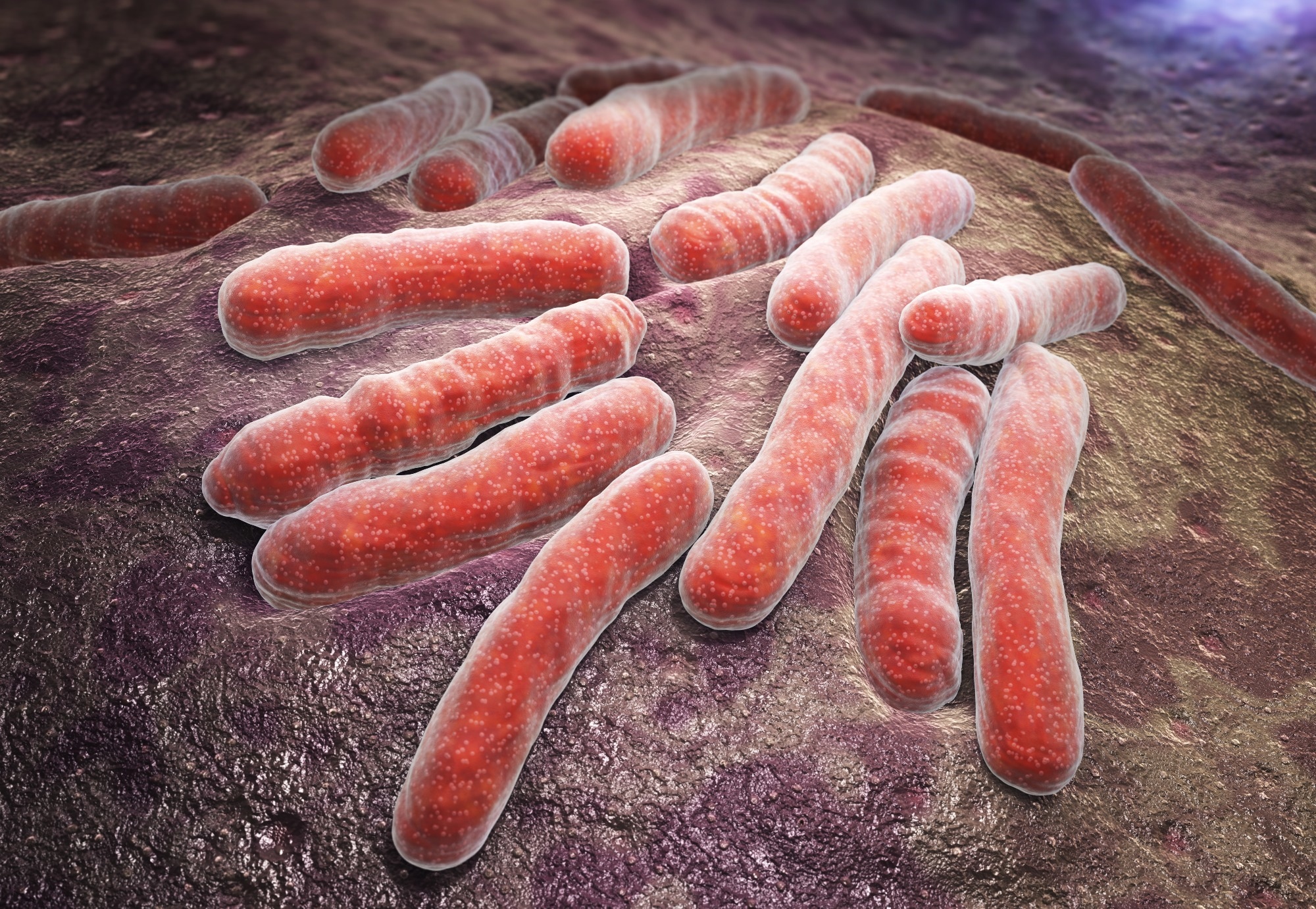
Study: Risk of incident tuberculosis after severe COVID-19: a nationwide cohort study. Image Credit: Tatiana Shepeleva / Shutterstock
In a recent article-in-press in the journal Nature Communications, researchers evaluated the risk of incident tuberculosis (TB) following severe coronavirus disease 2019 (COVID-19) among adults in Chile.
Around 10.7 million people worldwide had TB in 2024, with 1.2 million deaths. TB control efforts were substantially disrupted due to the COVID-19 pandemic, contributing to ~500,000 excess TB deaths in 2020–22. Before COVID-19 vaccines were available, nearly 14% and 5% of infections with severe acute respiratory syndrome coronavirus 2 (SARS-CoV-2) led to severe disease and critical illness, respectively.
Severe COVID-19 is characterized by a hyperinflammatory response that may linger beyond the acute phase and lead to transient immunosuppression, elevating susceptibility to secondary infections. A growing body of evidence suggests that COVID-19 survivors may have a higher risk of reactivation of Mycobacterium tuberculosis infection; however, population-level TB risk after COVID-19 remains poorly defined.
About the study
In the present study, researchers assessed the associations between COVID-19 severity and TB risk within a year of COVID-19 diagnosis in a nationwide cohort in Chile. This retrospective cohort study included adults aged ≥18 years with a first SARS-CoV-2 infection, confirmed by antigen testing or reverse-transcription polymerase chain reaction (RT-PCR).
Individuals who died on the day of SARS-CoV-2 diagnosis, those aged ≥100 years, those with pre-COVID-19 TB, and those with immunocompromising conditions or on immunosuppressive treatment were excluded. COVID-19 severity was stratified into non-hospitalized, hospitalized, and intensive care unit (ICU)-admitted categories. The study’s outcome was new-onset TB occurring within one year of COVID-19 diagnosis. The team estimated person-time at risk from COVID-19 diagnosis to incident TB onset, death, or the end of follow-up.
Kaplan-Meier curves were generated for time-to-TB across severity categories. Cause-specific hazard ratios (HRs) for incident TB were estimated using Weibull regression models. Effect modification by COVID-19 vaccination was assessed. A directed acyclic graph was constructed to explore potential confounding and guide model specification. In addition, multiple sensitivity analyses were performed to evaluate the robustness of the results.
Findings
The study included 3.6 million adults with a SARS-CoV-2 infection diagnosed between March 2020 and October 2022. The median age of the cohort was 40 years, and 53.2% were female. Most subjects (94.2%) were non-hospitalized, while 2.8% were hospitalized and 3.1% were admitted to the ICU. Most individuals (82.7%) were affiliated with the public health insurance system.
More than half of the cohort had pre-existing conditions, such as diabetes (5.2%), chronic renal, hepatic, or pulmonary comorbidity (3.2%), and other comorbidities (46.1%). Only 16.5% of the cohort had completed the SARS-CoV-2 vaccination scheme before SARS-CoV-2 infection identification. Over a follow-up of 3.6 million person-years, new-onset TB was detected in 733 individuals within a year of COVID-19 diagnosis; these individuals were more likely to be older, male, migrants, or to have major chronic comorbidities compared with those without TB.
The median time-to-TB was 127 days from COVID-19 diagnosis, and more than one-third of cases occurred within the first 2 months of COVID-19. In total, new-onset TB remained rare, affecting 0.02% of the cohort, while 54,474 participants were censored because of non-TB-related deaths during follow-up. People who required hospitalization for COVID-19, with or without ICU admission, had a greater risk of TB than non-hospitalized cases. The adjusted HR for incident TB was 8.9 (95% confidence interval [CI]: 7.28 to 10.94) for hospitalized cases and 8.3 (95% CI: 6.71 to 10.28) for ICU-admitted cases.
Notably, this excess relative risk waned over time but remained elevated. Further, males, migrants, people enrolled in the public healthcare system, and those with a major chronic comorbidity had higher risks of incident TB. The researchers observed effect modification by vaccination status. The association between severe COVID-19 and new-onset TB was substantially stronger in unvaccinated individuals but markedly attenuated in vaccinated individuals, although the authors cautioned that this should not be interpreted as evidence that SARS-CoV-2 vaccination directly prevents TB.
Reducing the follow-up period to six months nearly doubled the magnitude of the association observed at one year. A calendar-period analysis suggested that the severe COVID-19-TB association was stronger after corticosteroids became widely used in severe COVID-19 care, although this did not prove an individual treatment effect. Age-stratified analyses revealed a stronger association in individuals aged <50 years compared to those aged ≥50 years. In analyses that excluded early TB events (i.e., those within 30–180 days of COVID-19), effect estimates declined progressively with increasing exclusion thresholds. Finally, several sensitivity analyses yielded consistent effect estimates.
Conclusions
In sum, severe COVID-19 was associated with a higher risk of incident TB within 1 year than non-severe COVID-19, although the observational design cannot establish causality, and the absolute incidence of TB was low. While the relative TB risk decreased over time, it remained elevated, suggesting that the acute and post-acute phases of COVID-19 may impair lung integrity and host immunity.
The authors noted that this link may reflect COVID-19-related biological effects or underlying biological or social vulnerability. Targeted screening for latent TB infection and active TB disease among survivors of severe COVID-19, particularly those with comorbidities such as diabetes or without prior SARS-CoV-2 vaccination, may help alleviate the TB burden.
Want to read later? Download your PDF copy by clicking here.
Journal reference:
- Vargas-García S, García-García L, García C, et al. (2026). Risk of incident tuberculosis after severe COVID-19: a nationwide cohort study. Nature Communications, Article in Press. DOI: 10.1038/s41467-026-74528-5, https://www.nature.com/articles/s41467-026-74528-5
 Study links COVID-19 to higher sleep apnea risk years after infection