In ultrasound research, resolution is important, especially when working with small animals.
Whether investigating cardiovascular function in mice, tracking tumor growth, or assessing therapeutic efficacy, the instruments employed can have a substantial impact on the quality and reproducibility of results.
Many laboratories, however, continue to use clinical ultrasound scanners, which are designed for use with humans, to imaging small animal models.
While this may seem convenient, employing clinical systems for preclinical applications introduces constraints that can jeopardize results. Here is why specialist preclinical ultrasound equipment is the ideal solution.
1. Clinical ultrasound lacks the resolution small animals require
Clinical ultrasound is designed to image humans rather than small animals with organs and arteries that are only millimeters or microns large. These systems typically run between 2 to 15 MHz, which is far too low to resolve fine anatomical structures in mice or rats.
Preclinical ultrasonic devices, on the other hand, operate between 15 and 50 MHz, enabling:
- High-resolution micro-anatomical imaging
- Accurate visibility of arteries, valves, and soft tissues
- Improved ability to measure minor physiological changes
Without this resolution, many preclinical findings can be missed or read incorrectly.
2. Hemodynamic measurements in small animals are not accurate with clinical systems
Rodents have drastically different cardiovascular profiles than humans, with heart rates ranging from 400 to 600 bpm. Clinical tools are just not designed to catch such fast movements or small hemodynamic variations.
Preclinical systems provide:
- Increased frame rates
- Optimized Doppler settings for smaller animals
- Specialized workflows for rodent cardiology
This results in a reliable assessment of heart function, perfusion, and dynamic physiology.
3. Animal handling and imaging positioning are not compatible
Preclinical imaging requires specific animal staging:
- Temperature-controlled platforms
- Integrated anesthesia and physiological monitoring
- Fixation is designed for stable and repeatable positioning
Clinical probes and tables were not developed for small rodents, making it difficult to maintain stability, control motion, and establish consistent imaging planes.
4. Clinical ultrasound is not actually cost effective
Using an existing healthcare system appears to be a cost-effective solution. However, the hidden expenses are:
- Inconsistent results due to poor image quality
- Repeat scans
- More animals are needed
- Difficulty publishing due to poor image clarity
Preclinical ultrasound systems are especially designed to provide the data that reviewers, collaborators, and funding agencies require.
The better choice: Purpose-built preclinical ultrasound
A dedicated small animal ultrasound system, such as the Prospect T2 Ultrasound System, provides:
- High-frequency and high-resolution imaging
- Real-time hemodynamic monitoring
- The design is compact and user-friendly for researchers
- Provides cost-effective performance for labs and imaging cores
These systems enable researchers to produce more reliable, reproducible, and publication-ready data.
Final thoughts
Using clinical ultrasound for preclinical studies jeopardizes data quality. Preclinical researchers require model-specific tools to meet the growing demand for precision, repeatability, and translational relevance.
Purpose-built preclinical ultrasound systems enable scientists to image with accuracy, confidence, and efficiency, thereby increasing the impact of their research.
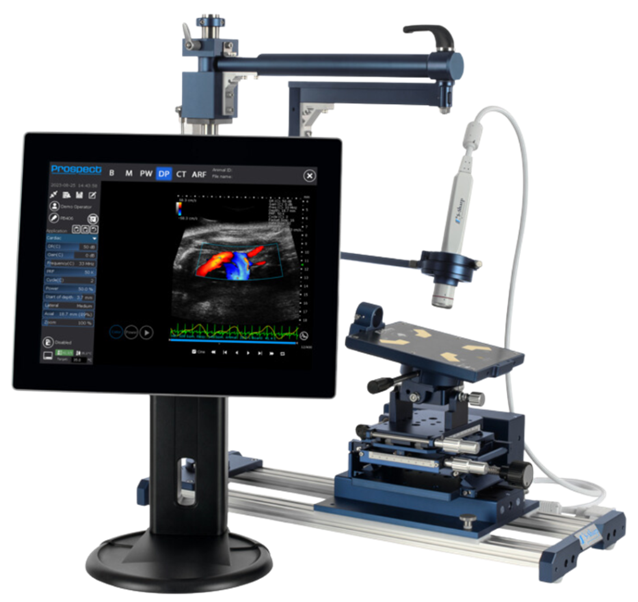
Prospect T2 Ultrasound System. Image Credit: Scintica Instrumentation Inc.
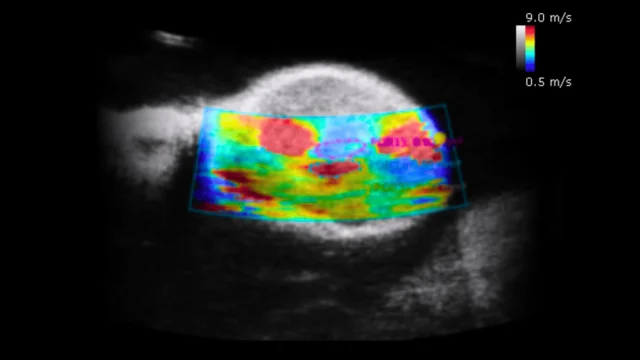
Image Credit: Scintica Instrumentation Inc.
About Scintica Instrumentation Inc.
At Scintica, we advance science and medicine by supplying researchers with reliable research instrumentation and equipment. Our carefully selected portfolio of imaging systems, research tools, and supporting technologies is designed to reduce complexity and help scientists focus on what matters most, generating
meaningful results.
We partner closely with the preclinical research community to connect teams with solutions that are scientifically robust and built to support research challenges. From system selection through long-term support, our goal is to make research more productive, efficient, and impactful.
Sponsored Content Policy: News-Medical.net publishes articles and related content that may be derived from sources where we have existing commercial relationships, provided such content adds value to the core editorial ethos of News-Medical.net, which is to educate and inform site visitors interested in medical research, science, medical devices and treatments.