New Approach Methodologies (NAMs) are being more widely adopted worldwide, prompting the dermo-cosmetics industry and pharmaceutical laboratories to actively seek robust, scalable, and human-relevant models rather than merely exploring alternatives to animal testing.
This article features an overview of the benefits of Laser-Assisted Bioprinting (LAB) in supporting this initiative.
Understanding the NAMs initiative
The New Approach Methodologies (NAMs) initiative aims to replace the use of animal models when testing the safety and efficacy of therapeutics and drugs by promoting the development and adoption of innovative research strategies.
These approaches include sophisticated in vitro human-based systems - such as organ-on-chip platforms, organoids, and complex three-dimensional tissue models - as well as in silico computational models that use bioinformatics, artificial intelligence, and predictive modeling to simulate biological processes.
Most notably, many of these platforms have been specifically developed to better capture the complexity of the human immune makeup, allowing researchers to study inflammation, immune responses, and disease mechanisms in a more physiologically relevant context.
The role of the bioprinter: Fabrication of human models
Bioprinting facilitates the fabrication of complex biological structures with precise spatial organization. Contrastingly, traditional two-dimensional cultures fail to replicate the in vivo spatial architecture of tissues found in the body.
High-resolution laser induced forward transfer (LIFT) technology functions as a high-precision assembly of tissue models, effectively bridging this gap.
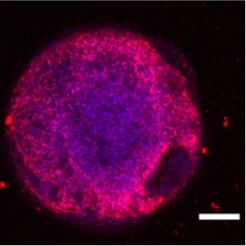
Multicellular spheroid model. Image Credit: Scintica Instrumentation Inc.
Poietis’ Next Generation Bioprinting Systems (NGB-R™ ) have been designed and developed as a commercialized LIFT model.
LAB is dependent on LIFT technology, with this nozzle-free process leveraging short laser pulses to propel biomaterials with increased accuracy.
LAB allows researchers to engineer highly complex tissues by eliminating the high-pressure shear stress found in traditional extrusion methods. This method also ensures clinically relevant tissues without compromising cellular viability.
Key benefits of LAB
LAB offers a wide range of benefits.
- High cell viability (>95 %): LAB is a gentle non-contact process, meaning that it significantly reduces mechanical stress. The technology preserves functional phenotype, cell integrity, and long-term biological activity, whether working with complex cell aggregates or fragile stem cells. These factors are essential in long-term toxicity studies.
- Picoliter and micrometric resolution (<50 µm): It is important to achieve cellular-level resolution to accurately mimic native tissues. LAB’s precision enables the exact spatial arrangement of single cells, facilitating the creation of intricate organ-on-a-chip models and an advanced reconstructed human epidermis (RHE) that performs similarly to human tissues.
- High throughput for GMP translation: Speed can be achieved without sacrificing precision. LAB offers print speeds up to 5 kHz, bridging the gap between early-stage prototyping in laboratories and the large-scale, Good Manufacturing Practice (GMP) compliant production of standardized human models.
- Exceptional multi-material versatility: The system can easily accommodate a diverse array of bio-inks, including matrices laden with growth factors and composite hydrogels. This enables the rapid assembly of complex, multi-phase tissue interfaces, for example, the dermis-epidermis junction.
About Scintica Instrumentation Inc.
At Scintica, we advance science and medicine by supplying researchers with reliable research instrumentation and equipment. Our carefully selected portfolio of imaging systems, research tools, and supporting technologies is designed to reduce complexity and help scientists focus on what matters most, generating
meaningful results.
We partner closely with the preclinical research community to connect teams with solutions that are scientifically robust and built to support research challenges. From system selection through long-term support, our goal is to make research more productive, efficient, and impactful.
Sponsored Content Policy: News-Medical.net publishes articles and related content that may be derived from sources where we have existing commercial relationships, provided such content adds value to the core editorial ethos of News-Medical.net, which is to educate and inform site visitors interested in medical research, science, medical devices and treatments.