The Newton 7.0 sets a new standard for preclinical optical imaging. Designed for dependability and versatility, it allows researchers to visualize biological processes in real time while maintaining image quality and ease of use.
Here are eight reasons why researchers use the Newton 7.0 for in vivo imaging excellence:
1. A wider lens aperture
The Newton 7.0 has the widest available lens aperture (f/0.70), enabling increased light collection even from low-signal samples. This facilitates quicker acquisition times and better sensitivity, which are suitable for in vivo experiments.
2. High-resolution CCD camera
All Newton 7.0 systems include a scientific-grade CCD camera for signal detection. The VIS camera is extensively chilled to -90 °C (absolute) to eliminate dark noise and improve image quality. With a resolution of 4.6 MP, photos have the best signal-to-noise ratio.
3. Powerful illumination system
Newton 7.0 provides imaging flexibility with eight to 12 excitation sources (model dependent), enabling users to track and view a wide range of fluorescent reporters. Class II LEDs provide a very narrow-band light, boosting sensitivity and eliminating cross-stimulation without the use of excitation filters.
4. Fully automatic darkroom
The motorized camera and mousepad enable users to easily navigate the field of view. Acquire photos from up to 10 mice at the same time using the greatest FOV (20 x 20 cm), allowing for the best throughput.
5. 3D optical tomography capabilities
Optical tomography uses body surface measurements and two 3D cameras to provide a detailed quantitative and targeted study of signal dispersion within an animal. The Newton 7.0 reconstructs bioluminescent signals into volume and overlays them with a 3D model to provide better knowledge of anatomical and deep tissue structures.
6. Multi-spectral capabilities
The Newton 7.0 uses multi-spectral imaging (also known as multiplexing) to precisely separate fluorescent and bioluminescent signals in a single acquisition session. Researchers can conduct co-localization research, allowing multiple signals to be viewed concurrently.
7. License-free software
The Newton 7.0 includes license-free acquisition and analysis software that is designed to be simple and easy to use. The software enables all users to study, process, and exchange data with no limits or additional expenses.
8. Fast, intuitive workflow
From acquisition to analysis, the user-friendly software interface simplifies each step. The Newton 7.0 has pre-made procedures, clever focusing, and real-time previews to help customers save time and reduce variability between tests. A variety of probes and dyes can be used with the flexible imaging modes of bioluminescence and fluorescence.
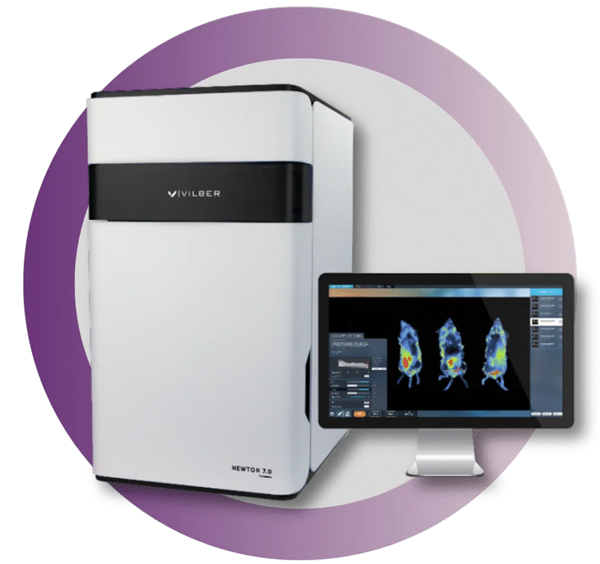
Image Credit: Scintica Instrumentation Inc.
About Scintica Instrumentation Inc.
At Scintica, we advance science and medicine by supplying researchers with reliable research instrumentation and equipment. Our carefully selected portfolio of imaging systems, research tools, and supporting technologies is designed to reduce complexity and help scientists focus on what matters most, generating
meaningful results.
We partner closely with the preclinical research community to connect teams with solutions that are scientifically robust and built to support research challenges. From system selection through long-term support, our goal is to make research more productive, efficient, and impactful.
Sponsored Content Policy: News-Medical.net publishes articles and related content that may be derived from sources where we have existing commercial relationships, provided such content adds value to the core editorial ethos of News-Medical.net, which is to educate and inform site visitors interested in medical research, science, medical devices and treatments.