Researchers analyzing recent NHANES data found that adults with higher total sugar intake had greater odds of gallstones, adding fresh evidence that the everyday diet may play a meaningful role in gallbladder health.
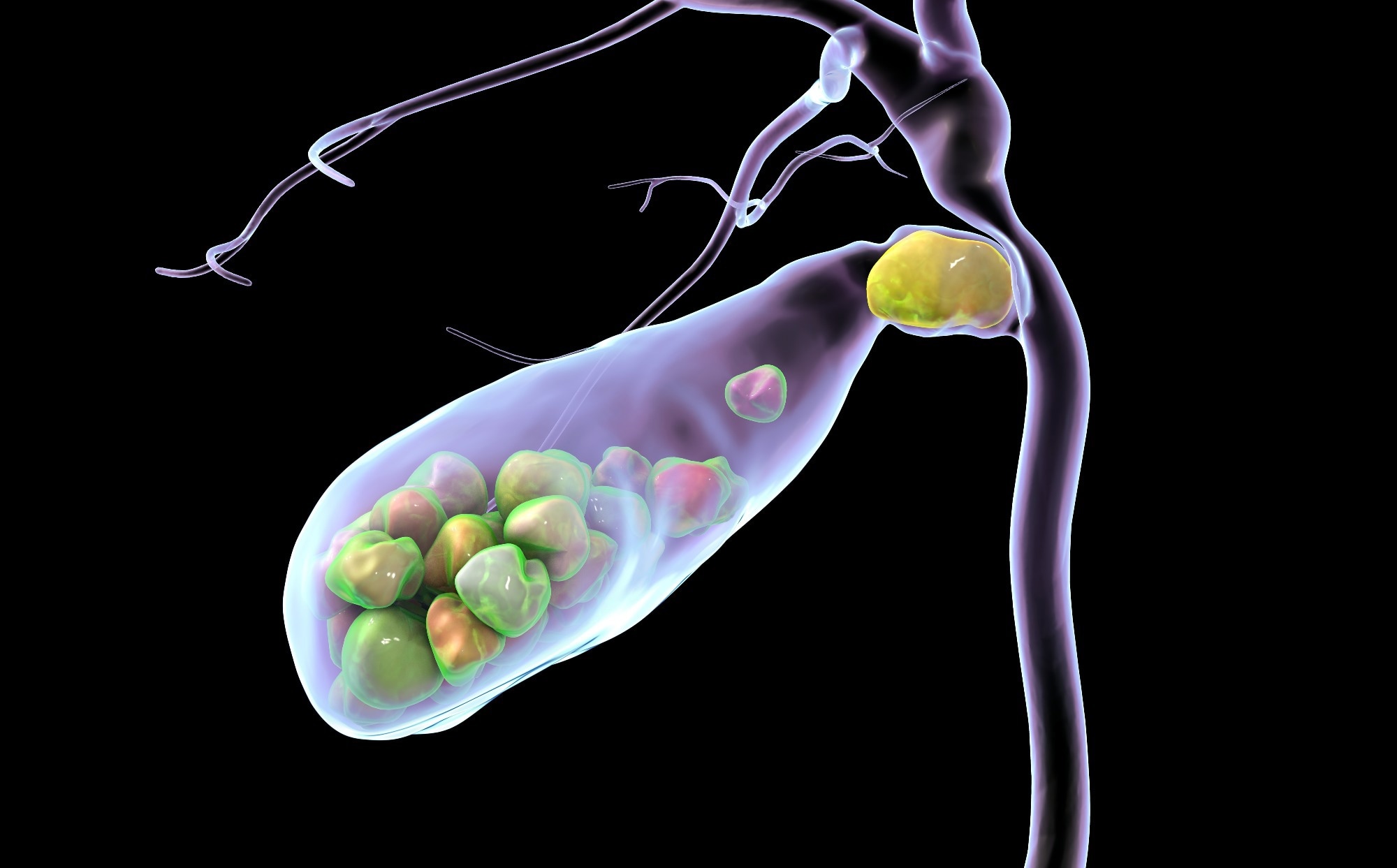
Study: Association between total dietary sugar intake and gallstones in Americans. Image Credit: Kateryna Kon / Shutterstock
A new study published in the journal Scientific Reports suggests that higher dietary sugar intake may increase the risk of gallstones among United States (US) adults. This highlights a growing dietary concern in modern lifestyles.
Analyzing data from 8,975 participants in the National Health and Nutrition Examination Survey (NHANES) from 2017 to 2023, researchers found that each 100 g/day increase in total sugar intake was associated with a 41% higher risk of gallstones, even after adjusting for demographic, clinical, lifestyle, and dietary factors.
These findings highlight excessive sugar consumption as a potential, modifiable risk factor. However, further longitudinal and mechanistic studies are needed to confirm causality and clarify the underlying biological mechanisms.
Gallstones are a common liver and biliary condition, and their prevalence is increasing worldwide. They can lead to complications such as cholecystitis and pancreatitis, which add significantly to healthcare costs.
Diet is an important factor in gallstone development. High intake of sugars like sucrose and fructose has been linked to metabolic disorders and other chronic diseases. Conversely, reducing refined sugar has shown benefits in conditions such as non-alcoholic fatty liver disease. However, its role in gallstone formation remains unclear. Given the high levels of sugar consumption, especially in Western populations, understanding this link is important for prevention.
NHANES Study Design and Gallstone Analysis
In this population-level, cross-sectional study, researchers examined the link between sugar consumption and gallstones among United States (US) adults.
The team analyzed data from 8,975 participants of NHANES surveys conducted between 2017 and 2023. The study population excluded individuals below 20 years of age, pregnant women, and those with missing data. The investigators estimated total dietary sugar intake in grams per day using two separate 24-hour food intake recalls. They identified gallstone status through self-reports. The researchers split the dataset into training (70%) and testing (30%) sets.
The team used multivariate logistic regression to calculate odds ratios (OR), adjusting for demographic, clinical, and lifestyle factors. They applied the restricted cubic spline (RCS) method to explore nonlinear relationships. The investigators also conducted subgroup analyses across key variables. These included age, sex, body mass index (BMI), race, education, marital status, smoking status, poverty-to-income ratio (PIR), drinking status, physical activity, and comorbidities.
To address class imbalance, the team used the synthetic minority over-sampling technique (SMOTE). They then developed an Extreme Gradient Boosting (XGBoost)-based machine learning (ML) model using a 10-fold validation approach to improve prediction accuracy. Lastly, analysis using Shapley additive explanations (SHAP) evaluated the contribution of individual variables.
Sugar Intake Shows Higher Gallstone Odds
The study cohort primarily comprised females (53%). Most participants (89%) did not report gallstones, while 11.4% did. Compared to those without gallstones, affected individuals were typically older, had lower incomes, and consumed fewer calories. They were also more likely to be physically inactive, obese, and smokers, with a higher burden of chronic diseases.
The analysis revealed a clear positive association between dietary sugar intake and gallstone risk. Every 100-gram/day rise in sugar intake increased the risk by 41% in the fully adjusted model (OR, 1.4). When grouped into quartiles, individuals in the higher intake groups (third and fourth quartiles) had 37% (OR, 1.37) and 82% (OR, 1.68) higher risks, respectively, compared to the lowest group. The RCS analysis supported a positive overall association without evidence of nonlinearity. Subgroup analyses confirmed the consistency of these findings.
The ML model performed well, achieving an area under the receiver operating characteristic (ROC) curve (AUC) of 0.896 on the test dataset. SHAP analysis ranked sugar intake sixth in importance among predictors. Age, sex, and body mass index (BMI) had a greater influence. Partial dependency plots (PDP) further showed that in the ML model, estimated gallstone risk increased sharply as sugar intake rose to about 150 g/day, then plateaued slightly thereafter.
Potential Mechanisms Linking Sugar and Gallstones
High sugar intake may promote gallstone formation by altering bile composition and cholesterol metabolism. It raises blood glucose and insulin levels, which can increase liver cholesterol production and its secretion into bile, leading to supersaturation. Over time, high sugar diets may also drive insulin resistance, visceral obesity, reduced gallbladder motility, and bile stasis.
Excess sugar may further trigger oxidative stress and low-grade inflammation, impairing gallbladder function and accelerating cholesterol crystal formation. It can also disrupt gut microbiota and intestinal barrier integrity. However, further studies are needed to clarify these mechanisms and inform prevention strategies.
Public Health Implications of Sugar Reduction
The findings highlight a significant association between higher total dietary sugar intake and increased gallstone risk in US adults. As diet is a modifiable risk factor, reducing sugar intake may represent a potential preventive approach. Such changes are simple to adopt, scalable at the population level, and accessible to the general public, with the potential to improve individual health while reducing the broader economic burden associated with gallstone-related complications.
Looking ahead, these findings may help inform public health guidance and clinical practice, although prospective studies and mechanistic research are needed to confirm these associations and refine targeted interventions. Because the study was cross-sectional and gallstones were self-reported, the findings cannot establish causality and should be interpreted with caution.
 High adolescent BMI linked to faster biological aging in adulthood