Self-reported diets often miss the mark, but this review shows how blood, urine, and skin biomarkers could sharpen fruit and vegetable intake research while revealing why no single marker is ready to stand alone.
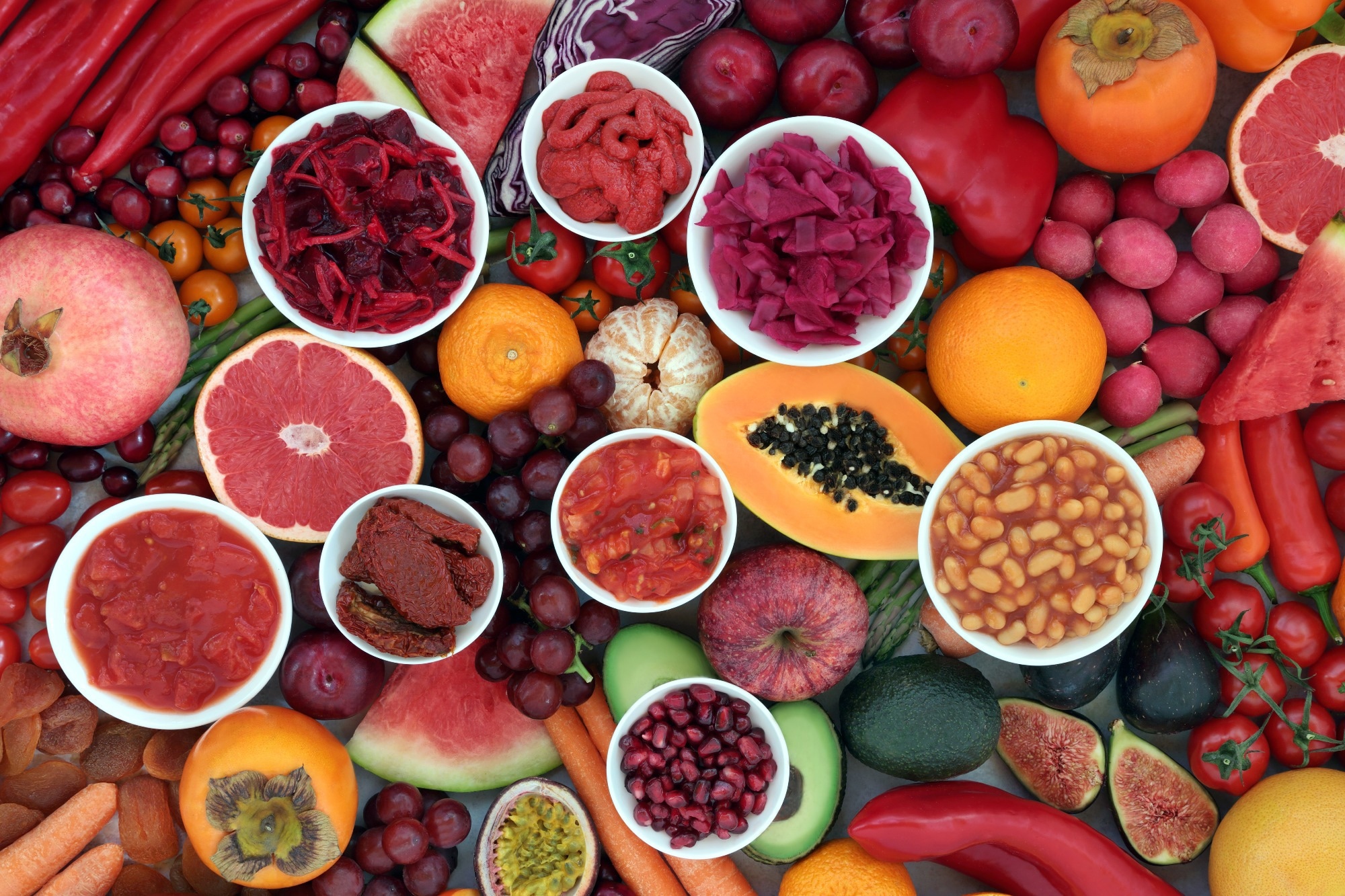
A Narrative Review of Candidate Biomarkers of Total Fruit and Vegetable Intake. Image Credit: Marilyn Barbone / Shutterstock
A narrative review article published in Nutrition Bulletin provides an in-depth overview of the characteristics of currently available candidate biomarkers for estimating dietary intakes of fruits and vegetables. Identifying effective biomarkers is particularly important for more objectively assessing intake and strengthening research into the health benefits of consuming fruits and vegetables.
Background
A high intake of fruits and vegetables has been consistently associated with a reduced risk of several chronic diseases, including cardiovascular disease, asthma, diabetes, obesity, and certain cancers. These well-documented associations have significantly encouraged the inclusion of these food groups in national dietary guidelines.
However, dietary intake assessment methods used in most nutritional studies, including food frequency questionnaires (FFQs), 24-hour dietary recalls, and food records, are prone to recall bias and other measurement errors that can reduce the accuracy of dietary intake estimates and, consequently, the risk estimates obtained from these studies.
To improve assessment accuracy, several dietary biomarkers have been identified, representing a more objective, complementary approach to estimating dietary intake of fruits and vegetables and potentially improving the validity of future epidemiological studies investigating the health benefits of these food groups.
Recent advances in metabolomics have facilitated the rapid identification of dietary biomarkers. However, validation has lagged behind discovery, partly because standardized validation processes were historically lacking.
To increase uptake of biomarker-based methods in dietary intake assessments, this review provided an in-depth analysis of current evidence supporting the validity, utility, strengths, and weaknesses of various candidate biomarkers for fruit and vegetable intake.
Validation criteria for fruit and vegetable intake biomarkers
Given the historical lack of a standardized validation process, researchers have used a consensus-based procedure to develop a set of eight criteria for the systematic validation of biomarkers of food intake. These include plausibility, dose response, time response, robustness, reliability, stability, analytical performance, and interlaboratory reproducibility.
A potential candidate biomarker is assessed against these criteria to determine its degree of validation. Several biomarkers have been identified in various body fluids, including blood, urine, and skin. Some potential candidate biomarkers include urinary potassium, flavonoids, and hippuric acid, serum and erythrocyte folate, serum vitamin C, and blood and skin carotenoids.
Urinary Potassium
Given that potassium is abundantly found in fruits and vegetables and that its homeostasis in the body is primarily maintained through renal excretion, urinary potassium levels have been considered a potential biomarker of fruit and vegetable intake. Urinary potassium levels correlate better with dietary potassium intake than serum or plasma potassium levels.
However, studies investigating urinary potassium as a potential biomarker have indicated that it may correlate significantly and dose-dependently with vegetable intake, but not consistently with fruit intake or total fruit and vegetable intake.
Several factors can modulate renal potassium excretion, including the use of certain medications, the presence of certain diseases, and endogenous levels of certain hormones. These factors can potentially reduce the ability of urinary potassium to function as a biomarker of fruit and vegetable intake.
Although urinary potassium remains stable for a long time, collecting 24-hour urine samples is time-consuming and may not be feasible for many individuals. All these factors collectively reduce the potential of urinary potassium to be an effective biomarker of total fruit and vegetable intake.
Urinary flavonoids
Flavonoids are bioactive polyphenolic compounds abundantly found in fruits and vegetables. Concentrations of flavonoids and their metabolites in 24-hour urine samples have been considered promising short-term biomarker candidates to assess recent intake of fruits and vegetables.
Several studies have reported that the sum of certain urinary flavonoid metabolites can serve as a promising biomarker for total fruit and vegetable intake. However, these flavonoid metabolites are not exclusive to fruits and vegetables, and their concentrations in urine samples may change in response to dietary intake of tea, chocolate, coffee, spices, and wine. This limitation highlights the need to identify and standardize specific flavonoids in fruits and vegetables.
Urinary concentration of hippuric acid, one of the main metabolic end products of flavonoids, also shows promise as a potential biomarker of fruits and vegetables. Despite evidence of significant dose-dependent associations in some studies between 24-hour urinary hippuric acid concentration and self-reported fruit and vegetable intake, most research on this candidate biomarker has been conducted in children and adolescents.
Serum and erythrocyte folate
Fruits and vegetables are rich sources of dietary folate, and serum and erythrocyte concentrations of this B vitamin have been considered potential biomarkers of dietary intake. Existing evidence indicates that serum folate acts as an indicator of changes in dietary folate intakes in the previous few days, and erythrocyte folate acts as a long-term indicator of dietary folate intakes over the previous 3–4 months. However, serum folate has been found to be a better reflector of dietary fruit and vegetable intakes than erythrocyte folate.
Despite evidence indicating a dose-dependent association between serum folate and fruit and vegetable intakes, one major limitation is that folate is not exclusively found in fruits and vegetables, and its concentration can change in response to other foods, especially supplements and fortified foods.
Another limitation is that several factors beyond dietary folate intake can significantly influence serum and erythrocyte folate concentrations, including gender, age, energy intake, smoking, alcohol intake, and race or ethnicity.
Serum vitamin C
Fruits and vegetables are the primary dietary sources of vitamin C, and their serum concentration can strongly reflect dietary intakes of these food groups. One potential limitation of this candidate biomarker is that blood saturation occurs after intake of 200–400 milligrams of dietary vitamin C in healthy individuals.
A decreased responsiveness beyond these intakes can reduce the sensitivity of serum vitamin C as a biomarker for detecting changes in fruit and vegetable intake, especially when dietary intakes of this vitamin from supplements and fortified or enriched foods are very high.
Overall, existing evidence suggests that serum vitamin C can serve as a useful biomarker of fruit and vegetable intake in populations where supplementation and consumption of vitamin C-fortified or enriched foods are limited and average intakes are lower than blood saturation levels.
Blood Carotenoids
Carotenoids are found in many common fruits and vegetables and cannot be synthesized in the human body. These factors make blood carotenoids a promising candidate marker. The total sum of carotenoids in the blood increases significantly in response to both short-term and long-term intakes of fruits and vegetables.
The Panel on Dietary Antioxidants and Related Compounds of the Institute of Medicine currently views blood concentrations of carotenoids as the best biomarker for fruit and vegetable intake because of a large body of evidence demonstrating their advantages over other tested candidate biomarkers. However, blood sampling is invasive, some fruits and vegetables contain few carotenoids, and interlaboratory reproducibility remains to be further studied.
Skin carotenoids also have the potential to be an alternative biomarker to blood carotenoids and offer several advantages, including reduced time, cost, and invasiveness. However, skin carotenoids require additional validation through controlled clinical trials in diverse populations.
Take-home message
Current research identifies a few biomarkers that can help estimate short-term or habitual intakes of fruits and vegetables. Serum vitamin C, serum folate, urinary hippuric acid, urinary potassium, and urinary flavonoids appear better suited to tracking short-term changes or adherence to dietary interventions, whereas blood and skin carotenoids and erythrocyte folate are better suited to habitual intake assessment. However, further research is needed to address some potential limitations, including factors affecting the concentrations of these biomarkers, standardization of appropriate analytical methods, and the efficacy of these biomarkers in diverse populations. Combined biomarker panels may improve group-level estimates of fruit and vegetable intake, but they still require further validation and may not yet be precise enough for individual-level assessment.
 Geo-mapping to identify high-need areas for trauma blood delivery