A new study suggests targeted reductions in red meat and dairy could deliver healthier, more sustainable, and more affordable diets, but only if key nutrients such as calcium and iodine are protected.
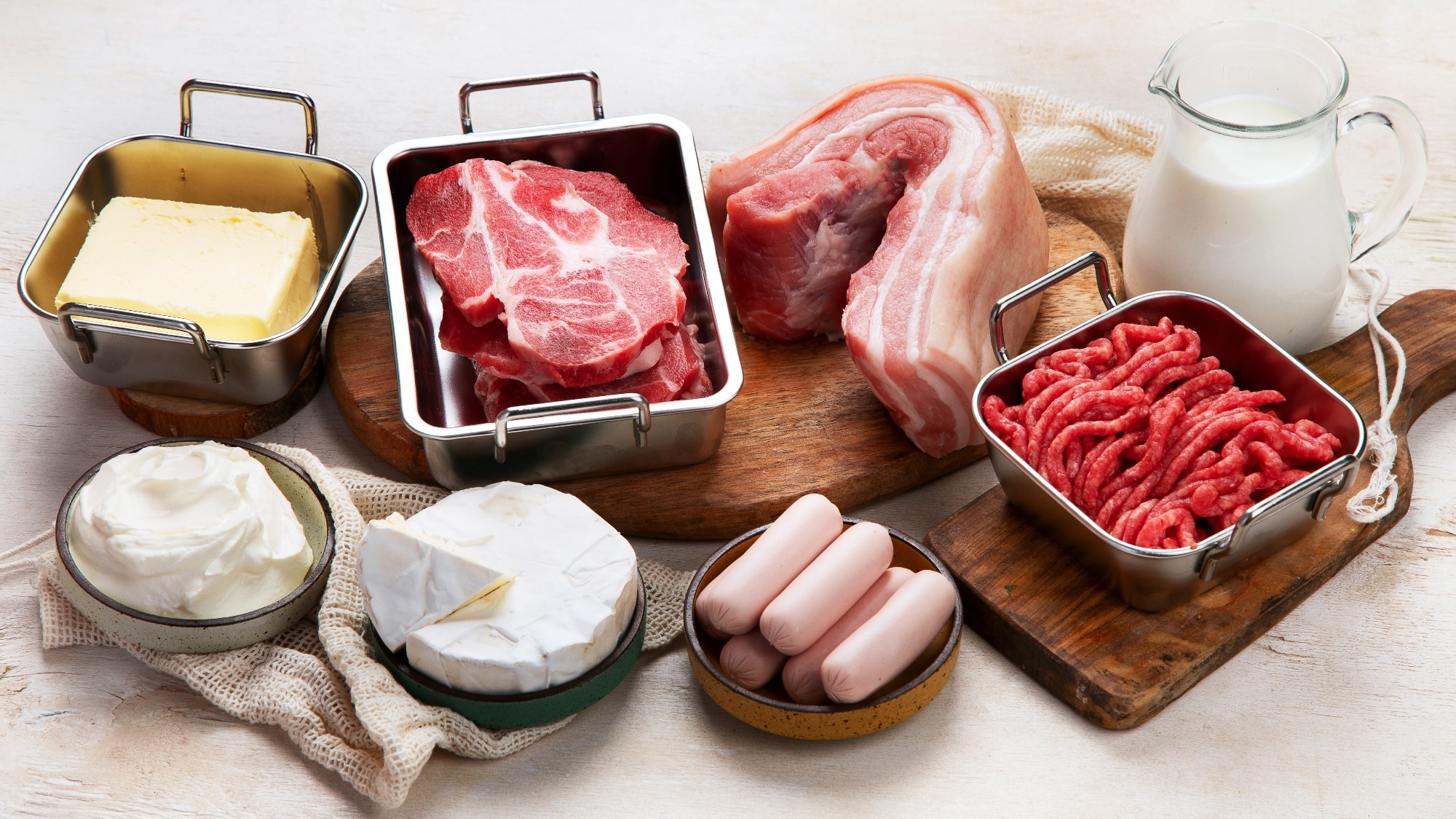
Study: Reduced meat and dairy consumption improves health, environmental and most nutritional outcomes without increasing diet costs among Scottish adults. Image Credit: Tatjana Baibakova / Shutterstock
In a recent study published in the journal Nature Food, a group of researchers evaluated how different pathways for reducing meat and dairy consumption could affect nutrient intake, health outcomes, environmental sustainability, and diet costs among Scottish adults.
Background
Can eating less meat and dairy benefit both personal health and the environment without increasing grocery bills? Food production is a significant part of greenhouse gas emissions, and dietary changes are considered one of the methods for meeting climate targets. UK and Scottish policy guidance, including the UK Climate Change Committee recommendations, the Eatwell Guide, and the Scottish Dietary Goals, has encouraged lower meat intake, particularly red and processed meat, as part of healthier and more sustainable diets. However, concerns remain that reducing meat and dairy consumption may compromise nutrient intake, raise food prices, increase the risk of chronic diseases, or increase diet costs. Further research is needed to analyze the relationships among health, nutrition, sustainability, and diet affordability, and to make evidence-based dietary recommendations.
About the Study
The researchers conducted a microsimulation analysis using dietary information from the 2021 Scottish Health Survey (SHeS), which included 3,447 adults aged 16 years and older and was designed to represent the Scottish population. The average daily intake of 54 nutrients was calculated from dietary recall data. Nutritional supplements were excluded from the analysis. Environmental impact and food price information were obtained by linking reported foods with the foodDB, which contains standardized estimates for approximately 70,000 food products sold in United Kingdom supermarkets.
A total of 35 dietary pathways, including 33 meat and dairy reduction pathways and two dairy-only reduction pathways, were modeled to reflect the meat and dairy reductions recommended by the Climate Change Committee (CCC), alongside red meat thresholds aligned with the Scottish Dietary Goals (SDG). Dairy intake was reduced by 20% across most pathways. Meat and dairy were either not replaced or replaced gram-for-gram with vegetables, beans and pulses, eggs, non-smoked oily fish, poultry, Plant-Based Meat Alternatives (PBMA), or Plant-Based Dairy Alternatives (PBDA). Nutrient intake, environmental impacts, and diet costs were estimated across pathways, while obesity, type 2 diabetes (T2D), cardiovascular disease, and all-cause mortality were modeled for the no-replacement pathways. Outcomes were also assessed across different sexes, ages, and Scottish Index of Multiple Deprivation (SIMD) groups.
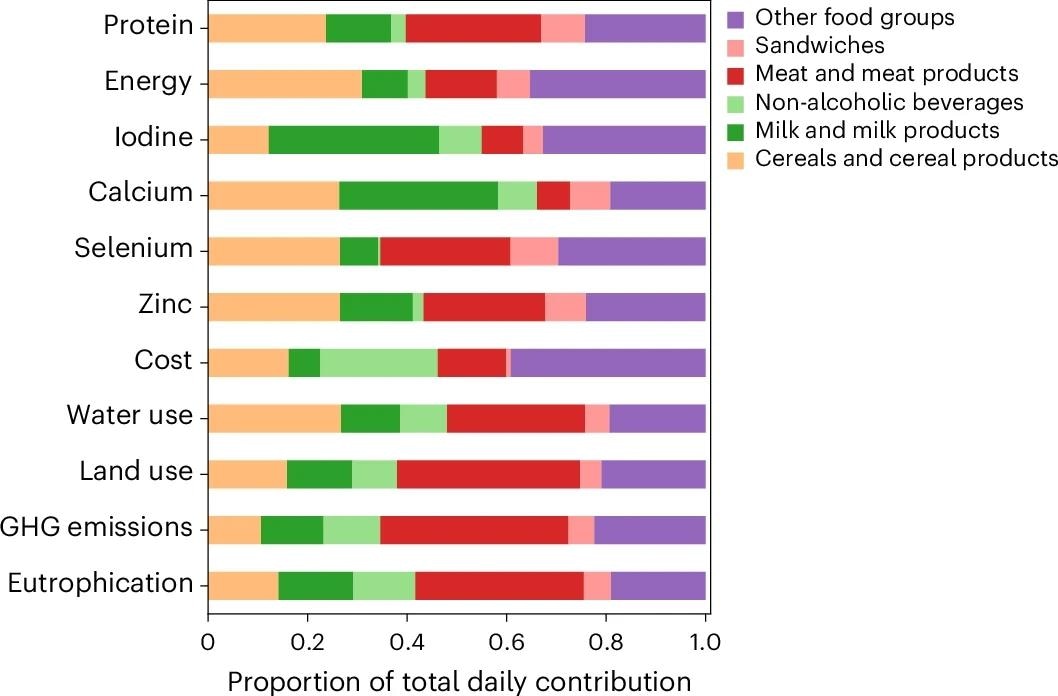
Relative contribution of each food category to intake of select nutrients, food costs and environmental indicators in a representative sample of adults 16+ years living in Scotland (2021) (n = 3,447).
Study Results
The analysis estimated that nearly all modeled dietary pathways produced favorable outcomes for most nutrition, health, environmental sustainability, and affordability measures, although some key nutrient intakes declined in several reduction pathways. Among the analyzed strategies, the largest estimated benefits were observed when daily red meat consumption was reduced to 31 g among high red meat eaters and dairy consumption was decreased by 20% simultaneously, with no consequent food substitutions. In this case, the model estimated the largest reductions in chronic disease risk, environmental impacts, and average daily diet cost.
Nutritionally, this pathway reduced average daily protein intake by 9.1 g. Calcium and iodine intake also declined, primarily due to lower dairy intake, with dairy accounting for most of the reductions in these nutrients. Calcium intake decreased by approximately 10%, while iodine intake declined by about 11%. Younger adults aged 16-24 years had the lowest baseline calcium intake, making this group particularly affected. Replacing red meat with PBMA helped offset calcium reductions, whereas replacing dairy with PBDA did not substantially improve iodine intake because commonly consumed oat-based alternatives contained limited iodine. Zinc and selenium intake also decreased modestly across the reduction pathways.
Over 10 years, the most effective pathway was estimated to prevent 59,248 cases of T2D, representing approximately one-quarter of annual cases. It was also associated with 18,595 fewer cardiovascular disease cases, a reduction of about 5.8% of annual cases, and 2,240 fewer deaths from all causes. Average Body Mass Index (BMI) decreased by 2.09 kg/m², with supplementary analyses indicating that much of the reduction in diabetes risk resulted from lower calorie intake and associated weight loss.
Environmental indicators improved across all modeled meat and dairy reduction pathways, with all pathways significantly reducing greenhouse gas emissions. The greatest environmental gains occurred in pathways that reduced red meat intake among high consumers, with improvements across greenhouse gas emissions, land use, freshwater use, and eutrophication. The model suggested that reducing red meat consumption was more beneficial than reducing the consumption of other meats from an environmental perspective. These findings demonstrate that focusing dietary changes on high consumers can maximize environmental gains.
Diet affordability remained favorable throughout most scenarios. The most effective pathway reduced average food expenditure by approximately £0.41 per person per day. Replacing meat with vegetables or beans and pulses yielded smaller average cost savings, whereas replacing meat with oily fish was the only strategy associated with a significant increase in food costs. Cost reductions were similar across socioeconomic groups, indicating that healthier, environmentally sustainable dietary changes could be achieved without increasing the financial burden on either the most or the least deprived populations.
The authors also noted several limitations. Dietary intake was self-reported and likely underreported, so absolute estimates of nutrient intake, costs, and environmental impacts should be considered conservative. The analysis also did not account for nutrient bioavailability, and the environmental database excluded some food-system stages, such as packaging, retail transport, waste disposal, and household energy use.
Conclusion
The findings indicate that reducing meat and dairy consumption, particularly by targeting high red meat consumers, can simultaneously improve public health, reduce environmental impacts, and lower diet costs without substantially compromising overall nutrient intake. Replacing meat with nutrient-rich plant foods may help maintain overall diet quality, although attention is still needed to ensure adequate calcium and iodine intake. The results support dietary strategies that encourage healthier food choices while advancing climate goals. Overall, balanced reductions in meat and dairy consumption represent a practical approach for supporting sustainable, affordable diets that promote better health among Scottish adults.
Journal reference:
- Kennedy, J., Clark, M., Stewart, C., Runions, R., Vonderschmidt, A., Frank, S. M., Scarborough, P., Comrie, F., McDonald, A., McNeill, G., Alexander, P., & Jaacks, L. M. (2026). Reduced meat and dairy consumption improves health, environmental and most nutritional outcomes without increasing diet costs among Scottish adults. Nature Food. DOI: 10.1038/s43016-026-01384-3, https://www.nature.com/articles/s43016-026-01384-3
 Fast food is crowding out grocery access across the U.S.