Although advanced cell models are gaining popularity in labs, the primary challenge lies not in the intricacy of the biology itself, but in operationalizing these processes. The most difficult aspect is ensuring sufficient staffing, maintaining consistent decision-making, and handling the demands of weekend and out-of-hours work.
Automated cell culture
Across representative workflows, manual cell culture requires large amounts of skilled researcher time.
The majority of this time goes toward repetitive yet essential tasks including feeding, passaging, plate handling, routine inspection, and schedule management. Developments in precision automation, robotics, and data analytics are now overcoming these operational hurdles.
By standardizing culture management, these technologies enhance repeatability and model dependability while minimizing the need for continuous manual oversight. This reduces out of hours work and means that skilled scientists can spend their time analysing data and designing the next experiment, rather than on manual cell culture. Increased model consistency reduces noise in downstream datasets which, in turn, increases confidence in results.
The CellXpress.ai® Automated Cell Culture System
The CellXpress.ai from Molecular Devices serves as an example of an integrated, automated cell culture system. Consequently, manual effort drops to approximately one to one-and-a-half hours per week for 2D and iPSC maintenance, and to approximately one hour per week for dome-based organoid maintenance. These reductions become even more apparent as scale increases, since user engagement is limited to occasional replenishment and review instead of repetitive, plate-by-plate intervention.
Continuous operation is feasible without around-the-clock staffing, significantly reducing weekend burden while lowering variability and the likelihood of failure in long-term processes. Automated culture on the CellXpress.ai system can scale across various cell lines, experimental runs, and lab sites, maintaining biological fidelity throughout.
Multiple 2D and 3D lines, including organoids, have been successfully maintained and expanded in parallel over extended culture periods, with repeated passaging cycles carried out seamlessly on the same system.
Notably, cross-contamination was not observed, even during simultaneous culturing of multiple lines, reinforcing system dependability and providing added peace of mind for researchers.
The result is true capacity combined with efficiency: researchers spend less time keeping cultures alive and more time focusing on experiment design, assay development, and interpretation.
By automating routine culture operations for both 2D and 3D cell models, the CellXpress.ai system allows scientists to reclaim their weekends and eliminate the stress of unpredictable, out‑of‑hours work.
The CellXpress.ai Automated Cell Culture System is engineered to handle routine and intricate 2D, iPSC, and 3D organoid processes with low manual intervention. The system integrates liquid handling, incubation, and automated imaging within one workflow, enabling seeding, feeding, passaging, and monitoring to be conducted on a defined schedule and adjusted based on measured culture state.
Routine brightfield and fluorescence imaging is used to measure parameters including confluency, morphology, and growth. These measurements act as explicit criteria to induce culture actions that would otherwise require hands-on inspection.
In practice, this changes cell culture from an operator-dependent, schedule-driven process to one that allows for consistent routine decisions across plates, runs, and time.
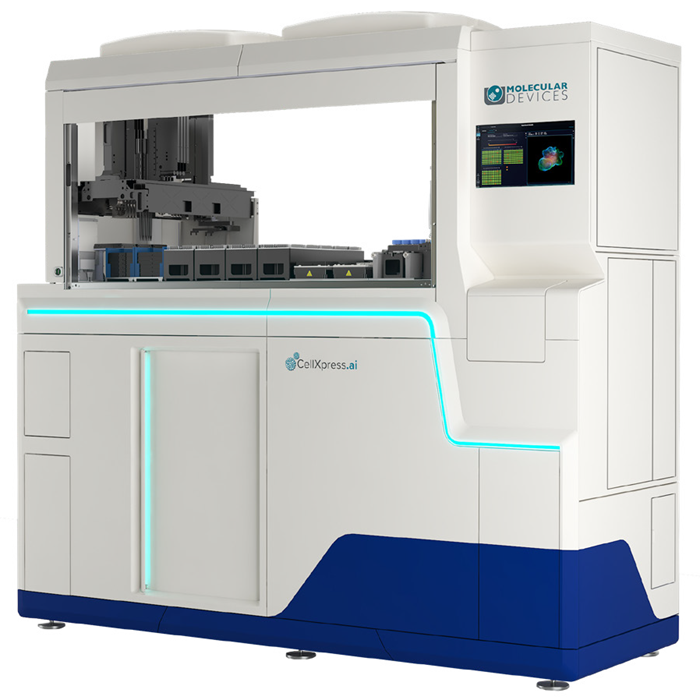
Image Credit: Molecular Devices UK Ltd
About Molecular Devices UK Ltd
Molecular Devices is one of the world’s leading providers of high-performance bioanalytical measurement systems, software and consumables for life science research, pharmaceutical and biotherapeutic development. Included within a broad product portfolio are platforms for high-throughput screening, genomic and cellular analysis, colony selection and microplate detection. These leading-edge products enable scientists to improve productivity and effectiveness, ultimately accelerating research and the discovery of new therapeutics. Molecular Devices is committed to the continual development of innovative solutions for life science applications. The company is headquartered in Silicon Valley, California, with offices around the globe. For more information, please visit www.moleculardevices.com.
Sponsored Content Policy: News-Medical.net publishes articles and related content that may be derived from sources where we have existing commercial relationships, provided such content adds value to the core editorial ethos of News-Medical.net, which is to educate and inform site visitors interested in medical research, science, medical devices and treatments.