A new study shows that everyday wearable data, combined with routine blood tests, may help spot insulin resistance earlier, opening the door to more accessible screening before type 2 diabetes takes hold.
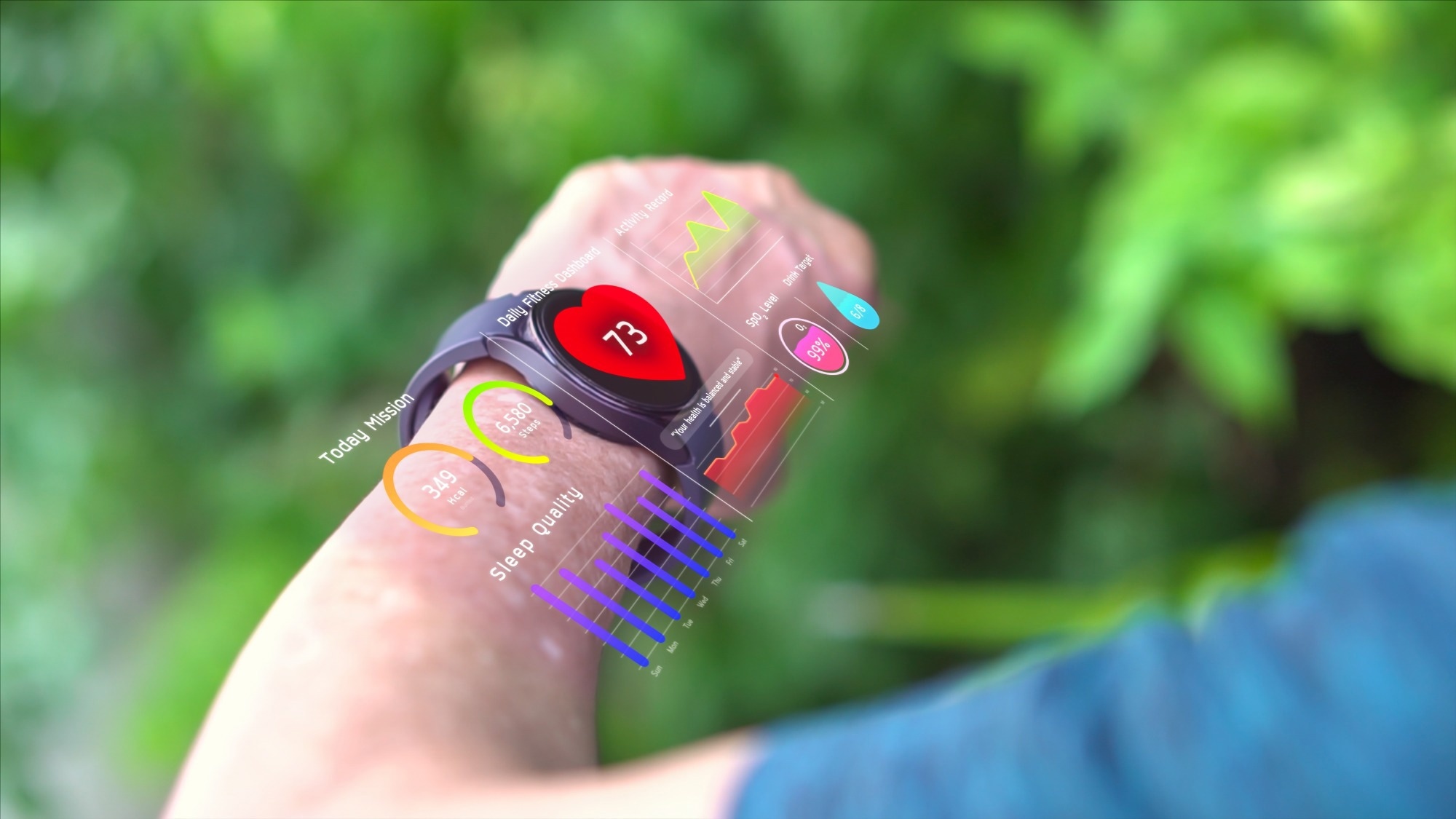
Study: Insulin resistance prediction from wearables and routine blood biomarkers. Image Credit: Black_Kira / Shutterstock
In a recent study published in the journal Nature, researchers developed a method to predict insulin resistance (IR) using data from wearable devices, blood biomarkers, demographics, and other health information.
Currently, 537 million people worldwide have diabetes, with a majority (around 90%) having type 2 diabetes (T2D). The main problem in diabetes is the body’s inability to regulate blood glucose levels due to relative or absolute insulin deficiency. In type 1 diabetes (T1D), the immune system mistakenly destroys pancreatic β cells that secrete insulin, leading to absolute insulin deficiency.
In T2D, the body becomes insulin-resistant, requiring elevated insulin production to achieve the same glucose-lowering effect. Over time, β cells cannot produce sufficient insulin to compensate for IR, resulting in relative insulin deficiency and elevated blood glucose levels. IR prevalence is estimated at 20%–40% in the general population and 84% in T2D.
IR is associated with cardiovascular disease and metabolic dysfunction-associated steatotic liver disease. Early detection of IR can guide lifestyle interventions that can improve, or even reverse, IR. Several IR assessment methods are available, but are not routinely implemented and remain expensive and inaccessible.
Study Design and Insulin Resistance Modelling
In the present study, researchers developed a method to predict IR using signals derived from wearable devices and blood biomarkers. Adults were recruited to the Wearables for Metabolic Health study in the United States (US). The Google Health Studies application was configured to collect data from Google Pixel and Fitbit watches. The homeostatic model assessment of insulin resistance (HOMA-IR) was used as the reference measure for model development, but it is a proxy rather than the gold standard, the hyperinsulinaemic euglycaemic clamp.
Participants were classified as having IR if the HOMA-IR was greater than 2.9, insulin sensitivity (IS) if HOMA-IR was less than 1.5, or impaired IS if HOMA-IR was 1.5–2.9. Overall, 1,165 participants with high-quality data were included in IR model development. These included 300 individuals with IR, 459 with IS, and 406 with impaired IS.
Pearson correlation coefficients were calculated between HOMA-IR and lifestyle factors, demographics, glucose, lipids, electrolytes, and liver and kidney function markers. HOMA-IR was significantly positively correlated with fasting glucose, glycated hemoglobin, body mass index, resting heart rate, and triglycerides, and negatively correlated with daily step count, albumin/globulin ratio, high-density lipoprotein cholesterol, and heart rate variability.
These data suggested that HOMA-IR could be inferred from blood biomarkers and wearable measures. Multimodal models were then trained using combinations of demographics, blood biomarkers, and wearable features for IR prediction. Regression models were trained to predict continuous HOMA-IR, and classification thresholds were subsequently applied to determine IR status.
Incorporating wearable, blood biomarker, and demographic data significantly enhanced prediction accuracy. A model based on demographic and wearable features alone predicted IR with an area under the receiver operating characteristic curve (AUROC) of 0.7, specificity of 0.8, and sensitivity of 0.6. Including fasting glucose improved performance, yielding an AUROC of 0.78, specificity of 0.84, and sensitivity of 0.73.
A model using demographic, wearable, and blood biomarker data (metabolic and lipid panels) achieved an AUROC of 0.8, specificity of 0.84, and sensitivity of 0.76. Using each data source in isolation did not provide sufficient predictive power. The team also fine-tuned a wearable foundation model (WFM) pretrained on 40 million hours of sensor data to improve analysis of time-series wearable data.
Wearable Foundation Model Validation Results
Using feature embeddings from the WFM improved IR prediction. A model incorporating demographics and WFM-derived representations outperformed a demographics-only baseline. Incorporating WFM representations into models that included fasting glucose, lipid panel data, and demographics further improved predictive performance.
The IR models were validated in an independent cohort of 72 individuals with complete physiological biomarker and wearable data. In this cohort, a model incorporating WFM representations alongside demographics achieved an AUROC of 0.75, compared with 0.66 for a demographics-only baseline.
Integrating WFM representations into a model including lipid panel data, demographics, and fasting glucose increased predictive power (AUROC 0.88) compared with a model without wearable data (AUROC 0.76). However, the validation cohort was small, and not all biomarker combinations were externally validated.
The researchers also developed an IR literacy and understanding agent (IR agent) using a reason-and-act framework built on a large language model (LLM), specifically Gemini 2.0 Flash.
The IR agent combines language understanding with the ability to perform actions such as searching the web, accessing specialized tools, and using IR prediction models. Endocrinologists evaluated the agent’s responses, which demonstrated high safety and strong overall factual accuracy, though performance varied by data type.
Conclusions and Study Limitations
The proposed IR prediction framework, to the authors' knowledge, represents the first deployable model using readily available data from routine blood biomarkers, wearables, and demographics. The models were trained using HOMA-IR, which has been validated in large epidemiological studies. The study establishes a scalable, accessible framework for early metabolic risk screening, enabling earlier identification and intervention for individuals at risk of progressing to T2D.
The authors noted several limitations. Only 25% of participants had complete data and were included in the analysis, potentially introducing selection bias. In addition, all wearable data were derived from Google and Fitbit devices, so broader validation across other wearable ecosystems is needed.
_1b78fec41a5143afb6e7b9ad317023d2-80x70.jpg) Study identifies role for peroxisomes in protecting insulin and maintaining beta cell health
Study identifies role for peroxisomes in protecting insulin and maintaining beta cell health