A newly identified epigenetic pathway reveals how overactive microglia may sustain brain inflammation in Alzheimer’s, suggesting KAT7 as a potential target for future therapies.
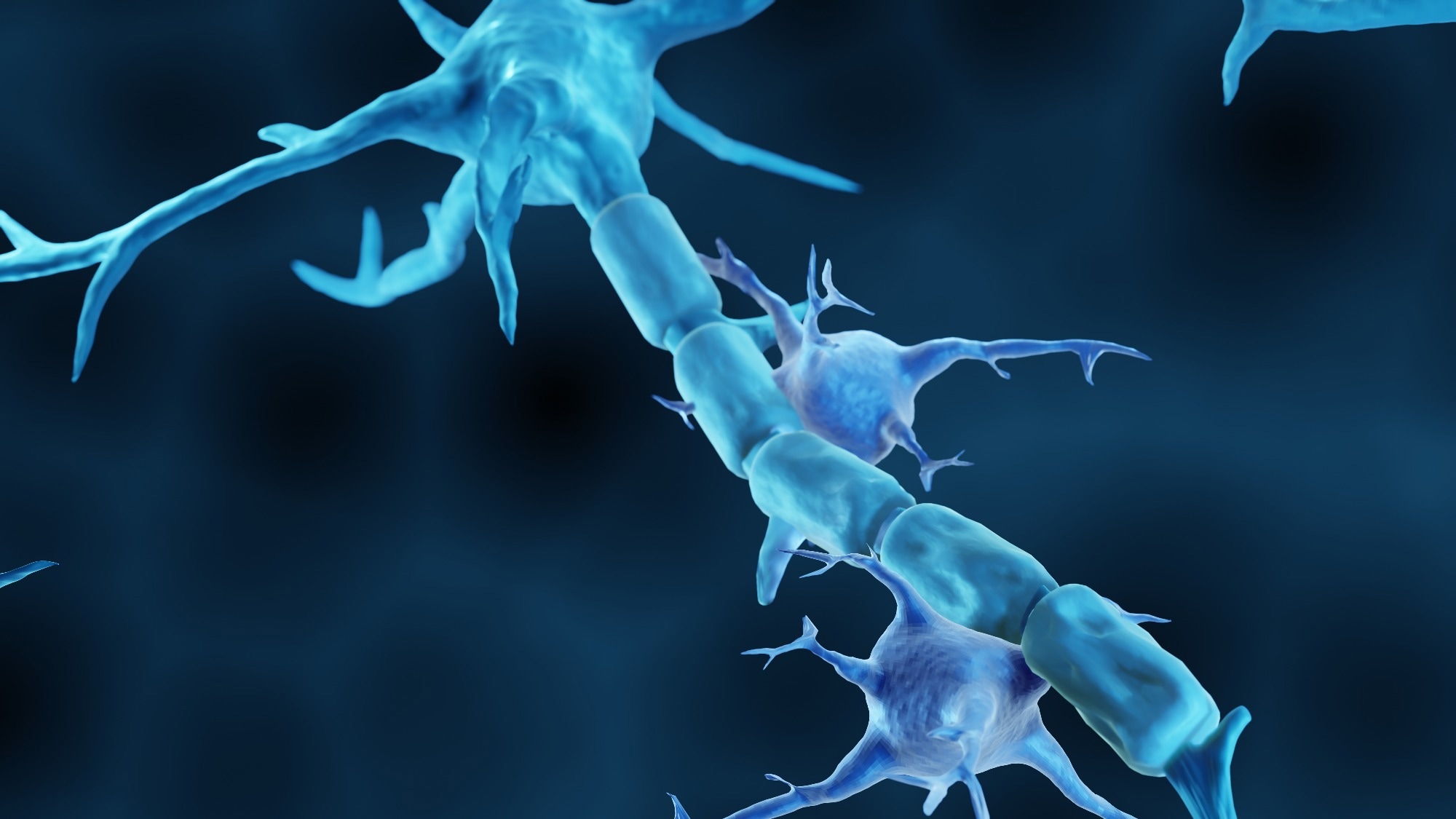
Study: Epigenetic control of microglial mitochondrial immunity by KAT7 drives Alzheimer’s disease pathogenesis. Image Credit: ART-ur / Shutterstock
A recent study published in the journal Neuron suggests that KAT7, a histone acetyltransferase protein, may contribute to brain inflammation in Alzheimer’s disease (AD) through altered microglial immune signaling.
The brain contains immune cells called microglia. These cells keep the brain healthy in normal conditions. KAT7 promotes pro-inflammatory microglial activation via mitochondrial immune signaling, thereby triggering brain inflammation.
Supporting these observations, blocking KAT7 activity or selectively deleting KAT7 in microglia reduced inflammation and improved synaptic plasticity and cognitive performance in mouse models. If confirmed in subsequent preclinical studies and clinical testing, novel strategies targeting KAT7 could improve AD outcomes.
AD continues to be the leading contributor to dementia worldwide. Toxic amyloid and tau proteins build up in AD brains. Conventional methods target these proteins to improve symptoms, but the clinical benefits of such strategies have been modest.
Scientists are now exploring other mechanisms that contribute to AD. They are increasingly finding that altered microglial activity can trigger immune responses linked to mitochondrial stress, mitochondrial DNA release, and worsening brain inflammation in people with AD.
New strategies are being developed and tested to target such mechanisms to improve the standard of care and quality of life for people living with AD.
About the Study
In the present study, researchers investigated whether KAT7 contributes to the inflammatory processes underlying cognitive decline in AD patients. They used mouse models and obtained postmortem brain samples from people with AD for analysis. They also used genetically modified mice to test whether blocking KAT7 could improve AD-like pathology and cognitive deficits.
The team compared normal microglia with microglia lacking the KAT7 gene. They measured changes in protein levels, gene activity, immune signaling, and mitochondrial deoxyribonucleic acid (mtDNA) production and release using several laboratory investigations. They performed techniques such as ribonucleic acid sequencing (RNA-seq), single-cell RNA-seq (scRNA-seq), and quantitative polymerase chain reaction (qPCR) to monitor changes in gene expression.
The researchers also used special techniques to identify histone modifications across the genome. Western blot tests, enzyme-linked immunosorbent assays (ELISA), and immunofluorescence staining helped the team monitor protein levels.
The team additionally treated some cells and mice with WM-3835, an experimental drug that blocks KAT7 activity. This helped them investigate whether KAT7 inhibition could improve AD outcomes.
The researchers evaluated the effects of KAT7 blockade on amyloid accumulation, plaques, microglial cell activity, immune pathways, and communication between different cells in the brain. To explore the effects on cognitive functions such as learning and memory, they conducted behavioral tasks, including the Morris water maze, in mouse models.
Results
The team found elevated KAT7 pathway activity in AD mouse models and brain samples from people with AD, suggesting that KAT7 is involved in disease-related inflammation.
In mice, Kat7 and several KAT7-complex components were increased in microglia; in human AD samples, KAT7-associated scaffold proteins and the histone mark H3K14ac were elevated, while KAT7 gene expression itself was not clearly increased. They also observed that KAT7 increases cytidine/uridine monophosphate kinase 2 (CMPK2) expression.
Elevated CMPK2 expression promotes the production of mtDNA in the mitochondria and its release into the cytosol. This leakage of mtDNA from mitochondria activates innate immune pathways in microglia.
As a result, a series of inflammatory reactions occur involving the cyclic GMP-AMP synthase-stimulator of interferon genes (cGAS-STING) pathway and NACHT, LRR, and PYD domains-containing protein 3 (NLRP3). Both of these promote inflammation, which further damages brain cells. KAT7, therefore, acts as an epigenetic regulator that maintains microglia in an overactive state. Altered microglial immune signaling promotes inflammation in the brain.
KAT7 blockade and removal confirmed these findings. When the researchers either removed KAT7 from microglia or blocked it with WM-3835, brain inflammation decreased. The treatment additionally reduced Aβ plaque burden and improved synaptic plasticity between brain cells.
These effects ultimately enhanced memory and learning in AD mice. In other words, KAT7 helps keep the brain’s immune system in an ‘attack’ mode. If scientists develop strategies to block KAT7 effectively, they could decrease brain inflammation and improve cognitive performance, at least in animal models.
Conclusions
The findings suggest that KAT7 activity contributes to the inflammation observed in AD brains by promoting mtDNA synthesis and release into the cytosol, where it triggers microglial immune responses. Developing KAT7 inhibition strategies could therefore help reduce brain inflammation by keeping microglial activity in check.
Such treatments could improve treatment efficacy by moving beyond mechanisms targeting amyloid and tau proteins and shifting the focus to other mechanisms that may contribute to brain inflammation in AD.
Since KAT7 is also linked to aging and cellular senescence, KAT7 inhibition may have broader relevance for neurodegenerative conditions involving chronic inflammation, although this possibility remains speculative.
Although the findings are encouraging, this is a preliminary investigation. The results have been primarily derived from mouse models, particularly the 5×FAD model, which develops robust amyloid pathology but does not fully capture tau pathology or the complexity of human AD.
Scientists must test the strategy in additional tauopathy, mixed-pathology, and other advanced disease models to better reflect the biological mechanisms underlying AD. If large-scale human studies eventually confirm the efficacy and safety of KAT7-targeted treatments, this approach could provide a new avenue for testing whether targeting neuroinflammation improves AD-related outcomes.
Download your PDF copy by clicking here.
 Three months of yoga before surgery revealed a surprising difference in stress hormones