Sponsored Content by n6Reviewed by Ify IsiborJul 22 2026
Microbiome sequencing has a reputation issue. From the outside, it appears to be one of modern biology's most powerful tools: sequence the entire sample and recreate the microscopic world within. It is just data, with no culturing or assumptions. However, anyone who has used these techniques understands that the reality is a lot messier.
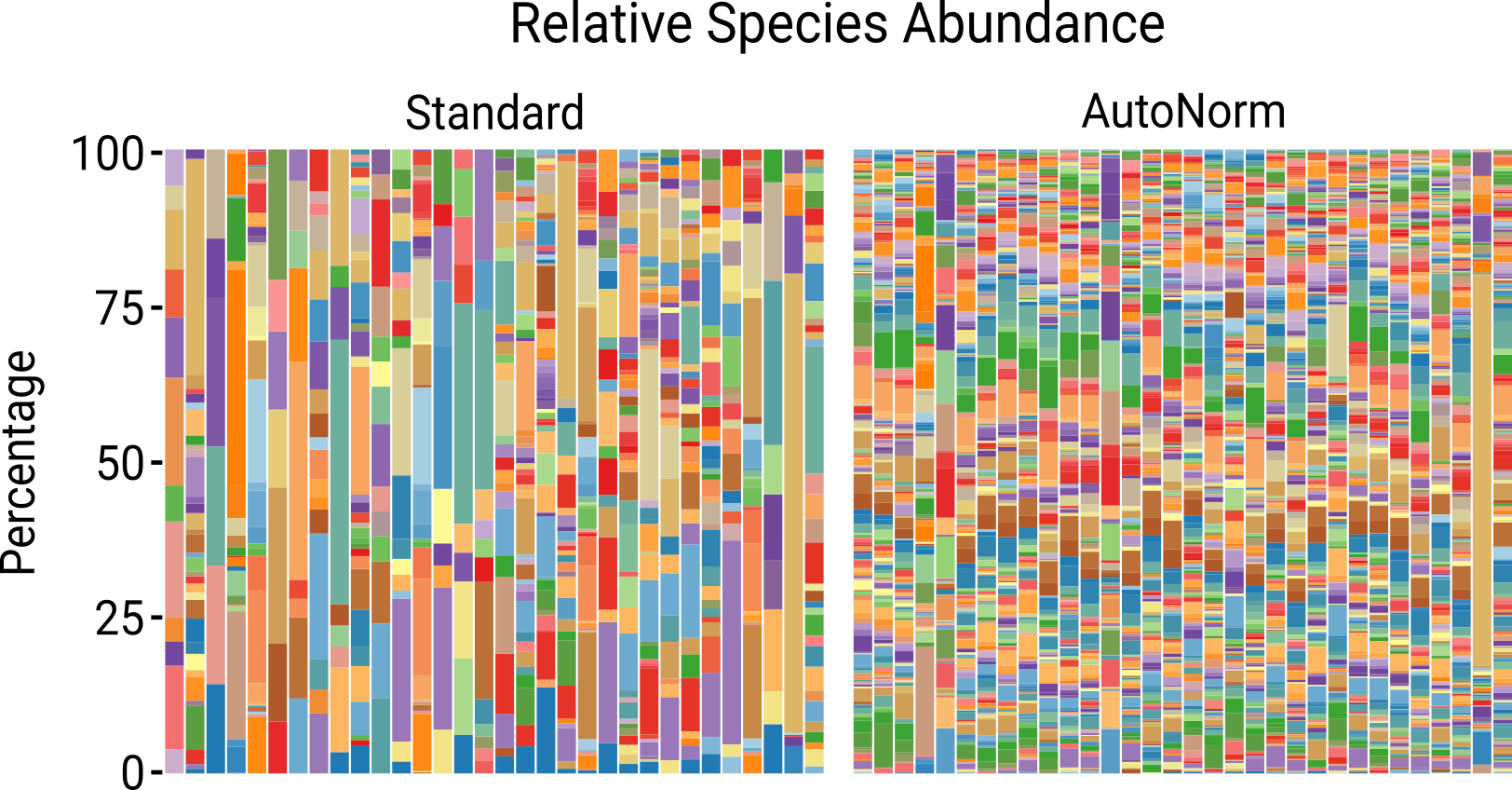 Image Credit: n6
Microbial samples differ fundamentally from the clean, single-organism inputs that many NGS procedures were designed around. Instead of a uniform population, they are heterogeneous communities whose composition, concentration, and complexity might fluctuate dramatically, not only across research but even in the same experiment.
One tube may feature a relatively balanced microbial colony. In the next, however, a single organism could account for 90% of the sample. In another, overall DNA content (let alone 16s rRNA concentration) is nearly undetectable, but biological diversity is abundant. In many circumstances, it is not clear which scenario is being faced until it is too late.
Uncertainty causes difficulties to cascade downstream. It is impossible to determine the optimal number of cycles for library amplification when template abundance varies by orders of magnitude. Highly abundant taxa grow rapidly, whereas rare creatures are difficult to detect at all. Library yields become inconsistent.
Some samples pass through prep with high concentrations, while others create insufficient material to sequence. Because most procedures rely on post-PCR quantification and normalization, all of the variability is funneled into a manual, time-consuming bottleneck.
By the time that libraries reach the sequencer, the biological signal has already been modified by the procedure.
How iconPCR Transforms Amplicon & Microbiome Workflows: Real Results from Penn State Genomics Core!
Kerry Hair from Penn State Genomics Core Facility discusses critical data that is often missed in conventional microbiome sequencing. Video Credit: n6
16S rRNA sequencing versus shotgun metagenomics: Choosing the right tool
Before optimizing a workflow, take a step back and consider a more fundamental question: what type of sequencing is actually required?
Both 16S rRNA sequencing and shotgun metagenomics aim to define microbial communities, although in very different ways. These discrepancies have significant implications for workflow complexity, cost, and data analysis.
16S rRNA sequencing targets a genetic marker found in bacteria and archaea. This area can be amplified and sequenced to determine the taxonomic composition of a sample without analyzing the full genome. It is efficient, scalable, and ideal for research in which the primary purpose is to determine what is present.
In contrast, shotgun metagenomics sequences all of the DNA in the sample. This encompasses microbial genomes, host DNA, and everything in between.
The payoff is higher resolution; users can often reach species or even strain level, from which functional potential can be extrapolated. However, additional depth comes at a cost: more sophisticated procedures, higher sequencing needs, and increased vulnerability to upstream variability.
In practice, 16S remains the workhorse for many applications, particularly those requiring high throughput and low cost. Shotgun techniques are useful when resolution is crucial or functional insights are needed. As the more prevalent workflow, this article will focus on 16S, but the workflow enhancements discussed also apply to shotgun metagenomics.
16S vs. shotgun metagenomics
Source: n6
| Feature |
16S rRNA Sequencing |
Shotgun Metagenomics |
| Target |
Marker gene |
All DNA |
| Cost per sample |
Low |
High |
| Resolution |
Genus (sometimes species) |
Species/strain |
| Workflow complexity |
Moderate |
High |
| Sensitivity to variability |
High |
Very high |
16S and shotgun sequencing are both highly sensitive to initial sample variability.
The 16S library prep workflow and where it quietly fails
On paper, the 16S workflow is simple: extract DNA, normalize samples for total DNA, amplify the 16S region, build libraries, normalize again, and sequence. Each step is clearly understood with defined protocols.
As a result, it is assumed that the conclusion accurately depicts true biology. The problem is that each step compounds the variability caused by the previous one.
PCR is the most significant tipping point. Because amplification efficiency is determined by template abundance, even minor variations in the starting composition can result in significant output variances.
Rare taxa risk extinction, whereas dominant creatures become even more powerful. At the same time, PCR artifacts build as the number of cycles increases. These artifacts, which include mutations, primer dimers, and chimeric molecules, can be hard to detect until sequencing.
Library preparation adds another degree of variability. Adapter ligation or indexing efficiency can vary between samples, expanding the disparity in library concentrations.
Normalization, however, is the most significant source of pain. Most workflows approach it as a post-processing step: measure each library, calculate concentrations, and manually modify volumes to ensure equal input for sequencing. It is sluggish, labor-intensive, and inherently error-prone.
Most significantly, it is reactive. By the time that normalizing begins, the underlying variability has already formed libraries. Adjusting for total DNA before amplification adds effort without truly resolving the issue, because total DNA is not equivalent to target DNA; the number of copies of the 16S rRNA genes varies substantially between species.
How to speed up the 16S rRNA sequencing workflow without cutting corners
When people talk about accelerating sequencing processes, they usually mean automating pipetting. This is because there are so many minor, laborious stages.
These include quantifying DNA, changing volumes, amplifying, measuring again, recalculating concentrations, and normalizing, not to mention rerunning failed samples. Individually, each step seems manageable, but together they can add hours or days to a workflow.
Optimizing these stages is not the most effective technique to speed up the process. The goal is to completely eradicate them.
This is when PCR-based normalization methods begin to change the game. Rather than amplifying samples and subsequently correcting for variability, these systems seek to control output throughout the amplification process. Samples can be driven to a more consistent endpoint by adjusting PCR conditions, notably the cycle number.
This means fewer downstream changes, fewer chances for error, and a much shorter path from sample to sequencing.
Technologies for normalization in 16S library prep: What actually moves the needle?
There are many ways to prepare a 16S library. Most workflows appear diverse on the surface, with various kits, different cleanup stages, and different instruments, but they typically fall into a few similar categories.
The goal of bead-based normalization approaches is to standardize DNA concentrations by leveraging binding capability. Enzymatic techniques try to chemically balance libraries. These can help to streamline sections of the workflow, but they are still add-ons to an already complex process.
What is more powerful is a shift toward integration, in which normalization is no longer an independent process but rather an inherent element of amplification.
This is where AutoNorm™ technology comes in. AutoNorm incorporates normalization into the amplification process, using real-time signals to cease cycling and enter a cold hold when the target amplicon concentration is attained.
It works in iconPCR™ thermocyclers with individually regulated wells (16 or 96), allowing for cycle number variations at the individual-well level. As a result, samples are normalized during PCR and not under- or over-amplified.
It is not just faster (thanks to the elimination of normalization steps before and after library amplification) but also more consistent. Libraries are sequenced with tighter concentration distributions and less variability and PCR artifacts across samples.
In a proof-of-concept study, full-length and variable region 16S libraries auto-normalized by iconPCR produced cleaner bioanalyzer profiles, a statistically important reduction in chimeras, and more species diversity.
About n6
n6 is a genomics company focused on simplifying sample prep and helping scientists get better data, faster. As genomics scales, n6 believes workflows should become easier, not harder. Our instruments combine multiple workflow steps into one streamlined process, reducing complexity at any throughput. We partner closely with scientists to remove barriers in the lab and build the tools genomics has always needed, but never had.
Sponsored Content Policy: News-Medical.net publishes articles and related content that may be derived from sources where we have existing commercial relationships, provided such content adds value to the core editorial ethos of News-Medical.net, which is to educate and inform site visitors interested in medical research, science, medical devices and treatments.