Sponsored Content by n6Reviewed by Ify IsiborJul 22 2026
Library normalization has traditionally been an unglamorous part of NGS preparation. Getting every sample to the same molar concentration before pooling is essential because sequencers do not play favorites, and imbalanced pools result in lost readings and money.
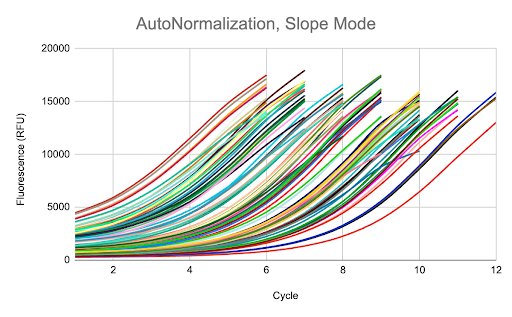
Image Credit: n6
The techniques used by labs, including bead-based methods, enzymatic approaches, and manual quantification, are not the issue. They accomplish exactly what they were intended to do: equalize concentration.
There is a key workflow assumption that nobody questions: if the concentration is correct, then everything else must be as well. However, this is not inherently correct. This assumption does not come from the kit; rather, it is part of the workflow.
Where the damage actually happens
The main story takes place upstream, inside the thermocycler, during a standard fixed-cycle PCR. Every sample on a plate undergoes the same number of cycles, independent of input quantity, quality, or complexity: this is where the trouble starts.
For high-input samples, the library often achieves its peak yield far before the thermocycler completes its programmed cycles. Past that point, the polymerase repeatedly amplifies the same fragments.
The consequence is a high duplication rate, and when those duplicates are bioinformatically filtered during the sequencing process, the "normalized" 10 nM sample has a significantly reduced effective depth and collapsed library complexity.
The normalizing step measured 10 nM. It just so happens that 10 nM contains 50% of the same sequences or other forms of artifacts. That was not a normalization failure; the kit did its job. The damage had already been done.
Low-input, deteriorated, or FFPE samples confront the opposite issue. These libraries may never achieve sufficient yield within the given cycle count, resulting in read imbalance or total sample dropout.
The conventional solution, running extra cycles for the entire plate, saves the struggling samples while over-amplifying the healthy ones. No post-PCR process can reverse the trade-off; by the time normalization is introduced, the outcome has already been determined.
Equal concentration does not mean equal information
This is the core illusion of the usual workflow. Normalization equalizes one variable, concentration, while keeping the variables that determine data quality unaffected.
Source: n6
| Library Feature |
What the workflow implies |
What really happens |
| Molar concentration |
Consistent across the plate
(~10 nM) |
✅ True - normalization works |
| Gene diversity |
High for all samples |
❌ Low for over-amplified samples |
| Read balance |
Equal across pool |
❌ Poor if low-input samples underperformed |
| Biomarker integrity |
Preserved |
❌ Distorted by excessive amplification bias |
The kit corrects the number. Fixed-cycle PCR already determined the biology.
Quality is set during amplification
The only approach to truly preserve library quality across every sample, input level, and run is to manage amplification as it occurs, independently for each well. That requires switching from passive fixed-cycle PCR to adaptive amplification.
This is what AutoNorm™ accomplishes on the n6 iconPCR™ platforms. Rather than blindly executing a predetermined number of cycles, AutoNorm monitors every well in real time using fluorescence during each cycle.
When a specific sample hits a predefined threshold or condition - the sweet spot where library production is adequate and diversity is maximized - the system stops cycling for that well. Other wells with lesser input samples will continue to cycle until they find their own optimal point.
As a result, high-input samples are terminated before duplicates accrue. Low-input samples receive the extra cycles required to avoid dropout. Every sample exits the thermocycler at its biological peak, not the plate's statistical average.
When amplification is appropriate for each well, normalization returns to its original purpose: a simple pooling step rather than damage control.
The question is not how to normalize
The discipline has made significant efforts to optimize what happens after PCR: better quantitative tools, smarter pooling algorithms, and more elegant normalization chemistry. All of them are valuable, yet each focuses on one side of the problem.
Quality is determined during amplification. The question is not how to normalize, but what is being normalized. When each well is viewed as a separate biological sample, the sequencing data represents the biology rather than the constraints of the thermocycler.
About n6
n6 is a genomics company focused on simplifying sample prep and helping scientists get better data, faster. As genomics scales, n6 believes workflows should become easier, not harder. Our instruments combine multiple workflow steps into one streamlined process, reducing complexity at any throughput. We partner closely with scientists to remove barriers in the lab and build the tools genomics has always needed, but never had.
Sponsored Content Policy: News-Medical.net publishes articles and related content that may be derived from sources where we have existing commercial relationships, provided such content adds value to the core editorial ethos of News-Medical.net, which is to educate and inform site visitors interested in medical research, science, medical devices and treatments.