Sponsored Content by n6Reviewed by Ify IsiborAug 20 2026
16S rRNA gene sequencing is critical for studying microbial diversity in a variety of ecosystems, including soil, water, and human-associated microbiomes.
Conventional PCR procedures for 16S library production often introduce considerable biases due to over- and underamplification and the formation of chimera sequences. These distortions reduce the accuracy of microbial community profiling by distorting relative abundances and masking low-abundance species.
n6's icon96™ technology marks a significant advancement in PCR. The main innovation is the iconPCR™ technology with AutoNorm™, which monitors and terminates each PCR reaction in real time using fluorescence-based criteria.
This eliminates the guessing involved in fixed-cycle PCR and assures that each library is amplified optimally.
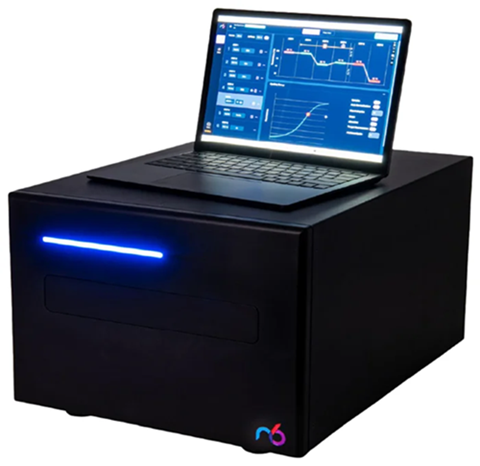
Figure 1. icon96, the world’s first real-time thermocycler with 96 individually controlled wells. Image Credit: n6
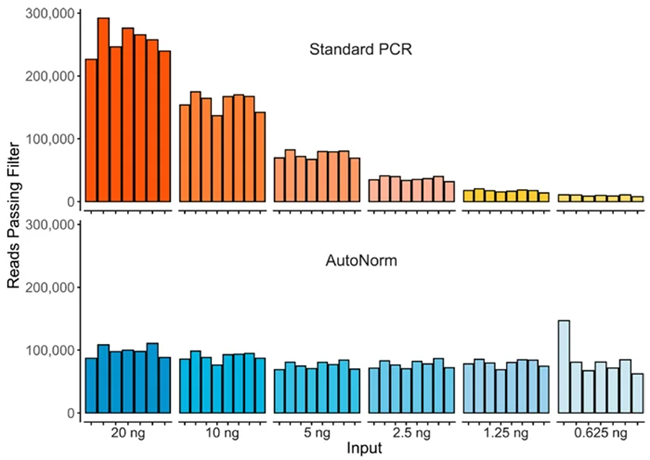
Figure 2. Significant yield variance when using a single PCR instrument with a fixed number of PCR cycles compared to iconPCR with AutoNorm, where each sample is amplified to similar levels. Image Credit: n6
To evaluate performance, the researchers generated full-length 16S rRNA libraries from soil microbiome samples and sequenced them using the PacBio® Sequel® II platform.
PacBio technology, which is well known for delivering accurate, long-read sequencing data, was critical in capturing the full-length 16S gene (V1-V9), allowing for high-resolution taxonomic analysis.
The combination of iconPCR and PacBio sequencing produced reproducible and detailed profiles of diverse microbial communities. This article includes a comparative analysis of icon96 with iconPCR against traditional PCR procedures.
The results clearly show that iconPCR outperforms other methods in terms of data quality, taxonomic resolution, and workflow consistency, particularly when combined with long-read platforms such as PacBio for full-length amplicon sequencing.
Advantages of iconPCR
- Streamlined procedure with fewer hands-on steps
- No chimeras and bias-free amplification
- Consistent diversity representation
- Automated normalization
- Workflow using a single tube
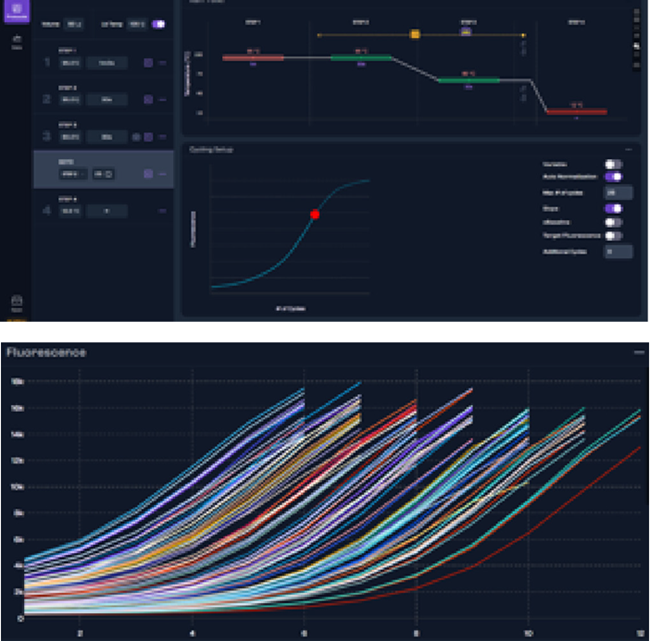
Figure 3a. Graphical view of setting AutoNorm and 3b. resulting amplification of each sample to its set threshold. Image Credit: n6
Conventional PCR
- Fixed cycle count (e.g., 30 cycles)
- Universal amplification
- Common issues with under- and overamplification
- High chimera rates
- Variable library quality
- Manual quantification and normalization required
- More hands-on time
- Increased reagent waste
- Increased quality control and repeat expenses
iconPCR (using AutoNorm)
- Real-time fluorescence monitoring
- Per-well cycle control based on signal, eliminating guesswork
- Optimal amplification for each sample
- Reduced chimera formation
- Consistent library quality across all wells
- Automated normalization (no post-PCR quantification)
- A 40–60% reduction in hands-on time
- Reduced reagent waste and fewer unsuccessful libraries
- Faster turnaround with fewer QC/rescue stages
About n6
n6 is a genomics company focused on simplifying sample prep and helping scientists get better data, faster. As genomics scales, n6 believes workflows should become easier, not harder. Our instruments combine multiple workflow steps into one streamlined process, reducing complexity at any throughput. We partner closely with scientists to remove barriers in the lab and build the tools genomics has always needed, but never had.
Sponsored Content Policy: News-Medical.net publishes articles and related content that may be derived from sources where we have existing commercial relationships, provided such content adds value to the core editorial ethos of News-Medical.net, which is to educate and inform site visitors interested in medical research, science, medical devices and treatments.