Sponsored Content by n6Reviewed by Ify IsiborAug 20 2026
16S sequencing identifies and analyzes bacteria using the 16S ribosomal RNA (rRNA) gene, found in all prokaryotic organisms. By amplifying and sequencing this gene, scientists can compare sequences to databases to assess the species composition of microbial communities.
This approach is often employed in microbiome research, clinical diagnoses, and environmental monitoring. Metagenomic samples, on the other hand, are among the most difficult samples for NGS analysis, due to the large amount of heterogeneity and sources of genomic material:
- High-mass fecal samples
- Dilute genomic material from wastewater
- Low percentage of bacterial vs. host DNA mass ratio
- Inhibitor contaminants carryover
Over- and underamplification can have a negative impact on data quality because well-characterized PCR artifacts like chimeras, false positives, and false negatives hinder analysis and accuracy.
These issues are worsened by the low read depth required per sample, necessitating high sample multiplexing to maximize sequencing throughput.
This article presents two studies that demonstrate workflow and data quality improvements:
- Study 1: Extensive soil metagenomics using multiple sequencing platforms
- Study 2: Kitchen Sink: 16S profiling of feces, soil, and human samples
Study 1: Extensive soil metagenomics utilizing various sequencing platforms
Experimental details: Comparison of standard vs. iconPCR AutoNormalization
- 16S PacBio sequencing of 1500 bp full-length v9
- Short read v3 and v4 amplicons for Illumina and Element
- Loop-Seq combines long and short read sequencing
- ZymoBIOMICS Community DNA standard
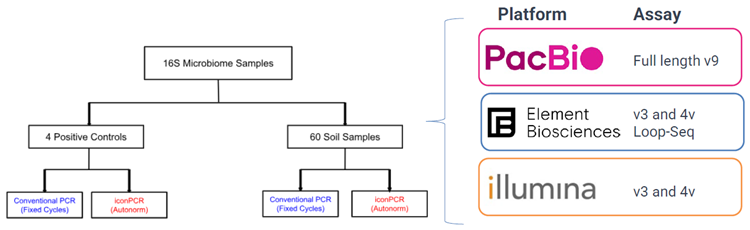
Image Credit: n6
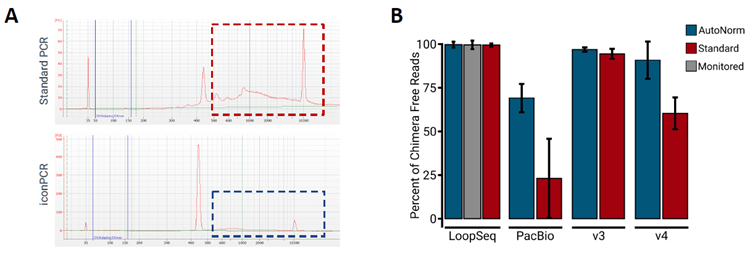
Figure 1. iconPCR produces significantly fewer artifacts than standard PCR. Image Credit: n6
- The V4 Standard PCR pool has peaks higher than 500 bp, with only 19% of the pool falling into the predicted region. In comparison, the V4 iconPCR pool (bottom panel) generated using AutoNormalization only shows one peak at the predicted size (∼440 bp).
- The percentage of chimera-free reads across different sequencing methods. Use of AutoNormalization (blue bars) increases the number of chimera-free reads when compared to Standard PCR (red bars).
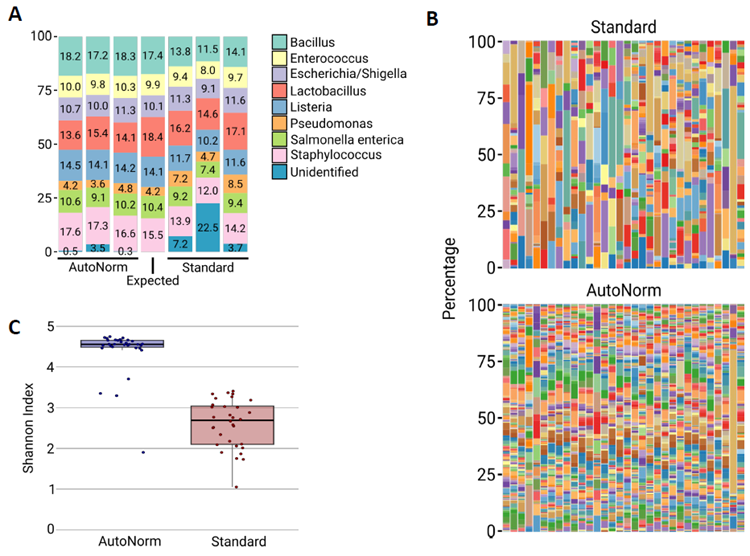
Figure 2. Increased species diversity and accuracy with iconPCR. A.)Relative microbial abundance of the ZymoBIOMICS Microbial Community DNA standard employing standard PCR or AutoNormalization. Each example has three replicates. With standard classification analysis, the standard PCR method produced many more sequences categorized as 16S amplicons. These false-positive sequences (unidentified) did not exist in the original sample and were formed as a result of PCR artifacts.
B.) Bar plots displaying the microbial diversity of soil samples sequenced using PacBio. Samples sequenced after AutoNormalization have an increase in the number of discovered species. C.) A box and whiskers plot of the Shannon diversity index of soil samples sequenced using PacBio. Samples sequenced after AutoNormalization demonstrated an increase in the diversity of species found. Image Credit: n6
Table 1. Long Read Molecules and Detected ASVs by Treatment. Comparison of read length and detected amplicon sequence variants (ASVs) for LoopSeq and PacBio Sequencing. Use of iconPCR increases the percent of ASVs compared to standard PCR. Source: n6
| Treatment |
Samples
evaluated |
Total full-length
molecules (bp) |
Avg. molecule
length
(bp) |
Full-length molecules
between 1276–1726 bps (%) |
Unique
ASVs
(%) |
ASVs without
singletons (%) |
ASVs without
doubletons (%) |
LoopSeq
iconPCR |
85 |
253,102 |
1474 ±111 |
250,223
(98.9%) |
234,023
(92.5%) |
7349
(2.9%) |
3220
(1.3%) |
LoopSeq
Monitored PCR |
85 |
421,512 |
1471 ±104 |
414,866
(98.4%) |
412,518
(97.9%) |
3386
(0.80%) |
1409
(0.33%) |
LoopSeq
Standard PCR |
85 |
150,059 |
1052 ±552 |
92,629
(61.7%) |
87,653
(58.4%) |
1472
(0.98%) |
434
(0.29%) |
PacBio
iconPCR |
33 |
1,681,760 |
1490 ±26 |
1,679,763
(99.8%) |
991,488
(59.0%) |
NA |
NA |
PacBio
Standard PCR |
33 |
780,585 |
1495 ±26 |
779,049
(99.8%) |
188,342
(24.1%) |
NA |
NA |
Study 2: “Kitchen sink” 16S profiling conducted on fecal, soil, and human samples
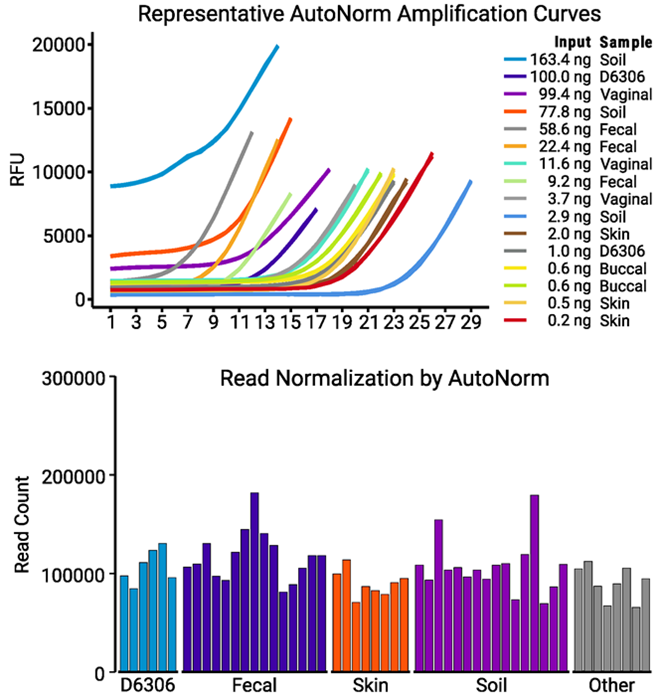
Image Credit: n6
Experimental details:
- Zymo Quick 16S Full Length Library Prep Kit
- PacBio sequencing of 1500 bp of full-length 16S
- Dilution series for ZymoBIOMICS Community DNA standard (D6306)
- 16 fecal
- 16 soil
- Eight skin
- Three vaginal
- Two buccal
- Three hand
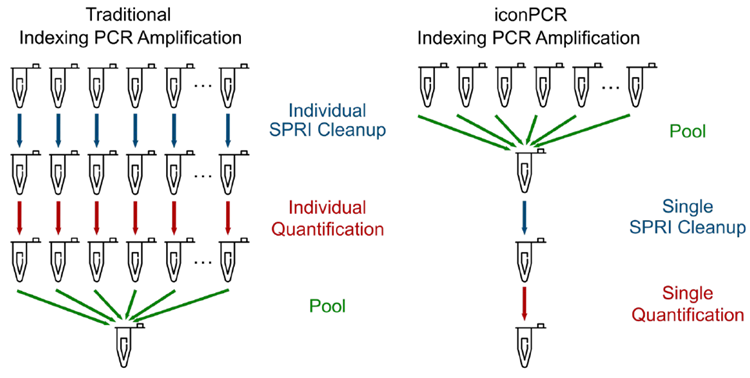
Figure 1. Simplified workflow using AutoNormalization. Image Credit: n6
Following index PCR, standard processes include individual sample purification and measurement. The samples can then be standardized to the same molar amount and pooled.
AutoNormalization normalizes the samples throughout the PCR process, allowing an equal volume of each to be pooled immediately after PCR. The single pool can then be cleaned, quantified, and fed into the sequencer. iconPCR simplifies the workflow by minimizing hands-on time and reducing cleanup and QC costs.
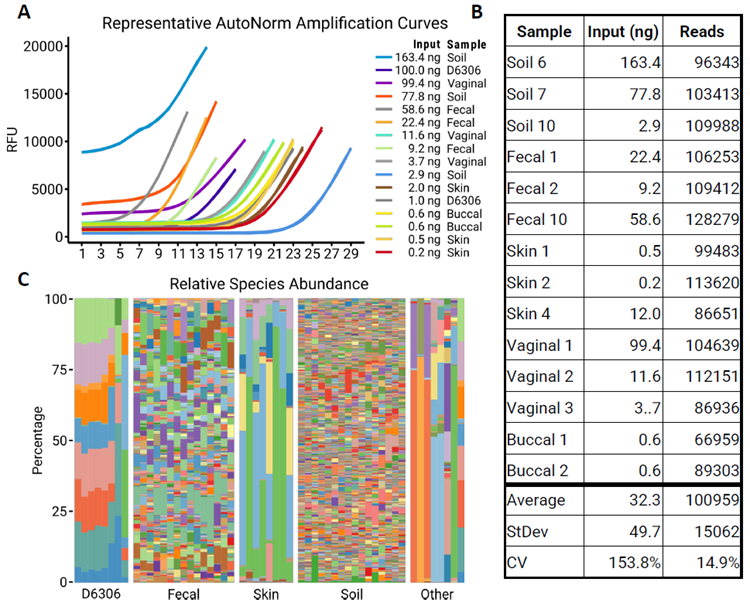
Figure 2. Effective normalization of libraries with AutoNormalization. A.) Amplification profiles of samples using iconPCR. Samples were standardized using the slope method, and cycling was stopped when the slope reached its maximum value. It is important to note that the input does not always correspond to the number of cycles.
B.) After iconPCR, 5 uL from each sample was pooled, cleaned, and sequenced. The table displays the exemplary samples and their corresponding read counts. AutoNormalization successfully normalized the output of all samples. C.) Bar plots depicting the comparative abundance of each species across all samples analyzed. The use of iconPCR enables an efficient workflow with complex sample combinations. Image Credit: n6
View The Full Poster Here
References and further reading
- Jouvenot, Y., et al. (2024). The use of iconPCR for 16S library preparation improves data quality and workflow. BioRxIV. DOI:10.1101/2024.12.18.629279. https://www.biorxiv.org/content/10.1101/2024.12.18.629279v1.
Acknowledgments
Produced using materials originally authored by Brett Hale from AgriGro, Caroline Obert, Kyle Metcalfe, Andrew Boddicker, Marielle Krivet, Junhua Zhao, and Tuval Ben-Yehezkel from Element Biosciences, and Pranav Patel, Yann Jouvenot, Wes Austin, and Gagneet Kaur from n6.
About n6
n6 is a genomics company focused on simplifying sample prep and helping scientists get better data, faster. As genomics scales, n6 believes workflows should become easier, not harder. Our instruments combine multiple workflow steps into one streamlined process, reducing complexity at any throughput. We partner closely with scientists to remove barriers in the lab and build the tools genomics has always needed, but never had.
Sponsored Content Policy: News-Medical.net publishes articles and related content that may be derived from sources where we have existing commercial relationships, provided such content adds value to the core editorial ethos of News-Medical.net, which is to educate and inform site visitors interested in medical research, science, medical devices and treatments.