Lead discovery is the phase of drug development in which researchers find and validate chemical starting points (“hits”) that interact with an established biological target. The strongest hits are then progressed into “leads” for further optimization.
This phase occurs after target identification and before lead optimization, and it directly influences the quality of all subsequent molecules.
During hit-to-lead, validated hits are assessed, prioritized, and developed into lead series through structure–activity relationship (SAR) studies.
Lead optimization involves repeated refinement of these leads to enhance potency, selectivity, and developability, including ADME/DMPK and safety characteristics, until a compound is suitable for preclinical evaluation. More reliable binding and structural information at this point can help reduce expensive attrition during later development.
NMR spectroscopy contributes throughout this process. It confirms which fragments bind, determines binding strength ( ), identifies binding locations and modes, and defines the 3D conformation adopted by a ligand in solution under near-physiological conditions. Medicinal chemists can use this information to design improved compounds.
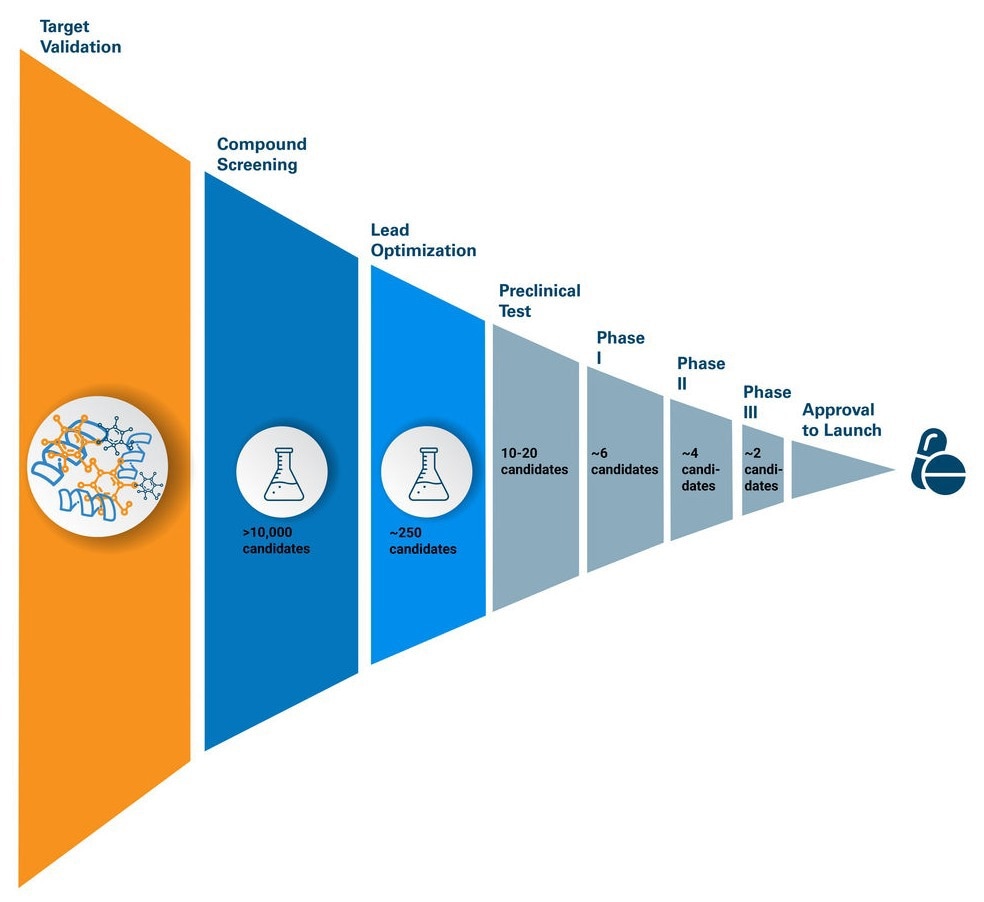
Drug discovery and development funnel. Image Credit: Bruker BioSpin Group
Why use fragment-based screening by NMR?
Fragment-based screening (FBS) by NMR is an established component of contemporary drug discovery and is used in more than half of fragment-screening campaigns. The method identifies strong and weak binders, verifies compound identity, and provides information about the location and mode of fragment binding.
These capabilities support progression from hit discovery through hit-to-lead and lead optimization. Bruker combines instrumentation, automation, and software in a unified workflow, reducing the manual data processing that has traditionally limited screening speed.
Features
An end-to-end NMR workflow for lead discovery
Bruker brings together the complete NMR-based lead discovery workflow under near-physiological conditions into a single integrated environment. The process covers library definition and library quality check, automated data acquisition, screening, hit identification, binding validation, structural characterization, and project-level data management.
Conducting all NMR measurements under near-physiological conditions helps generate biologically relevant information throughout the workflow. By removing manual transfers between separate software tools, the system helps discovery groups progress efficiently from fragment library preparation to validated structural understanding.
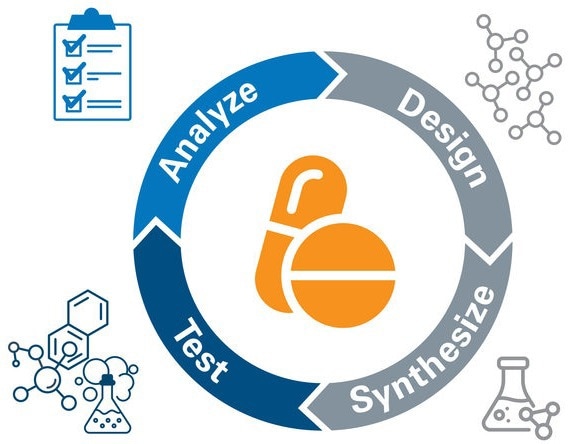
The Design-Synthesize-Test-Analyze workflow of drug discovery. Image Credit: Bruker BioSpin Group
Library definition, quality control, and data management
Reliable screening begins with a well-characterized library. Mnova Gears, Verify, and qNMR assess the identity, purity, and solubility of each fragment, ensuring that screening resources are used only for dependable compounds.
These tools are also offered collectively through the Bruker Chemist Suite, which delivers an integrated process for compound verification and quality evaluation.
Mnova MixDesign creates optimized mixtures, making it possible to screen numerous fragments together while maintaining clear interpretation.
Mnova DB manages fragment libraries and screening data by bringing spectra, screening outcomes, and project information together on a single platform. This supports complete project oversight and creates an audit trail for each screening campaign.
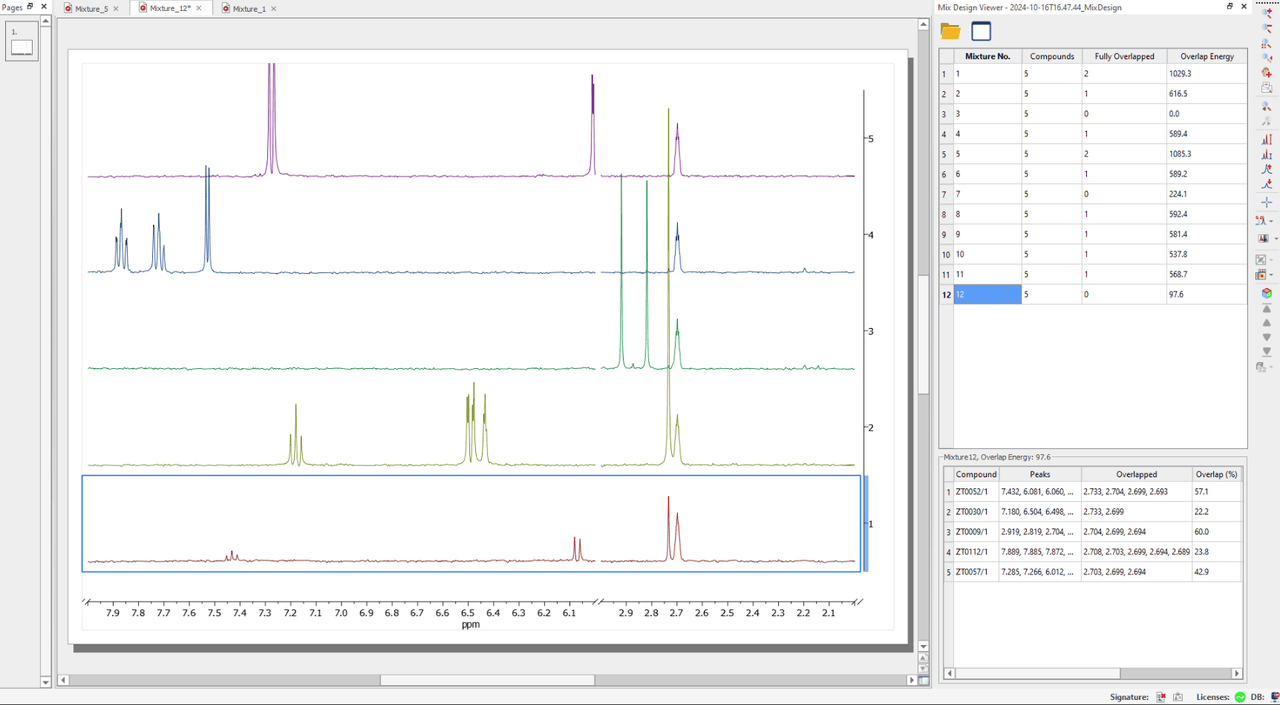
Mixture Design. Image Credit: Bruker BioSpin Group
Automated acquisition and library screening
Automated acquisition using automation software and SampleJet permits unattended analysis of fragment libraries with both standard and customizable NMR screening experiments. Common experiments include 1D 1H with buffer and water suppression, STD, waterLOGSY, T2/T1ρ, and 19F experiments with decoupling.
High-sensitivity QCI-F CryoProbes enable efficient data collection for both 1H and 19F screening. Since 19F signals are highly selective and well dispersed, and protein samples contain no fluorine background, as many as 30 fragments can be included in one mixture.
Acquisition-to-analysis and automated hit detection
For ligand-observed 1D NMR 1H and 19F experiments, TopSpin’s fragment-based-screening capability links acquisition with analysis by transferring spectra into Mnova Screen, where automated analysis and hit detection are performed.
In addition, Mnova Screen 2D analyzes chemical shift perturbations (CSPs) from single-point 2D-NMR titrations, enabling rapid ligand prioritization and hit identification.
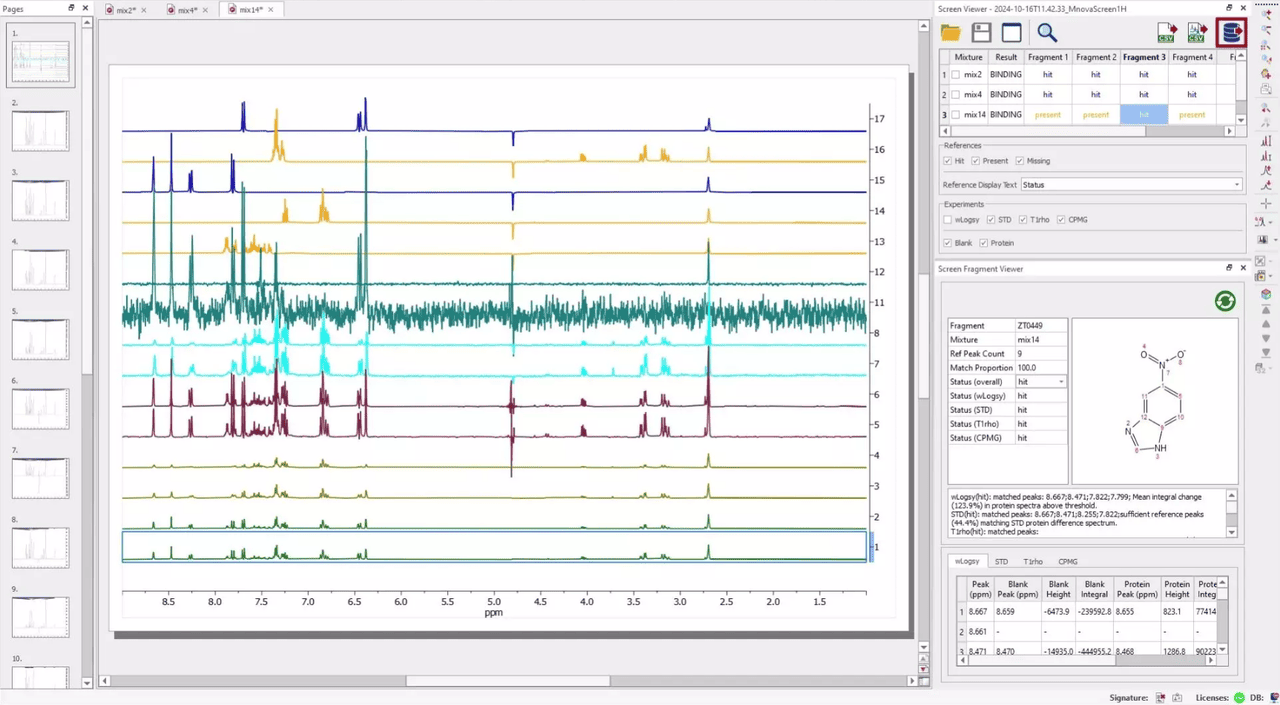
Automated Hit Detection with Mnova Screen. Image Credit: Bruker BioSpin Group
Binding validation and structural biology
Validated hits can be further examined using protein-observed 2D NMR. Mnova Binding processes protein–ligand HSQC titrations, displays chemical-shift perturbations, and determines values from multiple peaks. Consequently, affinity determination and binding-site mapping can be carried out in one experiment without the need for a crystal structure.
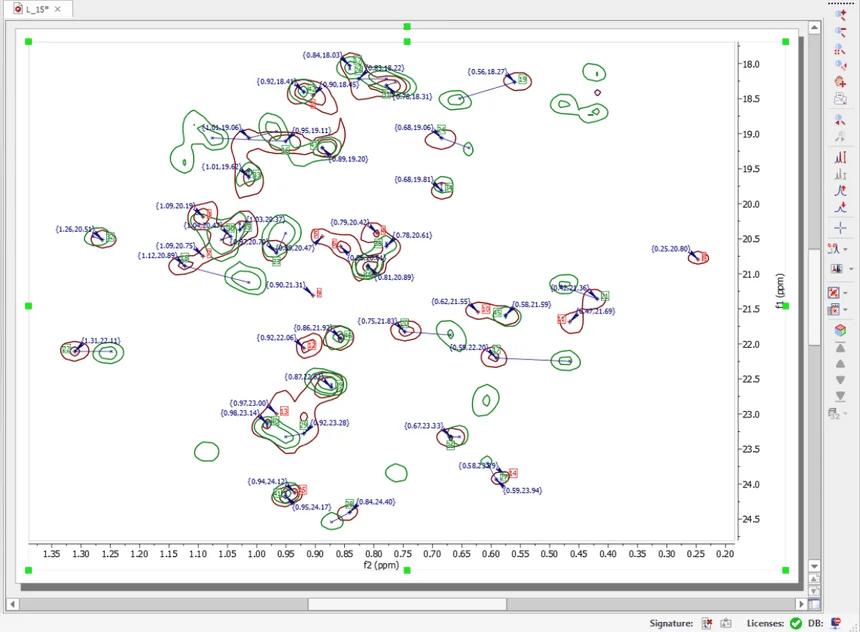
Mnova Screen 2D Chemical Shift Perturbation. Image Credit: Bruker BioSpin
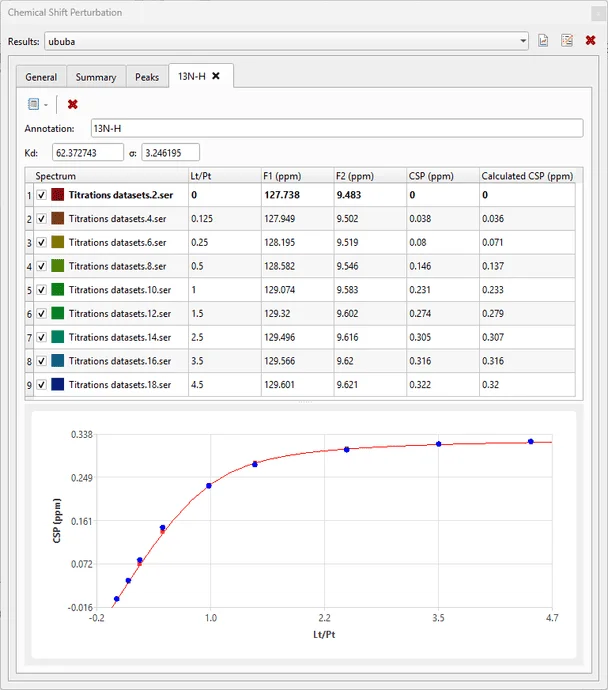
Image Credit: Bruker BioSpin
Lead optimization and 3D conformational analysis
The 3D structure adopted by a free ligand in solution can affect its ability to bind a target, making conformational information important during optimization.
Mnova StereoFitter determines the most likely 3D conformational populations from experimental NMR constraints, such as NOEs, residual dipolar couplings, J-couplings, and chemical shifts. The resulting data give medicinal chemists direct experimental structural guidance for subsequent compound-design cycles.
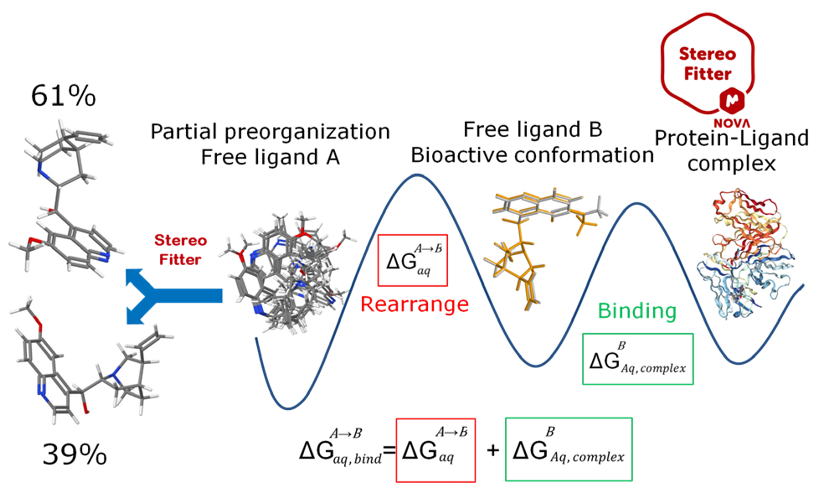
Mnova StereoFitter. Image Credit: Bruker BioSpin Group
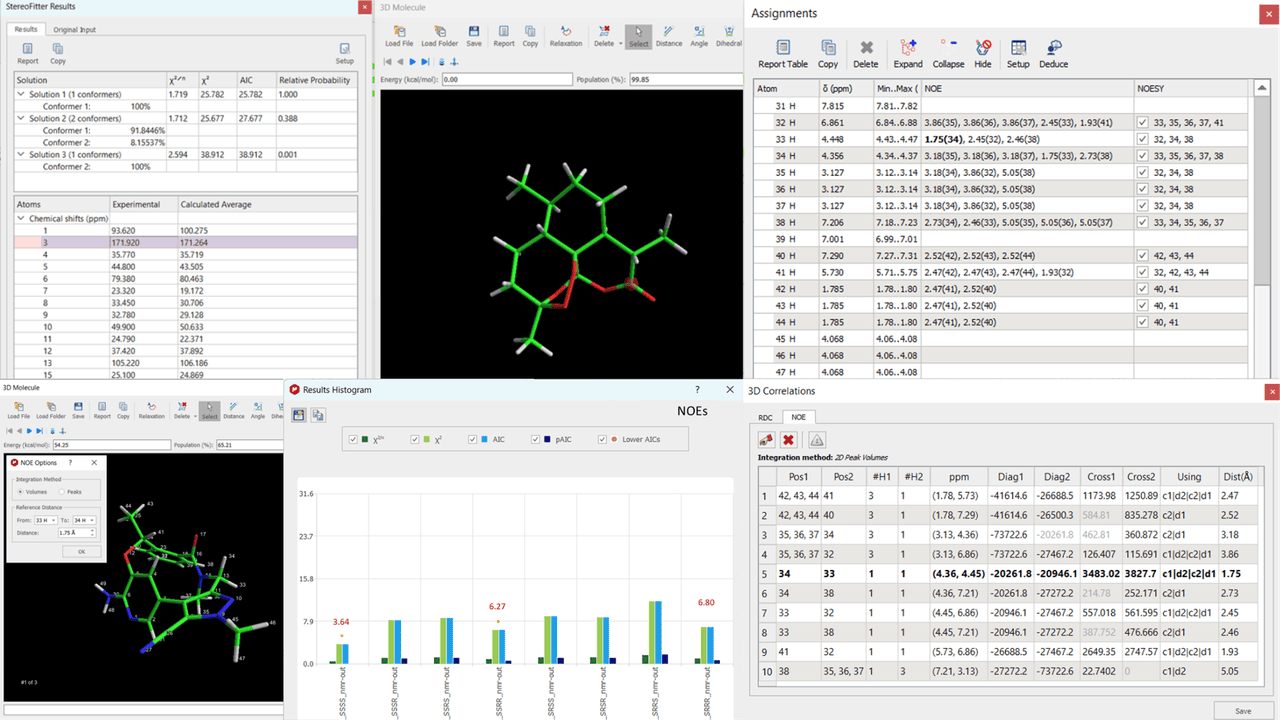
Mnova StereoFitter. Image Credit: Bruker BioSpin Group
Benefits
- Biologically relevant insights: Near-physiological solution-state measurements assess molecular interactions under conditions that more closely resemble the native environment, supporting better-informed lead discovery decisions.
- Faster progression from screening to validated hits: Automated acquisition-to-report workflows and high-throughput sample handling can reduce the time required to move from screening to validated hits from weeks to days.
- Distinct information for stronger decisions: A single workflow combines binding detection, binding-site localization, and structural information, including dynamic features that crystallography alone cannot readily access.
- Greater confidence in the data: Sensitivity appropriate for the µM–mM fragment range, together with integrated Quality Check and solution-state measurements, helps limit false-positive results.
- Integrated workflow from beginning to end: Library quality check, screening, binding analysis, and 3D characterization are conducted in one environment without manual data transfer, producing traceable and reproducible results.
- Scalable and automated discovery: Automation of acquisition, analysis, and reporting accommodates expanding libraries and campaigns involving multiple teams.
- The 19F advantage: 19F screening allows up to 30 fragments per mixture, provides strong T2 sensitivity, avoids background fluorine from proteins, and can use commercially available 19F libraries.
Use cases
- Primary fragment screening, including challenging targets: If high-throughput screening produces no hits, automated 19F NMR screening of fragment mixtures can identify validated binders and provide evidence of target druggability.
- Turnkey screening for CROs: When internal NMR expertise is limited, an automated workflow allows rapid implementation of screening services and flexible use of the instrument.
- Hit validation and optimization without crystallography: When binding-site and affinity information is required quickly, automated 2D NMR with extraction can provide both, supporting faster SAR cycles and better development decisions.
- Orthogonal confirmation of screening hits: When alternative techniques produce many false positives, ligand-observed NMR confirmation can reduce the hit list to candidates supported by higher-confidence evidence.
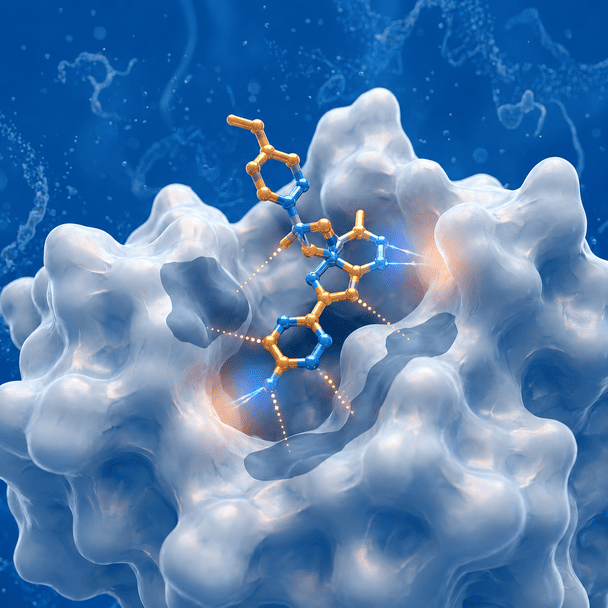
A fragment molecule binds within a target protein pocket. Image Credit: Bruker BioSpin Group
How NMR complements other methods
NMR is the only screening strategy that brings together quality checks, binding detection, and structural characterization within one workflow in near-physiological conditions. It measures interactions in solution without immobilizing the compounds or targets, thereby avoiding artifacts often associated with surface-based assays, while also offering strong sensitivity for weak binders.
SPR (Surface Plasmon Resonance), in comparison, provides limited structural information and can have difficulty detecting weak binders. Similarly, X-ray crystallography requires suitable crystals and does not directly provide affinity measurements. As a result, NMR is often used to validate and enrich hits identified through both approaches.
About Bruker BioSpin Group
The Bruker BioSpin Group designs, manufactures, and distributes advanced scientific instruments based on magnetic resonance and preclinical imaging technologies. These include our industry-leading NMR and EPR spectrometers, as well as imaging systems utilizing MRI, PET, SPECT, CT, Optical and MPI modalities. The Group also offers integrated software solutions and automation tools to support digital transformation across research and quality control environments.
Bruker BioSpin’s customers in academic, government, industrial, and pharmaceutical sectors rely on these technologies to gain detailed insights into molecular structure, dynamics, and interactions. Our solutions play a key role in structural biology, drug discovery, disease research, metabolomics, and advanced materials analysis. Recent investments in lab automation, optical imaging, and contract research services further strengthen our ability to support evolving customer needs and enable scientific innovation.
Sponsored Content Policy: News-Medical.net publishes articles and related content that may be derived from sources where we have existing commercial relationships, provided such content adds value to the core editorial ethos of News-Medical.net, which is to educate and inform site visitors interested in medical research, science, medical devices and treatments.