Tau is a microtubule‑associated protein comprised of N‑terminal, proline‑rich, microtubule‑binding, and C‑terminal domains.
The microtubule‑binding region is responsible for mediating the microtubule interaction, while alternative splicing produces six primary isoforms that are developmentally regulated and balanced in the adult brain.
Tau stabilizes axonal microtubules as a major function, which, in turn, supports axonal transport and neuronal polarity. Moreover, this allows Tau to influence the regulation of synaptic activity, mitochondrial function, calcium homeostasis, and genomic stability.
In Alzheimer’s disease and related Tauopathies, irregular post‑translational modifications, misfolding, and the build-up of Tau trigger microtubule destabilization, synaptic dysfunction, neurodegeneration, and the spread of pathology across the neural network.
Therefore, Tau is now considered to be a major target for biomarkers and disease‑modifying therapies.
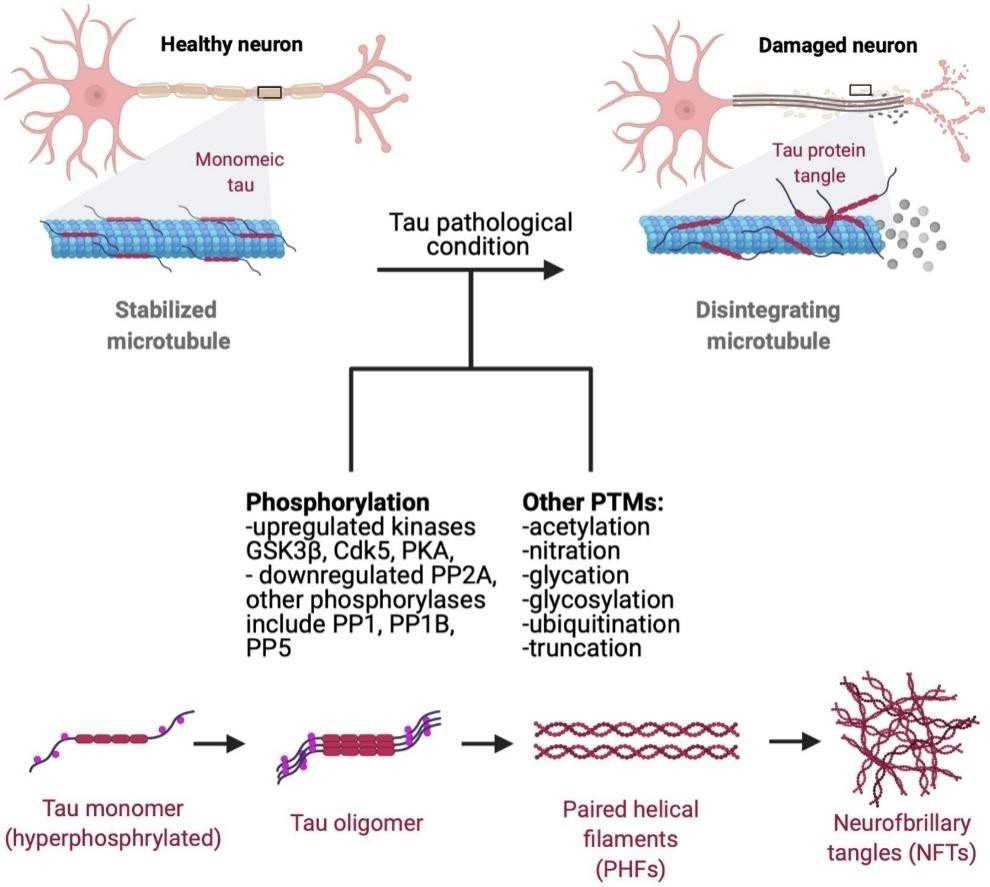
Figure 1. Progression of Tau pathology. Image Credit: https://www.frontiersin.org/journals/neuroscience/articles/10.3389/fnins.2021.702788/full
SignalChem Biotech, now part of Sino Biological, has developed an extensive Tau portfolio featuring over 80 products, including diverse isoforms, truncations, mutations, and in vivo kinase‑phosphorylated variants.
Critical neurodegenerative signatures are captured by the phospho‑Tau proteins, which support both the development of IVD antibodies and mechanism‑of‑action studies. Biotinylated Tau facilitates the effective capture on streptavidin platforms for screening and binding assays.
Moreover, aggregation‑competent constructs are validated for their functionality via Thioflavin T assays, proving the formation of durable β‑sheet‑rich fibrils and offering practical tools transferable to real-world scenarios for efficient anti‑aggregation drug discovery in Alzheimer’s disease and related Tauopathies.
Targeted diagnostic strategies for Tau
Although there is a growing demand for Alzheimer’s disease (AD) diagnostics, detecting AD at the early stage remains a challenge. Gold-standard approaches such as Aβ PET imaging and cerebrospinal fluid (CSF) testing are typically restricted due to their expense, invasiveness, and limited accessibility.
The consequence of this has triggered a shift in diagnostic strategies toward stepwise workflows that employ blood-based biomarkers for initial screening and risk stratification. This emerging framework has allowed plasma phosphorylated tau biomarkers (pTau181 and pTau217) to be viewed as important bridges between early risk assessment and conclusive diagnosis.
Roche Diagnostics has developed the first FDA-approved plasma p-tau test: Elecsys® pTau181. This tool can be used to assess amyloid pathology related to Alzheimer’s disease in primary care. Delivering results in ∼18 minutes on cobas® e analyzers, this automated assay requires only 30 μL plasma, and demonstrates a high negative predictive value (∼97.9%), facilitating improved prescreening and reduced reliance on PET or CSF testing.
The SPEAR UltraDetect™ pTau217 assay is a highly sensitive, blood-based immunoassay designed to quantify plasma pTau217 with dual-verification SPEAR™ chemistry. It achieves fg/mL sensitivity and >90% specificity for amyloid-PET positivity in comparative studies. While still being used in the research phases, it can support AD clinical trials, cohort enrichment, and longitudinal biomarker studies.
Moreover, the FDA has granted the SPEAR UltraDetect™ tool breakthrough device designation for future clinical applications.
Advances in the development of Tau-targeted therapeutic drugs
There are many new and developing strategies that target tau, including Tau-triggered neuroinflammatory pathways; regulation of Tau phosphorylation via kinases and phosphatases; use of antibodies or small molecules to prevent aggregation and PHF/NFT formation; active and passive immunotherapies; and gene-level reduction of MAPT expression.
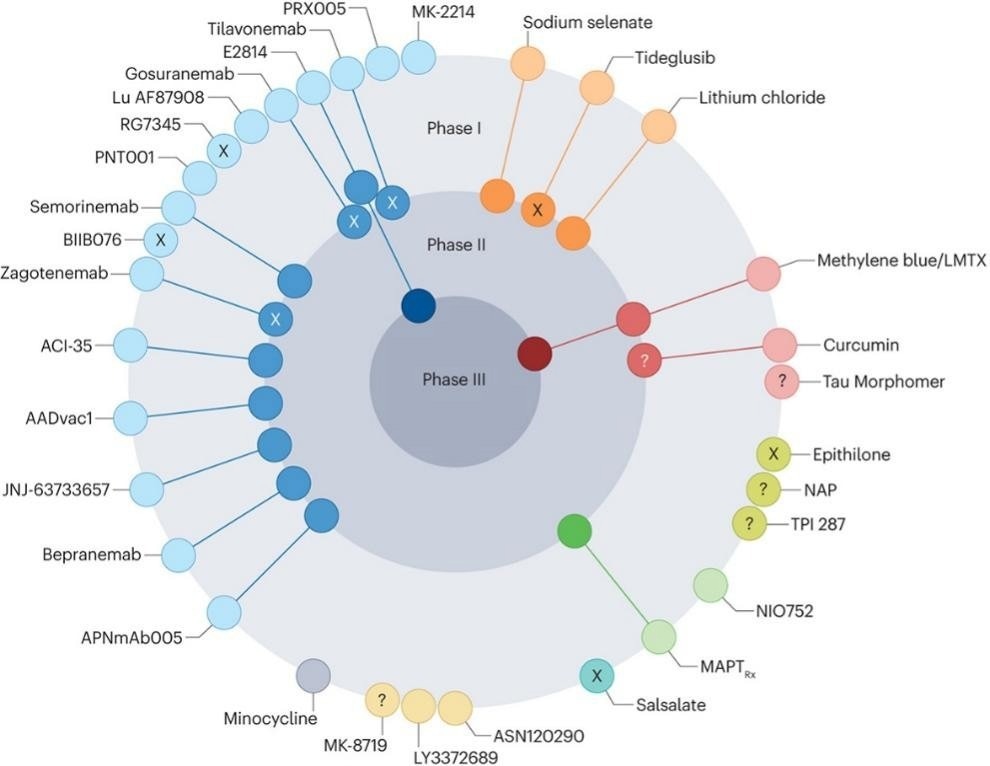
Figure 2. Current status of clinical trials of Tau-targeting drugs. Image Credit: https://pmc.ncbi.nlm.nih.gov/articles/PMC10965012/
In a study evaluating Tau-driven neuroinflammatory pathways as a primary target, Jin et al. observed that exogenous Tau triggers microglia via the PQBP1–cGAS–STING innate immune signaling axis.
SPR and NMR studies using recombinant human Tau 410 (3R) and Tau 441 (4R) proteins (T06-54N, T08-54N; SignalChem) have demonstrated that monomeric Tau interacts with the WW domain of PQBP1and binds through its proline-rich region.
However, P179A/P216A mutations have a significant degenerative effect on this interaction. Following microglial absorption, Tau–PQBP1 colocalization captures cGAS and STING, resulting in NF-κB activation and the expression of inflammatory factors.
When the PQBP1 or the Tau–PQBP1 interaction was disrupted, a considerable reduction was observed in microglial activation, neuroinflammation, neuronal injury, and cognitive impairment in vivo. This supports the hypothesis that Tau-induced innate immune sensing can be considered a viable emerging therapeutic target.
The GSK-3β inhibitor Tideglusib exhibited irreversible functional inhibition and lowered Tau phosphorylation and pathology across a number of AD mouse models, endorsing GSK-3β as a key Tau kinase target and pushing the development of next-generation GSK-3 inhibitors, such as AZD1080 and lithium-based compounds.
Additionally, it has been observed that the PP2A activator sodium selenate (VEL015) enhances Tau dephosphorylation and ameliorates neurodegenerative phenotypes in preclinical models. Early clinical studies indicate acceptable safety, and when used in combination, kinase inhibition and phosphatase activation constitute one of the most widely studied and mechanistically established strategies for modulating Tau phosphorylation.
Tau-targeted therapies are also looking at ways to inhibit Tau aggregation, a key factor that aims to neutralize pathological Tau and prevent its propagation. Etalanetug (E2814), a humanized IgG1 antibody, was developed by Eisai to target the Tau microtubule-binding repeat region (MTBR).
Preclinical studies have shown that E2814 inhibits the aggregation and spread of Tau, while pilot-phase clinical studies in DIAD patients have demonstrated acceptable safety and biomarker responses, supporting its translational potential as a disease-modifying immunotherapy.
Active Tau immunotherapy has been designed to stimulate endogenous anti-Tau antibodies that neutralize pathological Tau and prevent its aggregation and spread, while offering the potential to modify disease over the long term.
One of the first Tau vaccines to enter clinical development, AADvac1 targets an MTBR conformational epitope and has shown encouraging signs of safety, durable immunogenicity, and reduced Tau pathology in preclinical and early clinical studies.
Antisense oligonucleotides (ASOs) lower protein expression by targeting and binding to MAPT mRNA, which in turn promotes RNase H1-mediated degradation. BIIB080 (MAPTRx), the first ASO designed to target Tau in clinical development, reduces Tau expression and has demonstrated favorable safety, target engagement, and biomarker reductions in initial AD trials, leading to FDA Fast Track designation.
In conclusion, the accumulating evidence from decades of mechanistic research identifies Tau as a major trigger of neurodegeneration.
As Tau-targeted diagnostics and therapies continue to develop, they will play a central role in enabling earlier detection, accurate patient stratification, and meaningful interventions for Alzheimer’s disease and related Tauopathies.
Featured products
Human Tau protein (full length, His tag), ThT validated
Cat#: T08-548H
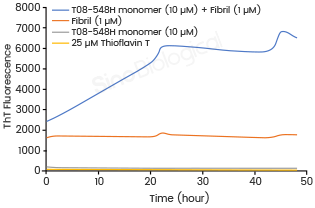
Thioflavin T emission curves show increased fluorescence (correlated to Tau aggregation) over time when Tau-441 Protein (T08-548H) monomers are combined with Tau pre-formed fibrils. Image Credit: Sino Biological Inc.
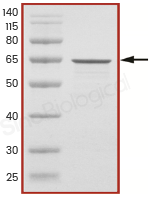
The purity of Tau-441 was determined to be >90% by densitometry. Observed MW ∼64 kDa.Calculated MW ∼47 kDa. Image Credit: Sino Biological Inc.
Human Tau (1-421) protein, ThT validated
Cat#: T08-558BN
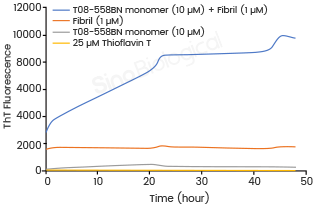
Thioflavin T emission curves show increased fluorescence (correlated to Tau aggregation) over time when Tau-441 (1-421) Protein (T08-558BN) monomers are combined with Tau pre-formed fibrils. Image Credit: Sino Biological Inc.
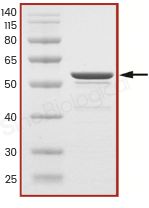
The purity of Tau-441 (1-421) was determined to be >85% by densitometry. Observed MW ∼55 kDa. Calculated MW ∼44 kDa. Image Credit: Sino Biological Inc.
Human Tau protein (P301S), ThT validated
Cat#: T08-568GN
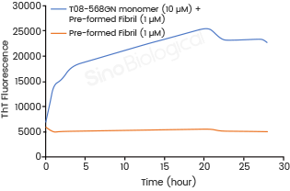
Thioflavin T emission curves show increased fluorescence (correlated to Tau aggregation) over time when Tau-441 (P301S) Protein (T08-568GN) monomers are combined with Tau pre-formed fibrils. Image Credit: Sino Biological Inc.
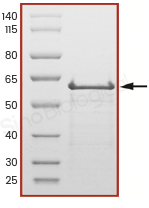
The purity of Tau-441 (P301S) was determined to be >80% by densitometry. Observed MW ∼63 kDa. Calculated MW ∼46 kDa. Image Credit: Sino Biological Inc.
More Tau proteins
Source: Sino Biological Inc.
| Cat# |
Description |
Species |
Sequence |
Expression Host |
| T07-50CN |
Tau-412, GSK3beta-phosphorylated |
Human |
Full Length |
E. coli |
| T08-50BN |
Tau-441, BRSK2-phosphorylated |
Human |
Full Length |
E. coli |
| T08-50CN |
Tau-441, CAMK2-phosphorylated |
Human |
Full Length |
E. coli |
| T08-50FN |
Tau-441, GSK3beta-phosphorylated |
Human |
Full Length |
E. coli |
| T08-50KN |
Tau-441, PHKG2-phosphorylated |
Human |
Full Length |
E. coli |
| T08-50LN |
Tau-441, PKA-phosphorylated |
Human |
Full Length |
E. coli |
| T08-50N |
Tau-441, BRSK1-phosphorylated |
Human |
Full Length |
E. coli |
| T08-50ON |
Tau-441, TTBK1-phosphorylated |
Human |
Full Length |
E. coli |
| T08-50RN |
Tau-441, DYRK1A-phosphorylated |
Human |
Full Length |
E. coli |
| T08-50RNB |
Tau-441, DYRK1A-phosphorylated &
Biotinylated |
Human |
Full Length |
E. coli |
| T08-54B2N |
Tau-441, Biotinylated |
Human |
Full Length |
E. coli |
| T08-54BN |
Tau-441, Biotinylated |
Human |
Full Length |
E. coli |
| T08-55LNB |
Tau-441 (216-391), Biotinylated |
Human |
216-391 |
E. coli |
| T08-55NB |
Tau-441 (244-372), Biotinylated |
Human |
244-372 |
E. coli |
| T08-56FBN |
Tau-441 (P301L), Biotinylated |
Human |
Full Length,
P301L |
E. coli |
| T08-55LCB |
Tau-441 (216-391), Biotinylated |
Human |
216-391 |
E. coli |
| T04-54BN |
Tau-381, Biotinylated |
Human |
1-381 |
E. coli |
| T07-54BH |
Tau-412, Biotinylated |
Human |
1-412 |
E. coli |
| T06-54BN |
Tau-410, Biotinylated |
Human |
1-410 |
E. coli |
| T08-56GNB |
Tau-441 (P301S), Biotinylated |
Human |
1-441 |
E. coli |
| T08-55FNB |
Tau-441 (151-391), Biotinylated |
Human |
151-391 |
E. coli |
| T08-55BNB |
Tau-441 (1-421), Biotinylated |
Human |
1-421 |
E. coli |
| T08-52NB |
Tau-441 (dK280), Biotinylated |
Human |
1-441 |
E. coli |
| T08-55HNB |
Tau-441 (231-421), Biotinylated |
Human |
231-421 |
E. coli |
| T06-54B2N |
Tau-410, Biotinylated |
Human |
1-410 |
E. coli |
| T08-50FNB |
Tau-441, GSK3beta-phosphorylated,
biotinylated |
Human |
Full Length |
E. coli |
| T08-50LNB |
Tau-441, PKA-phosphorylated,
biotinylated |
Human |
Full Length |
E. coli |
| T08-50NB |
Tau-441, BRSK1-phosphorylated,
biotinylated |
Human |
Full Length |
E. coli |
| T08-50ONB |
Tau-441, TTBK1-phosphorylated,
biotinylated |
Human |
Full Length |
E. coli |
About Sino Biological Inc.
Founded in 2007, Sino Biological is a global biotechnology company specializing in high-quality recombinant proteins, antibodies, and CRO services. Serving researchers in over 90 countries, Sino Biological supports basic research, drug discovery, vaccine development, and diagnostics through its comprehensive product portfolio, proprietary quality systems, and innovative research platforms.
Sino Biological's core business
Sino Biological is a leading global biotechnology supplier dedicated to high-quality research reagents and comprehensive CRO services. Its extensive product portfolio covers over 9,800 recombinant proteins, 15,000 antibodies, and 50,000 genes, all produced in-house. As a trusted CRO partner, Sino Biological specializes in customized recombinant protein and antibody production. It stands out with its robust high-throughput antibody production system, including HEK293/CHO and cell‑free platforms. This system enables rapid turnaround (as fast as 5 days), high-throughput production (> 10,000 Abs/month), and cost-effective solutions for global academic and pharmaceutical clients.
Sponsored Content Policy: News-Medical.net publishes articles and related content that may be derived from sources where we have existing commercial relationships, provided such content adds value to the core editorial ethos of News-Medical.net, which is to educate and inform site visitors interested in medical research, science, medical devices, and treatments.