The synergy of high-throughput wet-lab validation and artificial intelligence (AI) is reshaping protein drug development. Combining cell-free protein synthesis with label-free surface plasmon resonance (SPR) technology enables scientists to quickly screen and validate AI-designed antibody binders directly from crude extracts, avoiding complicated cell culture and substantially accelerating pharmaceutical discovery workflows.
The emergence of AI is fundamentally transforming the field of protein therapeutic discovery. Following the breakthrough of structural prediction platforms such as AlphaFold, sophisticated generative AI algorithms, including diffusion models, can now create hundreds or even thousands of highly specific protein binders, nanobodies, and miniproteins in silico within minutes.1
By leveraging deep learning and extensive datasets, these algorithms navigate the enormous protein sequence landscape with unparalleled, atomic-level accuracy.
The real bottleneck: High-throughput wet-lab validation
Even though computational design has advanced exponentially, the physical synthesis and validation of these molecules remain restricted by biological limitations. The primary bottleneck in contemporary structural biology and pharmaceutical discovery has moved downstream: AI-designed candidates demand extensive wet-lab testing to verify their empirical folding, target specificity, and binding affinity.
The iteration rate of generative algorithms depends on the quality and throughput of these wet-lab experiments. Conventional cell-based expression platforms (utilizing E. coli, yeast, or mammalian cells) are inherently limited by cellular toxicity, membrane transport barriers, and cell growth kinetics.
Such approaches require weeks for vector construction, cell culture, induced expression, and multiple chromatographic purification procedures before functional testing can commence.
Mechanistic benefits of cell-free protein synthesis
To address the restrictions of living cells, scientists are increasingly adopting cell-free protein synthesis (CFPS). CFPS functions as an open reaction platform by extracting the essential translational machinery - ribosomes, translation factors, and tRNAs - from cellular confines.2 Adding amino acids, energy regeneration systems, and nucleic acid templates to these extracts decouples protein production from cell growth and viability.3
From an academic standpoint, this open environment provides substantial benefits. It facilitates the expression of proteins that are toxic or otherwise challenging to produce in living cells, supports the incorporation of non-canonical amino acids, and significantly accelerates the timeline from DNA to functional protein.
Since CFPS can directly use linear DNA templates produced through PCR, it can bypass cloning stages in specific workflows, allowing highly parallelized library screening within only a few hours (Figure 1).4
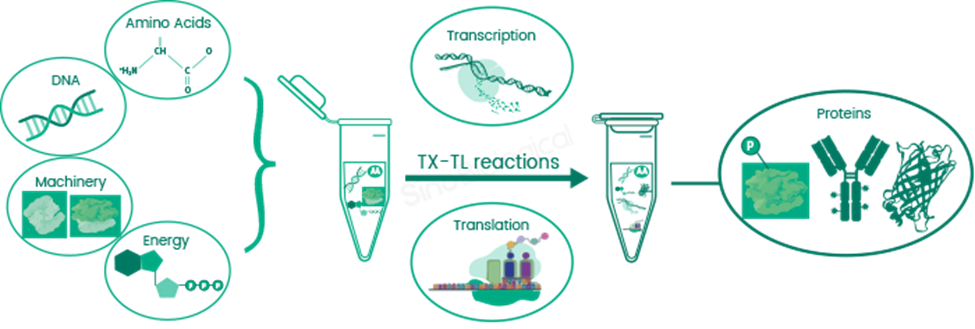
Figure 1. Schematic overview of cell-free protein synthesis (CFPS). DNA, amino acids, energy components, and the transcriptional and translational machinery contained in the cell lysate are combined in an in vitro reaction to produce functional proteins. Image Credit: Sino Biological Inc.
Biophysical accuracy: SPR analysis in complex matrices
Rapid protein synthesis addresses only one part of the challenge; evaluating its binding kinetics without purification is just as difficult.
Surface plasmon resonance (SPR) has been widely recognized as the biophysical "gold standard" for label-free, instantaneous evaluation of biomolecular interactions.5 SPR detects subtle alterations in the refractive index at a metal-dielectric interface when an analyte binds to an immobilized ligand on a sensor chip.
Importantly, contemporary SPR microfluidics and surface-capture chemistries enable direct analysis of target interactions in complex, unpurified matrices such as CFPS crude lysates.
By immobilizing specific capture molecules such as anti-His or Protein A antibodies on the sensor surface, scientists can selectively pull down the synthesized, tagged binders from the crude supernatant. This approach removes the complex background of the cell-free extract before the target antigen is introduced.
Stech et al. successfully expressed sophisticated antibody formats, including full-length IgG and scFv-Fc, using a microsome-containing CHO-based cell-free system, and subsequently validated them via SPR.6
The SPR analysis confirmed the conformational integrity and specific, concentration-dependent binding affinity (with a measured KD of 1.7 µM for IgG) of these in vitro-synthesized SMAD2-P antibodies, thereby verifying their functional viability and suitability for precise downstream kinetic analysis (Figure 2).
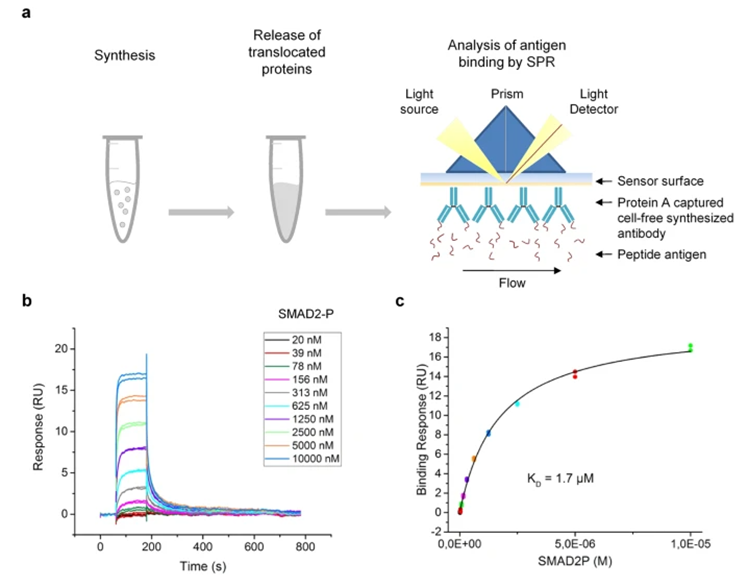
Figure 2. Steady-state affinity analysis of SMAD2-P-specific IgG expressed by cell-free systems. Scheme depicting the applied workflow: Sample preparation included cell-free synthesis of IgG, followed by SPR validation. Image Credit: https://doi.org/10.1038/s41598-017-12364-w
Empirical validation: A high-throughput case study
To empirically validate this proposed synergy, a recent collaborative investigation used optimized commercial platforms, combining Sino Biological’s XPressMAX™ CFPS system with Cytiva’s Biacore SPR technology, to assess a library of AI-designed VHH (nanobody) molecules (Figure 3).
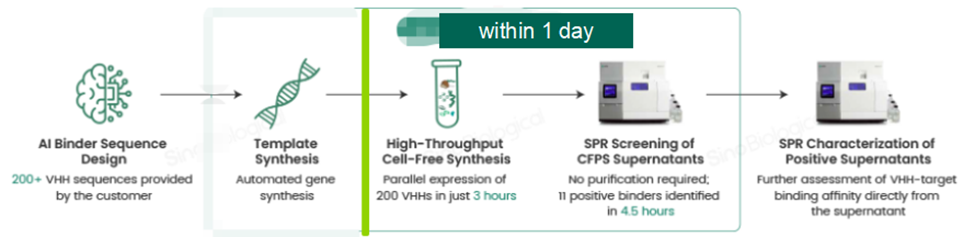
Figure 3. Workflow of ultra-fast, high-throughput screening with CFPS and SPR. Image Credit: Sino Biological Inc.
The scientists produced 200 different VHH variants simultaneously. Taking advantage of the high translational efficiency of the optimized extract, the synthesis stage required just three hours.
The CFPS supernatants were then injected directly into the SPR biosensor using a His-capture approach. The high-throughput SPR system evaluated all 200 variants within only 4.5 hours and successfully isolated 11 positive binders (Figure 4).
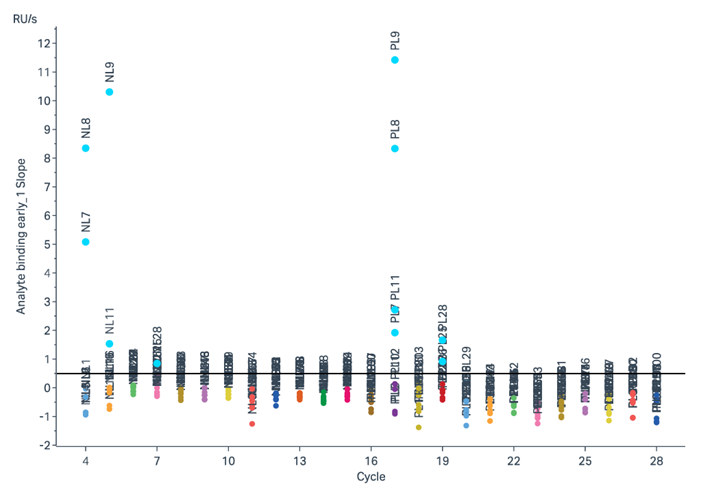
Figure 4. High-throughput SPR screening of CFPS products for target binding. Using a CM5 sensor chip and a His Capture Kit to screen the His-tagged cell-free expression products, 200 samples were analyzed within 4.5 hours, resulting in 11 positive hits. Image Credit: Sino Biological Inc.
To carefully evaluate the biophysical fidelity of this purification-free strategy, the kinetic parameters (Kon, Koff, and KD) of the identified binders were compared across four distinct sample preparations (Table 1 and Figure 5).
The quantitative kinetic data across all four conditions was statistically indistinguishable. This strong correlation confirms that proteins produced in vitro fold accurately and retain binding activities identical to their in vivo counterparts. It also verifies that direct SPR measurement of CFPS supernatants is analytically reliable and that it does not compromise sensitivity due to matrix interference.
Table 1. SPR affinity testing of Y19, Y2, and Y12 from four different samples. Source: Sino Biological Inc.
| Sample |
KD (M) |
| Y19 |
Y2 |
Y12 |
| Linear Template-Derived Crude Supernatant (CFPS) |
6.30E-10 |
6.22E-11 |
1.22E-09 |
| Plasmid Template-Derived Crude Supernatant (CFPS) |
7.14E-10 |
8.06E-11 |
2.71E-09 |
| Purified Sample (CFPS) |
7.65E-10 |
5.70E-11 |
1.67E-09 |
| Purified Sample (CHO) |
6.92E-10 |
9.94E-11 |
9.76E-10 |
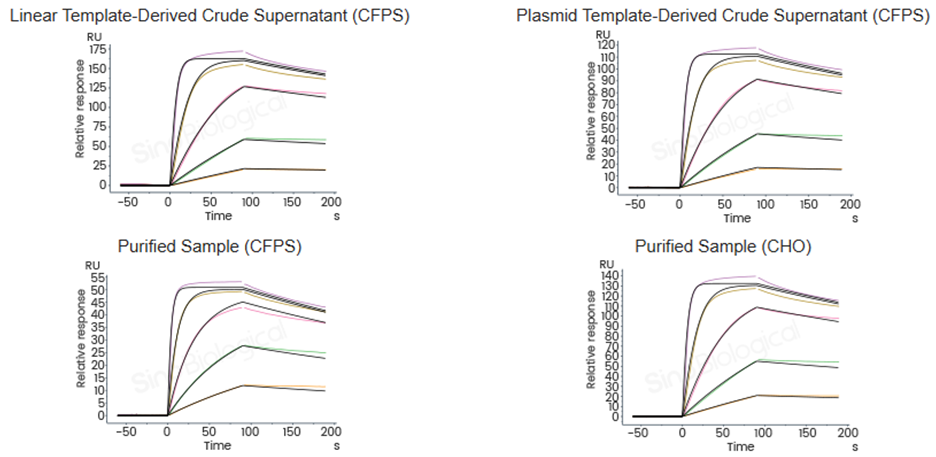
Figure 5. SPR results for Y19 obtained from four distinct samples. Image Credit: Sino Biological Inc.
Closing the AI loop
The integration of rapid cell-free expression and purification-free SPR kinetics represents a significant development in structural biology. By shortening the "build-test" cycle from weeks to just one day, this approach generates the large volumes of high-quality, real-world data required to refine and retrain generative AI models.7
Looking ahead, the seamless integration of computational design with efficient biophysical verification will be critical to realizing the full potential of AI-driven pharmaceutical discovery.
References and further reading
- Watson, J. L., et al. (2023). De novo design of protein structure and function with RFdiffusion. Nature, 620, 1–3. DOI:10.1038/s41586-023-06415-8. https://www.nature.com/articles/s41586-023-06415-8
- Carlson, E. D., et al. (2012). Cell-Free Protein Synthesis: Applications Come of Age. Biotechnology Advances, 30(5), 1185–1194. DOI:10.1016/j.biotechadv.2011.09.016. https://www.sciencedirect.com/science/article/abs/pii/S0734975011001819
- Stech, M., and Kubick, S. (2015). Cell-Free Synthesis Meets Antibody Production: A Review. Antibodies, 4(1), 12–33. DOI:10.3390/antib4010012. https://www.mdpi.com/2073-4468/4/1/12
- Brookwell, A., Oza, J. P., and Caschera, F. (2021). Biotechnology Applications of Cell-Free Expression Systems. Life, 11(12), 1367. DOI:10.3390/life11121367. https://www.mdpi.com/2075-1729/11/12/1367
- Rich, R. (2000). Advances in surface plasmon resonance biosensor analysis. Current Opinion in Biotechnology, 11(1), 54–61. DOI:10.1016/s0958-1669(99)00054-3. https://www.sciencedirect.com/science/article/abs/pii/S0958166999000543.
- Stech, M., et al. (2017). Cell-free synthesis of functional antibodies using a coupled in vitro transcription-translation system based on CHO cell lysates. Scientific Reports, 7(1). DOI:10.1038/s41598-017-12364-w. https://www.nature.com/articles/s41598-017-12364-w.
- Chen, J., et al. (2025). Artificial intelligence–powered biofoundries for protein engineering and metabolic engineering. Current Opinion in Biotechnology, 96, 103380. DOI:10.1016/j.copbio.2025.103380. https://www.sciencedirect.com/science/article/pii/S0958166925001247
About Sino Biological Inc.
Sino Biological is an international reagent supplier and service provider. The company specializes in recombinant protein production and antibody development. All of Sino Biological's products are independently developed and produced, including recombinant proteins, antibodies, and cDNA clones. Sino Biological is the researchers' one-stop technical services shop for the advanced technology platforms they need to make advancements. In addition, Sino Biological offers pharmaceutical companies and biotechnology firms pre-clinical production technology services for hundreds of monoclonal antibody drug candidates.
Sino Biological's core business
Sino Biological is committed to providing high-quality recombinant protein and antibody reagents and to being a one-stop technical services shop for life science researchers around the world. All of our products are independently developed and produced. In addition, we offer pharmaceutical companies and biotechnology firms pre-clinical production technology services for hundreds of monoclonal antibody drug candidates. Our product quality control indicators meet rigorous requirements for clinical use samples. It takes only a few weeks for us to produce 1 to 30 grams of purified monoclonal antibody from gene sequencing.
Sponsored Content Policy: News-Medical.net publishes articles and related content that may be derived from sources where we have existing commercial relationships, provided such content adds value to the core editorial ethos of News-Medical.net, which is to educate and inform site visitors interested in medical research, science, medical devices, and treatments.